
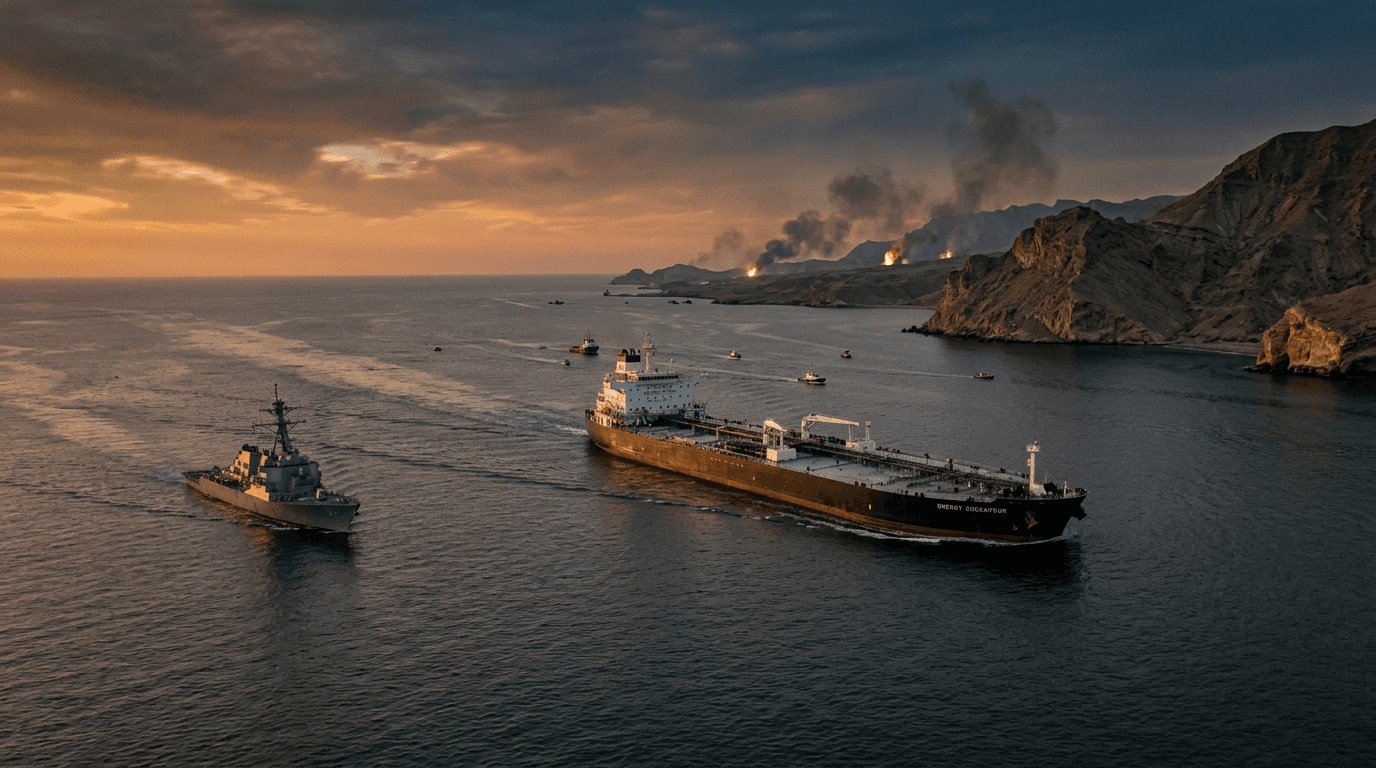
West Texas Intermediate crude oil has surged to its highest levels in six months, with prices climbing near $79 per barrel as geopolitical tensions in the Middle East escalate into a full-scale crisis. The sharp rally reflects investor fears of supply disruptions following coordinated US-Israel military strikes against Iranian targets that began on February 28, 2026, and Iran's retaliatory attacks. What started as political tension has rapidly transformed into a tangible energy market emergency, reminding traders and policymakers alike how vulnerable global oil supply remains to geopolitical shocks.
The Escalation Timeline
The rapid acceleration in WTI prices traces directly to military developments in the Middle East. Prior to late February, WTI crude had been trading around $67 per barrel, already elevated due to building geopolitical concerns. However, when the United States and Israel initiated coordinated military operations against Iranian targets on February 28, 2026, markets reacted with visceral urgency. Iran responded with missile and drone attacks on US bases and regional allies, escalating the conflict into its second and third day by early March.
This tit-for-tat military exchange instantly injected a fresh wave of uncertainty into energy markets. Traders and analysts quickly recognized that a localized conflict could have global economic consequences. Within days, WTI surged toward the $79 level, representing a dramatic climb from December lows near $55 per barrel. The six-month high represents not just price momentum but a fundamental repricing of global energy risk.
The Strait Of Hormuz Chokepoint
The primary driver behind crude oil's sharp ascent is the acute threat to one of the world's most critical energy infrastructure. The Strait of Hormuz, a narrow passage between Iran and Oman, represents a chokepoint of almost incomparable strategic importance. Roughly 20 percent of global crude oil shipments and seaborne gas flows transit through this waterway every single day. For perspective, that equates to approximately 20 million barrels of oil per day moving through a geographically constrained channel where military conflict can disrupt traffic with minimal warning.
The current conflict has already prompted maritime authorities and shipping carriers to halt or severely restrict traffic through the Strait. Insurance premiums for crude shipments through the region have spiked dramatically, adding additional cost pressures to the energy supply chain. When traders contemplate even temporary disruptions to such a massive volume of global oil supply, the rational response is to reprice crude sharply higher. The market is not being irrational—it is correctly identifying and pricing in genuine supply risk.
Geopolitical Risk Premium In Action
Energy market analysts have quantified the geopolitical risk premium currently embedded in crude prices at between four and ten dollars per barrel. This premium represents the additional cost imposed by political uncertainty rather than fundamental supply-demand dynamics. In other words, WTI would likely trade significantly lower if markets believed energy flows would remain uninterrupted. The fact that crude has climbed toward $79 demonstrates how substantially traders are valuing the risk of Strait disruption.
Norbert Rucker, head of economics at Julius Baer, captured the sentiment accurately: Oil prices are bloated with a geopolitical risk premium. Traders are positioning defensively, unwilling to hold short positions ahead of potential supply interruptions. As one senior equity trader explained to market observers, whenever markets approach closed periods without clear diplomatic breakthroughs, traders add upside protection through call buying and risk positioning. This behavior is entirely rational but also self-reinforcing during crisis periods.
Opec Plus Considerations
Complicating the outlook is the role of OPEC+, which remains a central player in global crude balancing. The organization is reportedly considering increasing oil output by 137,000 barrels per day in April 2026, potentially ending a three-month pause in production hikes. However, such modest production increases would prove insufficient to offset sudden supply disruptions from the Middle East conflict or Strait disruptions.
OPEC+ faces a delicate balancing act. The cartel wants to maintain favorable revenue levels while avoiding excessive volatility. However, when geopolitical events beyond their control disrupt supply flows, production adjustments have limited impact on prices. The organization's next moves will be closely watched as a barometer of confidence regarding the conflict's resolution.
What Comes Next
The trajectory of WTI crude prices now depends almost entirely on geopolitical developments and diplomatic progress. If tensions escalate further or Strait blockages persist, crude could approach or exceed $85-90 per barrel. Conversely, if diplomatic efforts successfully stabilize the region and shipping returns to normal, the geopolitical risk premium could decompress rapidly, sending prices lower.
For traders, businesses, and policymakers, the message is clear: global energy markets remain acutely sensitive to political risk. WTI's climb to six-month highs represents not speculative exuberance but appropriate pricing of genuine supply uncertainty. The coming days and weeks will determine whether this crisis abates or deepens—and crude prices will reflect every development.