
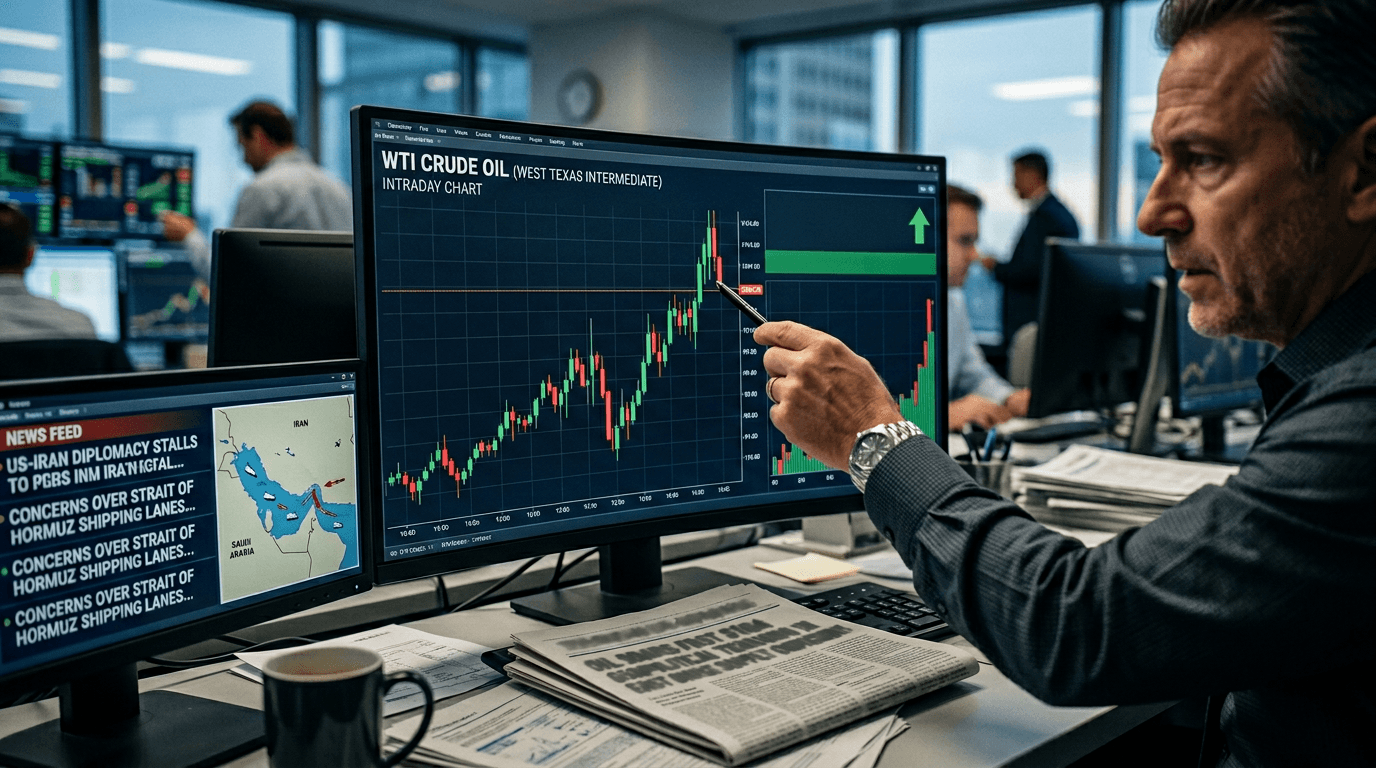
WTI crude oil prices have surged above $104 per barrel, a significant rally fueled by escalating tensions in the Middle East. This price increase marks a crucial shift in market dynamics, as traders and investors adjust their strategies in response to potential supply disruptions. The implications of this rally extend beyond energy futures, impacting equities, currencies, and broader economic forecasts.
The Geopolitical Catalyst
The primary catalyst behind this oil price surge is the rising tension between the United States and Iran, compounded by the recent breakdown in diplomatic negotiations. President Trump's threats of military action against Iran have heightened market concerns, forcing traders to reevaluate their risk assessments. Unlike distant geopolitical issues, these immediate military threats have become pivotal market-moving events. The collapse of US-Iran ceasefire talks over the weekend further propelled WTI prices, which rose by 8.5 percent on Monday.
The focus is not only on the potential for conflict but also on the strategic location where such conflict could unfold. The Strait of Hormuz, a critical chokepoint, is at the center of these concerns.
The Strait Of Hormuz: A Crucial Chokepoint
The Strait of Hormuz is a vital shipping lane through which nearly 20 percent of the world’s oil supply is transported daily. This concentration of global energy flow through a single geographic chokepoint makes it particularly vulnerable to disruptions. Even the hint of a blockade or military escalation could lead to unprecedented supply crises, especially given the already low global crude inventories. Analysts at JPMorgan have indicated that if the strait's passage is blocked, Brent crude prices could climb to over $120 per barrel, a significant increase from current levels.
Market sensitivity to potential disruptions in the Strait of Hormuz has increased significantly. Traders are not only considering the likelihood of supply loss but also the cascading effects of restricted energy flows. Rising insurance costs for tankers passing through the Gulf add another layer of transport costs and risk premiums, exacerbating the pressure on prices.
Market Structure Inversions
A notable development in the market is the inversion of the traditional pricing relationship between West Texas Intermediate (WTI) and Brent crude. Typically, Brent crude trades at a premium due to logistical and regional factors, but current concerns have reversed this dynamic. Traders now favor crude that can bypass chokepoints like the Strait of Hormuz, leading to WTI overtaking Brent in pricing. Additionally, UAE Murban crude has surged past $114.80, indicating strong demand for crude supplies that avoid conventional shipping routes.
This inversion highlights that the current anxiety is not about absolute supply shortages but rather the challenges of transporting crude to end markets. The market is effectively pricing in "delivery risk" as a higher priority than supply risk, influencing trading strategies and portfolio decisions.
What Traders Should Watch
Traders must remain vigilant in the coming weeks, focusing on three critical areas. First, developments regarding the Strait of Hormuz and any announcements about passage conditions should prompt immediate portfolio reviews. Second, monitoring communications from the Trump administration is crucial, particularly given the military timeline of two to three weeks. Third, global inventory levels, especially strategic petroleum reserves, should be closely watched, as government releases could temporarily stabilize prices.
Monitoring demand-side indicators is also essential. Economic data suggesting reduced demand at higher price levels could offset some of the supply-driven rally dynamics.
Takeaways For Trading Strategy
This oil market scenario reflects a fundamental repricing of geopolitical risk rather than changes in demand fundamentals. The surge above $104 indicates the market's attempt to balance potential supply disruption scenarios. Traders face both risks and opportunities in distinguishing between short-term volatility and long-term structural changes. The evolution of Middle East tensions will be crucial in determining whether this rally represents a sustained repricing or a temporary spike.