
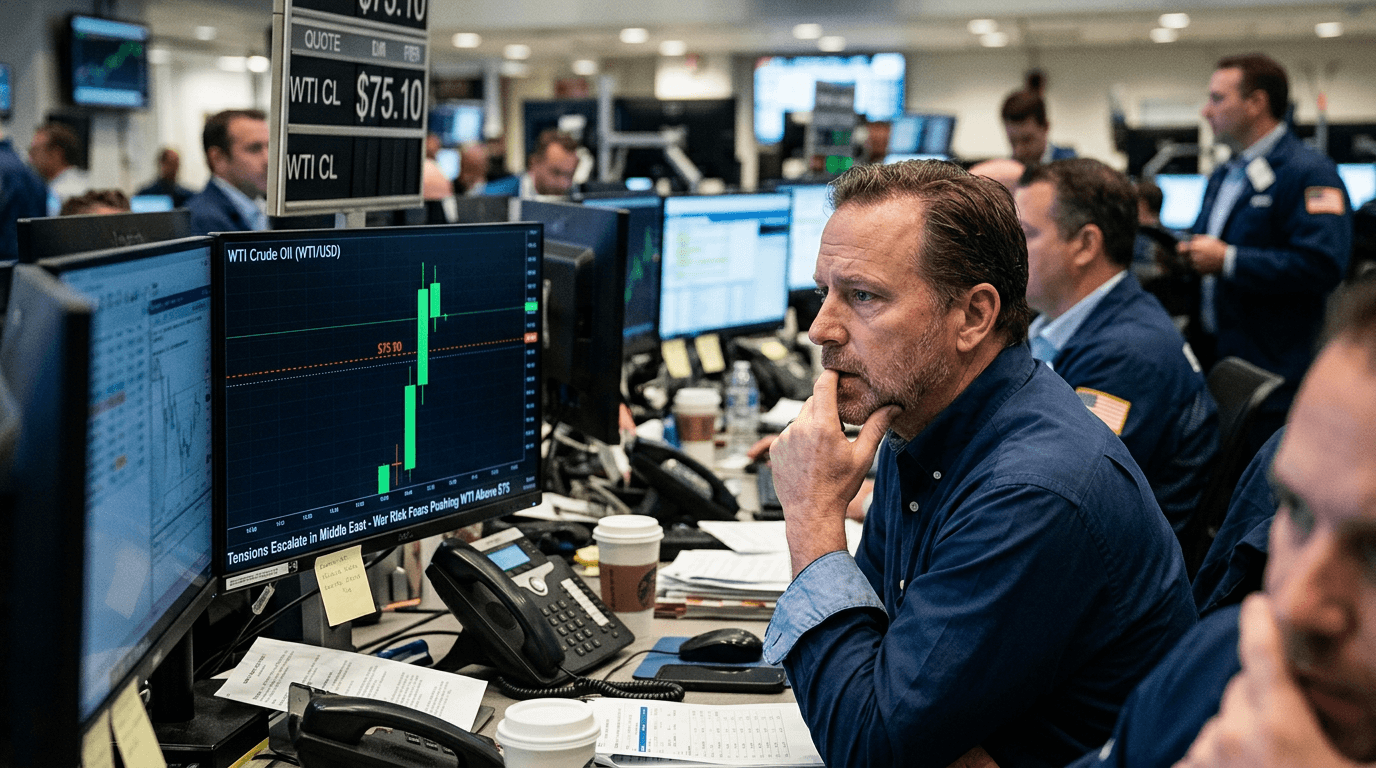
Oil’s latest surge has thrust crude back into the center of global market anxiety, with West Texas Intermediate (WTI) jumping above $75 a barrel as traders price in heightened war-risk across the Middle East[3][13]. The move, powered by more than a 6% rally in a single session, is about much more than headline volatility—it reflects deep concerns about supply routes, inflation, and the repricing of risk across asset classes.
Markets React To Middle East War-risk
The immediate catalyst for WTI’s jump above $75 has been renewed fears of an escalation in the U.S.–Iran conflict, alongside broader regional tensions involving Israel and Gulf states[3][13]. When missiles, drone strikes, or naval incidents hit the headlines, energy markets quickly pivot from focusing on fundamentals like demand growth to geopolitical tail risk.
Recent military actions in the region have already disrupted operations and shipping lanes, forcing some oil and gas facilities to shut and slowing flows through key chokepoints[3][8]. Traders know that the Middle East supplies a large share of globally traded crude, so any hint of sustained disruption can trigger outsized price reactions.
Price action reflects that sensitivity. In recent episodes of conflict, WTI has spiked into the mid-$70s, with intraday moves of 7–11% not uncommon as news breaks about strikes on energy infrastructure or tankers[3][13]. These are not typical daily swings; they signal stress, forced hedging, and algorithmic strategies repricing geopolitical risk in real time.
For market participants, the takeaway is clear: when war-risk headlines emerge, crude oil often becomes the fastest, most liquid proxy for geopolitical uncertainty—and that can cascade into other asset classes.
Why The Strait Of Hormuz Matters
A central reason oil reacts so violently to Middle East tensions is the strategic importance of the Strait of Hormuz, the narrow waterway off Iran’s southern coast through which a significant portion of the world’s seaborne crude and LNG exports travel[3][4][8]. Any threat to shipping in this corridor quickly becomes a global energy story.
Recent incidents have involved projectile attacks on tankers and naval confrontations, raising the possibility of shipping delays, higher insurance costs, or, in a worst-case scenario, temporary closures of the strait[8][12]. Even partial disruptions create logistical bottlenecks that reduce effective supply, tighten physical markets, and push futures prices higher.
Analysts at major banks have warned that a multi-week disruption to traffic through Hormuz could force Gulf producers to curtail output, potentially driving Brent crude above $100 and intensifying the rally in WTI[3]. Some forecasts suggest sustained conflict could keep prices elevated in an $80–$90 range, with upside spikes if infrastructure is directly targeted[3][11].
For traders and investors, the Strait of Hormuz is not just a geographic detail; it is a key variable in scenario analysis. Understanding how shipping routes, insurance costs, and naval escorts interact with physical supply is essential when evaluating whether a price spike is a short-lived scare or the start of a structural repricing of energy.
Inflation, Central Banks And Risk Assets
When WTI jumps above $75 on war-risk fears, the impact extends far beyond the energy complex. Higher crude prices feed directly into gasoline and diesel costs, raising transportation and production expenses across the economy[3][8]. That, in turn, revives inflation concerns that many central banks have been working to contain.
Analysts have warned that if Middle East tensions persist, U.S. gasoline prices could rise above key psychological thresholds, squeezing household budgets and potentially denting consumer sentiment[3][8]. Higher fuel prices act like a tax on consumers, leaving less disposable income for other spending.
For central banks, renewed energy-driven inflation pressure complicates the policy path. Even if core inflation is moderating, a sharp move in oil can slow or delay rate-cut timelines, or at least keep policymakers sounding cautious. Markets then must reprice interest rate expectations, which impacts bonds, equities, and currencies.
Risk assets are particularly sensitive to this dynamic. Rising oil on war-risk often produces:
- Strength in energy stocks and oil-linked futures and options, as higher prices support margins and cash flow.
- Pressure on rate-sensitive sectors and growth stocks, as the probability of “higher for longer” policy rates inches up.
- Volatility in emerging market assets, especially in countries that are large net importers of energy.
For portfolio builders, the message is that geopolitical oil shocks are macro events, not just commodity stories. They can alter the path of inflation and interest rates, influencing valuations across the capital markets.
What This Means For Traders And Simulated Finance
For traders operating in live markets—and for those using simulated finance (SimFi) platforms to build and test strategies—an oil spike above $75 on war-risk fears is a valuable case study in how geopolitics drives price discovery.
In recent conflict-driven rallies, crude futures have exhibited:
- Elevated intraday volatility, with large ranges and frequent reversals as headlines evolve[3][13].
- Skewed options pricing, with increased demand for upside calls and downside puts as hedgers adjust exposure.
- Strong cross-asset linkages, with moves in oil influencing inflation expectations, bond yields, and currency pairs tied to oil-exporting and importing nations.
Within a SimFi environment, traders can safely stress-test their playbooks against these conditions. For example, they might:
- Backtest strategies that respond to volatility spikes in energy markets, such as mean-reversion vs. momentum approaches.
- Explore cross-asset macro trades, like pairing oil exposure with inflation-linked instruments or FX positions in petro-currencies.
- Practice risk management techniques—position sizing, dynamic hedging, and scenario analysis—without the financial consequences of live trading.
Because simulated markets track real-world price moves and correlations, episodes like a WTI surge above $75 become live “labs” for studying how quickly sentiment shifts and how liquidity behaves when geopolitical risk is front and center.
Key Takeaways For Your Playbook
Three practical lessons stand out from the latest oil move:
First, geopolitical catalysts can temporarily overshadow fundamentals. Even if demand growth and inventory data look balanced, a sudden rise in war-risk can drive rapid repricing. Traders need to watch both economic releases and geopolitical newsflow, not treat them as separate worlds.
Second, chokepoints matter more than headline production numbers. The Strait of Hormuz and other critical shipping routes can be single points of failure for global energy supply[3][4][8]. Understanding their role helps distinguish a routine price move from one with systemic implications.
Third, inflation and policy expectations are the bridge from oil to broader markets. When crude jumps on war-risk, it is essential to ask how that might influence gasoline prices, inflation prints, and central bank rhetoric[3][8]. That is where commodity volatility can morph into multi-asset repricing.
For both active traders and those refining their strategies in a SimFi environment, the WTI rally above $75 is a reminder that markets are interconnected, fast-moving, and highly sensitive to geopolitical shocks. The more deliberately you study these episodes—price action, correlations, and policy responses—the better prepared you’ll be when the next bout of war-risk volatility hits.