
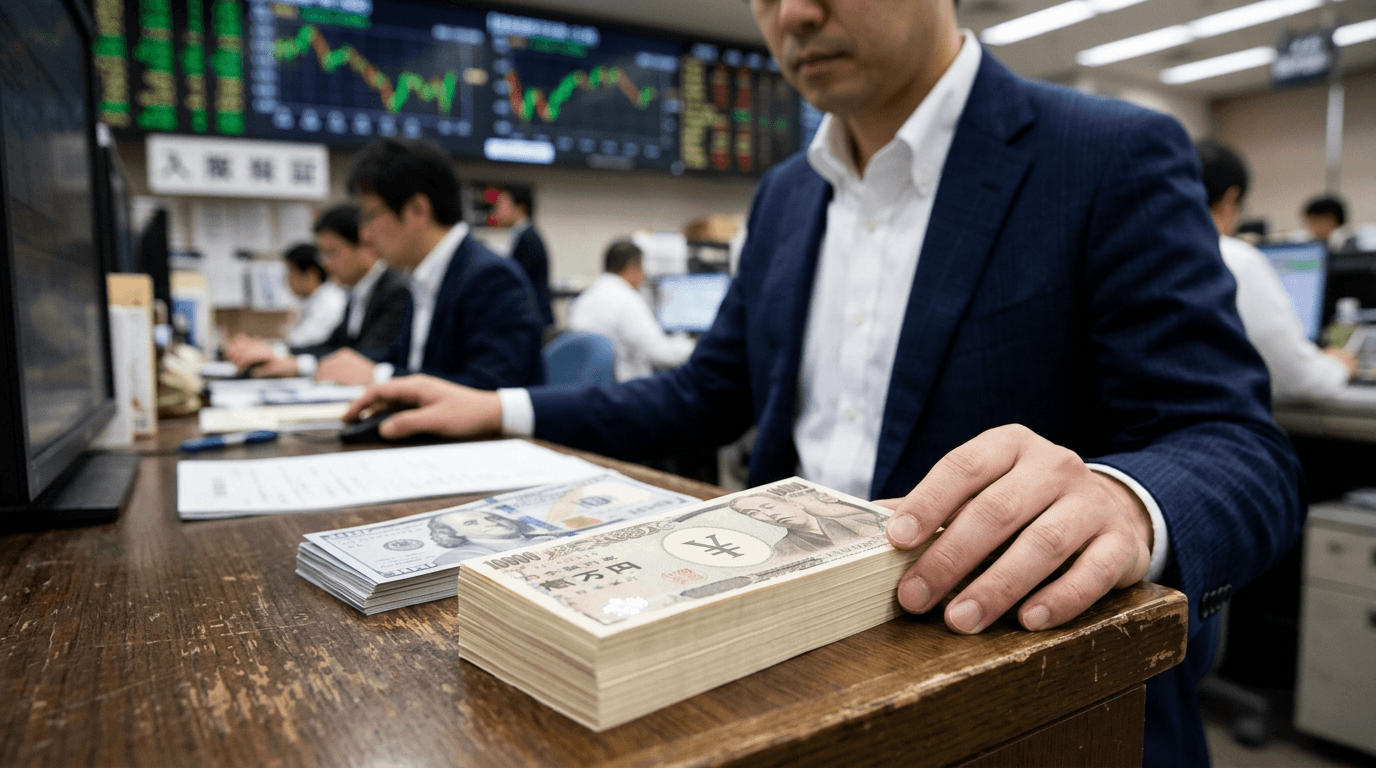
The Japanese yen has attracted significant safe-haven flows in recent trading sessions, with the currency appreciating 0.4% against the US dollar amid mounting geopolitical tensions and broader market uncertainty. This move reflects a fundamental shift in currency market dynamics, where traditional safe-haven considerations are once again taking center stage despite the dollar's historical dominance. For traders navigating the volatile USD/JPY pair, understanding the mechanics behind this yen strength and its implications for the year ahead is crucial for making informed trading decisions.
Understanding Safe-haven Flows In Currency Markets
Safe-haven flows represent one of the most powerful forces in foreign exchange markets, particularly during periods of elevated uncertainty. When investors perceive risks to their portfolios—whether from geopolitical tensions, financial instability, or broader economic concerns—they systematically shift capital into assets perceived as secure. The Japanese yen has long held traditional safe-haven status alongside the Swiss franc, a characteristic rooted in Japan's substantial net foreign asset position and the historical role of the yen as a funding currency in carry trades.
Research indicates that when safe-haven shocks ripple through markets, the yen and Swiss franc typically appreciate more strongly and persistently than the dollar, despite the dollar also experiencing temporary strength. This distinction is critical: while the dollar may spike briefly during panic episodes, it lacks the structural characteristics that make the yen a true safe-haven currency. The current 0.4% yen appreciation reflects this dynamic, with investors repositioning away from carry trade positioning and toward the yen's defensive characteristics.
The Evolving Safe-haven Landscape For The Dollar
A fundamental shift is underway in how markets perceive the dollar's safe-haven value. Research from major financial institutions reveals that the dollar has lost significant safe-haven value compared to 2024, with the currency's correlation to traditional safe-haven indicators declining substantially in recent years. This erosion stems from multiple structural factors: the United States has accumulated a significantly negative net foreign asset position since the Global Financial Crisis, undermining the asset base traditionally associated with safe-haven status.
The implications are profound. During classic safe-haven episodes, the dollar now weakens against genuine safe-haven currencies like the yen and franc, even as other risk assets may decline. This represents a meaningful reversal from the dollar's unchallenged dominance in recent years, forcing traders to recalibrate their understanding of currency dynamics during volatile periods. The current yen appreciation sits within this broader reorientation of market preferences toward true safe-haven characteristics.
USD/JPY OUTLOOK: BALANCING NEAR-TERM SOFTNESS WITH STRUCTURAL RECOVERY
While the yen has captured safe-haven demand recently, major financial institutions maintain a more nuanced view of USD/JPY's trajectory through 2026. MUFG Research forecasts an end-2026 USD/JPY level of 146.00, implying substantial yen appreciation from current levels around 156. The fundamental thesis rests on expectations for additional Federal Reserve rate cuts as labor market weakness extends into 2026, combined with persistent Bank of Japan tightening that should support the yen over time.
However, the near-term picture remains more complicated. State Street analysts expect USD/JPY to consolidate toward the 140-145 range by year-end 2026, but acknowledge that current yen softness may extend into early 2026. This near-term weakness reflects concerns about Japanese fiscal sustainability and skepticism regarding the Bank of Japan's policy commitment. The yen's safe-haven appeal may be constrained as long as questions persist about Tokyo's reflationist policies and their impact on long-end Japanese Government Bond stability.
The Carry Trade Dynamic And Hedging Costs
Understanding the Japanese carry trade remains essential for contextualizing yen movements. For decades, investors have borrowed yen at low rates—currently around 0.75%—to fund higher-yielding investments in US Treasuries yielding 3.5-3.75%. This activity creates structural demand for dollar strength, but it also creates latent vulnerability: when hedging costs for Japanese investors decline, they reduce the need to maintain dollar-denominated investments, opening the door for systematic yen buying.
MUFG's analysis suggests this dynamic will intensify throughout 2026. As US yields decline in line with expected Federal Reserve cuts, hedging costs for Japanese investors' dollar-positioned assets should fall meaningfully. Combined with anticipated Bank of Japan rate hikes during 2026, the structural incentives supporting carry trades will diminish considerably. This technical factor provides a powerful tailwind for yen strength independent of any specific safe-haven shock, suggesting the current 0.4% appreciation is merely the opening chapter in a larger yen recovery story.
Implications For Traders And Portfolio Managers
The convergence of safe-haven demand, declining carry trade incentives, and anticipated interest rate differentials creates a compelling environment for cautious yen bulls. While near-term consolidation and potential renewed weakness cannot be ruled out—particularly until Japanese political uncertainty settles post-election—the structural setup increasingly favors yen appreciation over the medium term.
Traders should monitor Federal Reserve communications closely for signals regarding the pace of rate cuts, as this will heavily influence hedging costs and investor positioning. Similarly, Bank of Japan policy guidance and Japanese government fiscal announcements will remain critical, as concerns about fiscal sustainability continue to create a substantial negative risk premium on the yen that could unwind as 2026 progresses.
The current safe-haven appreciation of the yen represents more than a momentary flight to quality—it signals a fundamental recalibration of how markets value currencies during uncertain times. For participants in the USD/JPY market, recognizing this shift and positioning accordingly could prove decisive over the coming months.