
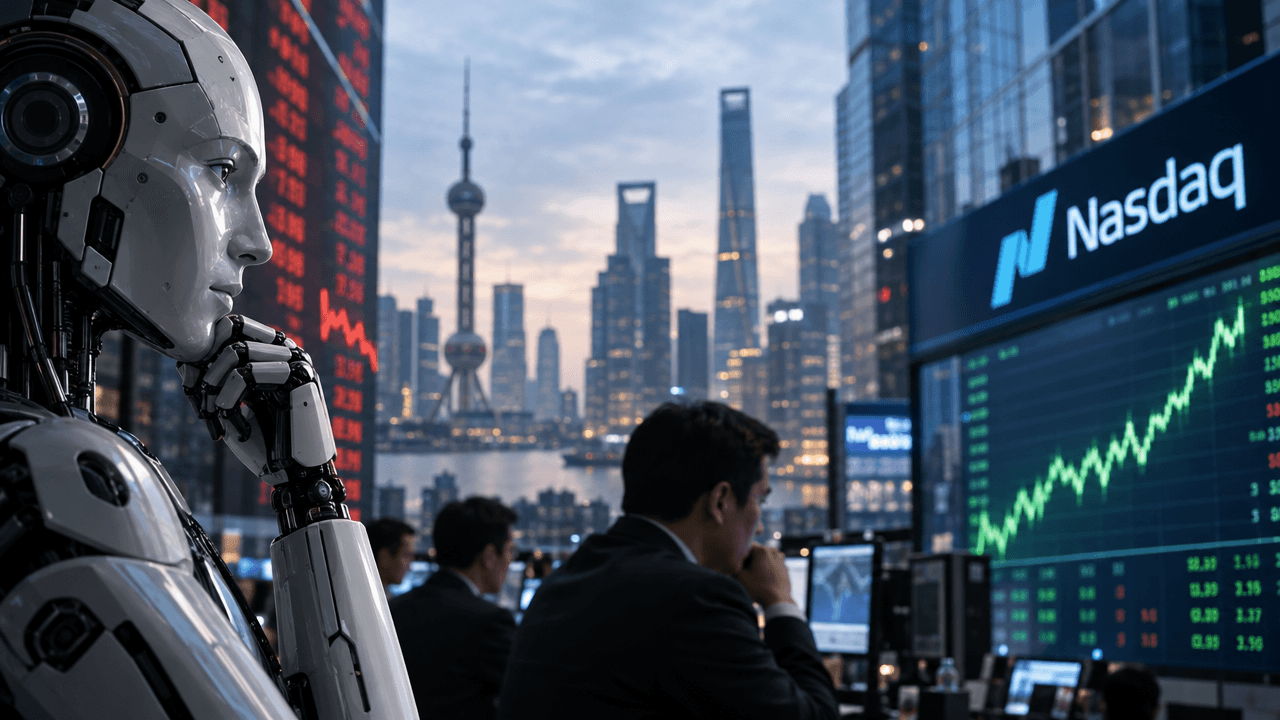
Asian equities started the week under pressure as investors questioned whether the artificial-intelligence boom can justify its enormous funding requirements. Japan’s Nikkei fell about 2%, extending a sharp technology-led decline, while concerns about expensive valuations and rising borrowing costs spread across regional markets. At the same time, U.S. equity futures recovered, with Nasdaq 100 futures gaining roughly 1.3% ahead of a closely watched earnings week. [1][4]
The contrasting moves reveal an important feature of the current market: investors are not abandoning artificial intelligence entirely, but they are becoming more selective about how the boom is financed, how quickly it produces cash flow, and whether current valuations leave enough room for disappointment.
Why Ai Financing Has Become A Market Risk
The development of advanced AI systems requires extraordinary investment. Companies are spending heavily on data centers, specialized chips, energy infrastructure, networking equipment and cloud capacity. Those expenses arrive well before many AI-related products generate dependable profits.
That timing creates a financing problem. Businesses may need to borrow more money or issue additional shares to fund expansion. If interest rates and corporate borrowing costs rise, the cost of building AI infrastructure rises as well. Wider credit spreads can also make refinancing existing debt more expensive.
Investors are increasingly asking whether future AI revenue will be sufficient to repay that capital. One concern is that infrastructure could become outdated before it earns an adequate return, forcing companies to write down the value of equipment and facilities. Analysts have warned that this could reduce book values and weaken investor confidence even if demand for AI remains strong. [1]
The issue is not simply whether AI is useful. It is whether the economic return on each new dollar of investment will exceed the cost of financing that investment. When the answer becomes uncertain, markets often reprice companies long before their reported earnings deteriorate.
Why Asian Equities Felt The Pressure First
Asian markets have significant exposure to the technology supply chain. Japan, South Korea and Taiwan are home to major semiconductor manufacturers, equipment producers and component suppliers. Their equity indexes can therefore react quickly when investors reduce exposure to chipmakers or question the durability of AI-related demand.
Japan’s Nikkei fell approximately 2% on Monday after losing 5.4% during the previous week, according to market coverage. [1] The decline reflected more than one weak session. It showed how quickly crowded trades can unwind when investors move from focusing on long-term growth to examining balance sheets, debt levels and near-term earnings expectations.
The pressure also affected broader Asian sentiment. Even where companies are not directly financing AI infrastructure, their share prices can fall as global funds reduce technology exposure or raise cash. Currency movements, bond yields and regional economic data then add another layer of volatility.
China offered a partial counterweight after economic data exceeded expectations, helping mainland markets limit some losses. However, stronger macroeconomic figures were not enough to eliminate concerns surrounding technology valuations and funding needs. [2]
This distinction matters for traders. A falling market does not necessarily mean that the region’s economic outlook has suddenly collapsed. It may instead reflect a sector rotation away from high-growth technology shares and toward companies with stronger current cash flow, lower leverage or more defensive characteristics.
Why Nasdaq Futures Rebounded
U.S. futures pointed to a more constructive opening after the previous week’s technology selloff. Nasdaq 100 futures rose approximately 1.3%, while S&P 500 futures gained around 0.8% in one market update. [4] The rebound suggests that investors were willing to buy beaten-down shares, at least temporarily, ahead of major corporate earnings releases.
A futures rebound should not be confused with a confirmed trend reversal. Futures prices often respond to short-term positioning, bargain hunting and changes in risk appetite before the cash market opens. They can rise even while the underlying concerns remain unresolved.
The earnings calendar is especially important this week. Results from major technology, semiconductor and cloud companies may provide fresh evidence about AI demand, capital expenditure plans and profitability. Investors will be looking beyond headline revenue growth. They are likely to focus on free cash flow, debt issuance, data-center spending, customer concentration and management guidance.
A company can report strong sales and still disappoint the market if it signals that spending will accelerate faster than revenue. Conversely, a business with moderate growth may be rewarded if it demonstrates disciplined investment and improving margins.
European futures remained weaker, with political uncertainty adding pressure to the region’s markets. [2] That divergence reinforces the idea that Monday’s trading was driven by several forces at once: AI financing concerns, earnings positioning, bond-market conditions and regional political risk.
What Traders Should Watch Next
First, monitor credit markets rather than equity indexes alone. If corporate spreads continue widening, heavily indebted AI infrastructure companies may face greater pressure. A stable or falling equity market accompanied by calm credit conditions would tell a different story from a simultaneous selloff in stocks and corporate bonds.
Second, compare capital expenditure with operating cash flow. Large investment budgets are not automatically negative, but companies need a credible path toward returns. Traders should examine whether management teams are funding expansion from internal cash generation, debt or new equity.
Third, watch market breadth. If only a small group of mega-cap technology shares drives a rebound, the recovery may be fragile. Broader participation from industrials, financials and consumer companies would suggest that confidence is improving beyond the AI trade.
Finally, manage risk around earnings announcements. Futures can move sharply before the opening bell, but earnings releases and guidance frequently produce larger moves after the market closes. Position sizing, predefined exit levels and awareness of overnight gaps are particularly important in simulated trading environments.
The Bigger Market Lesson
The AI investment cycle remains one of the most powerful themes in global markets, but its next phase will be judged by financial discipline rather than excitement alone. Investors want proof that enormous infrastructure spending can translate into durable revenue, sustainable margins and returns above the cost of capital.
Monday’s action offered a balanced message. Asian equities showed that financing concerns can quickly unsettle markets with heavy technology exposure, while the Nasdaq futures rebound demonstrated that demand for leading AI-linked companies has not disappeared. The market is moving from a period of enthusiasm toward a period of verification.
For traders, that means replacing broad assumptions with detailed analysis. The strongest opportunities may come not from buying every dip or avoiding technology altogether, but from identifying which businesses possess the balance-sheet strength, pricing power and cash flow needed to survive a more expensive financing environment.