
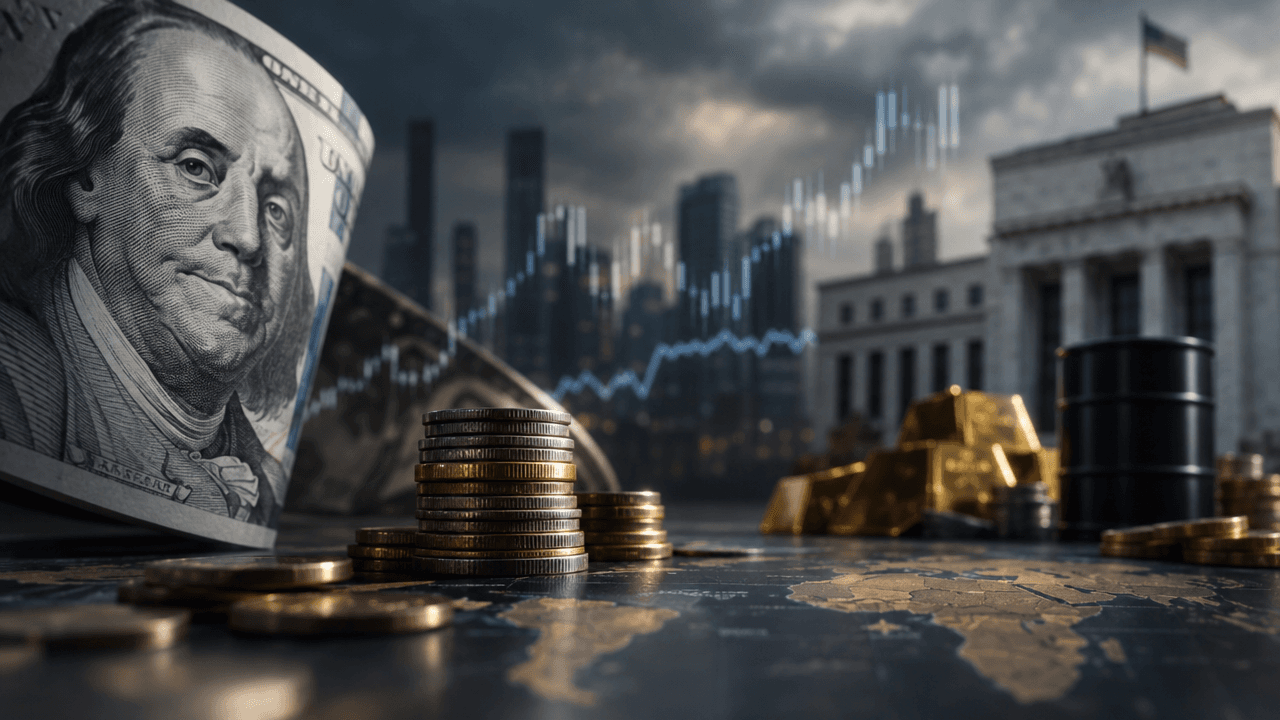
A rise in U.S. interest rates and the dollar can change the investment landscape far beyond American markets. In the latest market snapshot, the U.S. 10-year Treasury yield approached 4.936%, rising 1.48% on the day, while the U.S. Dollar Index advanced 0.36% to 104.035. These moves may appear modest in isolation, but together they represent a meaningful tightening of global financial conditions. [1][2]
WHY U.S. YIELDS MATTER
Treasury yields influence the price of money throughout the global economy. U.S. government bonds are widely treated as the benchmark “risk-free” asset, helping determine borrowing costs for mortgages, corporate debt, emerging-market bonds, private credit and other financial instruments. [7]
When the 10-year yield rises, investors reassess the return they can earn from holding riskier assets. Stocks, corporate bonds and emerging-market securities must offer greater potential returns to compensate for the additional risk. If those assets do not adjust quickly enough, their prices can come under pressure.
Higher yields also affect company valuations. Many growth-oriented businesses are valued according to expected cash flows several years into the future. As bond yields rise, those future earnings are discounted at a higher rate, reducing their present value. This is one reason technology shares, speculative assets and highly leveraged companies can be particularly sensitive to changes in interest rates.
The key question is why yields are rising. An increase driven by stronger economic growth may be relatively constructive, because healthier demand can support corporate earnings. A rise linked to persistent inflation, increased government borrowing or expectations of tighter monetary policy can be more disruptive.
THE DOLLAR’S GLOBAL TRANSMISSION CHANNEL
The dollar’s advance adds another layer of pressure. Because many commodities, loans and international contracts are priced in dollars, a stronger greenback increases costs for businesses and governments outside the United States.
Emerging-market currencies are often the first area to reflect this pressure. As U.S. yields become more attractive, global investors may shift capital toward dollar-denominated assets. That can weaken other currencies, particularly when local economies already face high debt, slowing growth or political uncertainty.
A weaker local currency raises the cost of servicing dollar-denominated debt. It can also increase the price of imported fuel, food, machinery and technology. Central banks in affected countries may then face an uncomfortable choice: raise interest rates to defend their currencies, or tolerate currency weakness and the inflation it may create.
This dynamic explains why dollar appreciation is often considered a tightening of global financial conditions. The World Bank has noted that a stronger dollar can increase risks associated with foreign-currency liabilities and dollar shortages, especially in emerging and frontier markets. [6]
Pressure On Commodities And Risk Assets
A stronger dollar can weigh on commodities because dollar-based prices become more expensive for buyers using other currencies. The effect is not automatic: supply disruptions, geopolitical events and changes in global demand can easily dominate currency movements. Still, a firm dollar creates a headwind for metals, energy products and agricultural goods when other conditions are unchanged.
Commodity-exporting economies may see export revenues pressured if prices decline, while commodity importers can face a different problem. Even if the dollar price of a product remains stable, a weaker local currency can make imports more expensive. The result can be slower growth, higher inflation or both.
Risk assets can also react to the combined impact of yields and the dollar. Higher borrowing costs reduce the appeal of leverage, while currency volatility makes international investments more difficult to manage. Positions built on cheap funding, including carry trades and highly leveraged speculative strategies, may be reduced when the interest-rate gap moves against them.
However, tighter conditions do not guarantee an immediate market selloff. Strong economic growth, robust corporate earnings or improving investor confidence can offset some of the pressure. Recent market analysis has shown that risk assets can remain resilient even while yields and the dollar rise. [5]
What Traders Should Watch
Traders should focus on the direction and persistence of the move rather than reacting to a single session. Important indicators include the U.S. 10-year yield, real yields, the Dollar Index, Treasury curve movements and credit spreads.
A rise in nominal yields accompanied by higher inflation expectations has a different meaning from a rise in real yields caused by tighter financial conditions. Similarly, a dollar rally driven by strong U.S. growth may be less damaging than one caused by fear, liquidity demand or aggressive expectations for monetary tightening.
It is also useful to monitor emerging-market currencies, gold, oil, industrial metals and equity volatility. Weakness across several of these markets would suggest that tighter conditions are spreading. Stable credit markets and resilient equities, by contrast, may indicate that investors are absorbing the adjustment without major stress.
For SimFi traders, this environment offers a valuable risk-management exercise. Reduce unnecessary leverage, define stop levels before entering a position and avoid assuming that a familiar correlation will remain permanent. A portfolio that performs well when yields fall and the dollar weakens may struggle when both move higher.
The Bigger Picture
The latest rise in U.S. yields and the dollar is a reminder that global markets are connected through interest rates, currencies and funding costs. A move in the Treasury market can influence asset prices thousands of miles away, while a stronger dollar can amplify pressure on borrowers and consumers outside the United States.
The most important takeaway is not that every risk asset must decline. Instead, traders should recognize that the market’s hurdle rate has increased. Investments now need stronger fundamentals, more attractive valuations or better risk-adjusted returns to command capital.
In this setting, patience and selectivity matter. Tracking the reasons behind higher yields, measuring dollar strength across currencies and managing exposure to leverage can help traders navigate a market where liquidity is becoming more expensive and global financial conditions are tightening.