
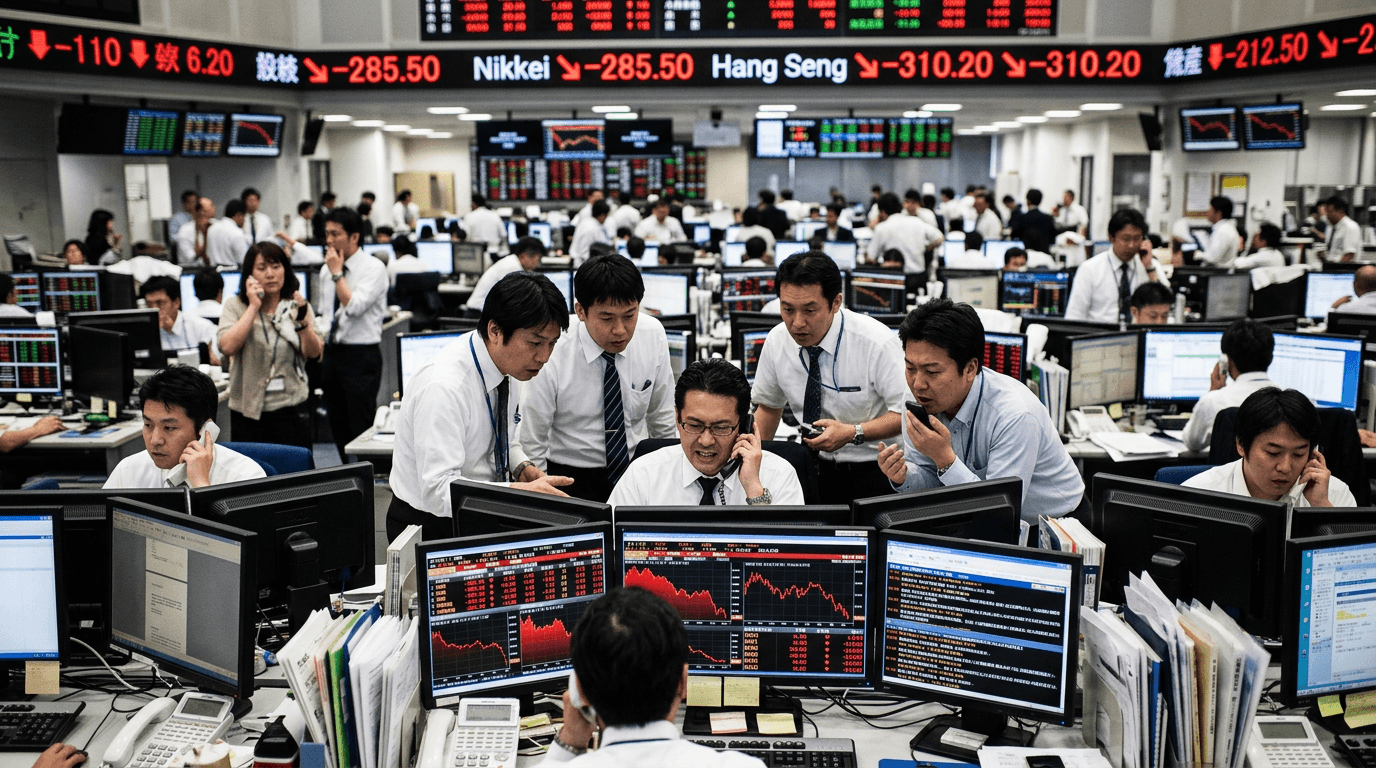
Asian equities slipped on Tuesday, giving back part of a five‑day rally as rising oil prices and fading hopes for an extended U.S.–Iran ceasefire cooled risk appetite across the region[2][8][12]. What started as a localized geopolitical story is now feeding into a broader recalibration of risk, with investors reassessing exposure to equities, FX, commodities, and index futures as the conflict premium in crude builds[2][3][15]. For traders, both in live markets and simulated environments, this is a textbook example of how sentiment can turn quickly when growth, inflation, and geopolitics intersect.
Global Risk Sentiment Cools
After a strong run driven by technology and cyclical names, Asian indices are pulling back from record or near‑record levels as investors take profits and move to the sidelines[9][11][15]. Benchmarks such as the MSCI Asia‑Pacific ex‑Japan index have drifted lower, reflecting a shift from “buy the dip” enthusiasm toward a more cautious stance as war risks in Iran rise[6][11]. Indian equities have joined the risk‑off move, with the Nifty posting its longest losing streak since 2025 as crude stays elevated and hopes of a lasting peace deal fade[8].
Behind the price action is a familiar dynamic: when geopolitical tensions threaten supply chains or energy flows, markets quickly reprice risk, especially after strong rallies[3][9]. Traders who had been leaning into momentum trades are now more focused on capital preservation, volatility management, and hedging, which typically dampens equity demand and boosts interest in safe‑haven assets[3][12]. For SimFi participants, this environment is ideal for practicing how to transition from an offensive, trend‑following stance to a defensive posture when the macro backdrop deteriorates.
Oil Prices Reprice Geopolitical Risk
Crude has moved back into the spotlight as the fragile ceasefire framework between Washington and Tehran shows signs of fraying[2][3][13]. Brent crude futures have climbed above the low‑90s per barrel, with earlier episodes this year pushing prices through the psychologically important $100 threshold as Iran war risk intensified[2][9]. Concerns center on potential disruptions in the Strait of Hormuz, a critical chokepoint for global oil shipments, and on renewed military escalation that could tighten supply further[3][12][15].
Higher oil prices act as both an inflation shock and a tax on energy‑importing economies, which are heavily represented in Asia[2][8]. Corporate margins in transport, manufacturing, and consumer sectors come under pressure, while households face higher fuel and utility bills, reducing disposable income and discretionary spending. Equity investors are therefore not just reacting to headlines but also to anticipated earnings downgrades and slower growth if crude remains elevated[2][8][12].
From a trading perspective, this is a clear reminder that commodity markets do not move in isolation. Energy price spikes ripple through valuation models, sector rotation strategies, and cross‑asset correlations. SimFi platforms can help traders test scenarios such as “Brent at $110 with no ceasefire extension” or “rapid de‑escalation and a $10 drop in crude” to understand how portfolios might respond.
Inflation, Bond Yields And Central Bank Expectations
Rising oil is once again complicating the inflation outlook, just as many investors had hoped for a smoother path toward monetary easing[2][12]. As crude climbs, inflation expectations firm and global bond yields edge higher, with the 30‑year U.S. yield recently touching its highest level since 2007 amid elevated energy prices and war uncertainty[2][12]. This repricing of the rates curve feeds directly back into equity valuations, particularly for long‑duration assets such as growth and technology stocks.
Higher yields raise discount rates in valuation models, which can compress price‑to‑earnings multiples even if earnings remain stable[2][12]. At the same time, renewed inflation worries may prompt central banks to stay cautious about cutting rates or to signal a slower easing trajectory, reducing support for risk assets[2][12]. The net result is a less forgiving environment for stretched valuations and speculative positioning.
For simulated trading, this is an opportunity to practice macro‑linked strategies: adjusting equity exposure based on yield moves, stress‑testing portfolios against rate shocks, and exploring relative value trades between rate‑sensitive sectors (such as utilities and REITs) and more resilient areas (like energy or defensive consumer names). Understanding the link between oil, inflation, and bond yields is essential for building robust playbooks that work across regimes.
Spillover Into Fx, Commodities And Index Futures
The shift in sentiment is not confined to equity cash markets. FX, commodities, and index futures are all reflecting the changing risk landscape[3][12][15]. Historically, episodes of Middle East tension and rising oil have tended to support safe‑haven currencies such as the U.S. dollar and Japanese yen, while pressuring the currencies of large energy importers[3][6]. That pattern appears again as traders hedge geopolitical risk via FX, making currency markets a key transmission channel for sentiment.
In commodities, energy is the focal point, but gold and other perceived havens often benefit when geopolitical risk rises and confidence in ceasefire talks erodes[3][12]. Industrial metals can suffer if growth expectations are revised down, while agricultural commodities may be influenced by higher fuel costs and freight disruptions. Index futures provide a leveraged, liquid way for market participants to express views on regional equity indices, often amplifying intraday moves as risk‑off flows build[3][6][12].
SimFi traders can replicate these cross‑asset dynamics in a risk‑controlled environment, experimenting with strategies such as: - Hedging equity exposure with index futures during geopolitical stress. - Expressing macro views through FX pairs sensitive to oil and risk sentiment. - Building spreads between energy and equity indices to capture relative moves.
By practicing these structures when real markets are volatile, traders gain experience without capital at risk, improving their readiness for future episodes.
Practical Takeaways For Traders And Simfi Users
Several actionable lessons emerge from the current environment:
First, sentiment can turn abruptly after strong rallies when a new shock—such as fading ceasefire hopes—hits markets that are priced for optimism[2][9][11]. Position sizing and risk management should assume that drawdowns can arrive quickly, especially in geopolitically exposed regimes.
Second, energy prices are a critical macro variable. Monitoring crude benchmarks alongside equity indices, bond yields, and FX can help traders anticipate shifts rather than simply react to them[2][8][12]. Building dashboards that track these links is a practical step for both live and simulated trading.
Third, scenario analysis matters. Whether using a SimFi platform or internal models, traders should stress‑test portfolios under different paths for oil, war risk, and central bank policy[3][12][15]. Running “what if” simulations—higher for longer crude, delayed rate cuts, or a surprise peace deal—helps expose hidden vulnerabilities and potential opportunities.
Finally, cross‑asset thinking is essential. Geopolitical shocks rarely stay confined to one market; they propagate via currencies, commodities, yields, and volatility. Traders who can connect these dots are better positioned to manage risk and to find trades that align with their macro view.
Conclusion
The pullback in Asian equities as oil rises and U.S.–Iran ceasefire hopes fade is more than a headline; it is a live case study in how macro, geopolitics, and market structure interact[2][3][8]. Elevated crude is feeding inflation concerns, lifting bond yields, and challenging the trajectory of monetary easing, while risk appetite across equities, FX, commodities, and index futures softens[2][3][12]. For traders and SimFi users, this environment highlights the value of disciplined risk management, scenario‑based thinking, and cross‑asset awareness.
Episodes like this will recur, even if the precise trigger changes. Using simulated markets to rehearse responses—adjusting exposure, hedging intelligently, and searching for asymmetrical opportunities—can turn volatile news into an educational advantage. The goal is not to predict every headline, but to build robust frameworks that remain effective when sentiment shifts and markets move together in response to shocks.