
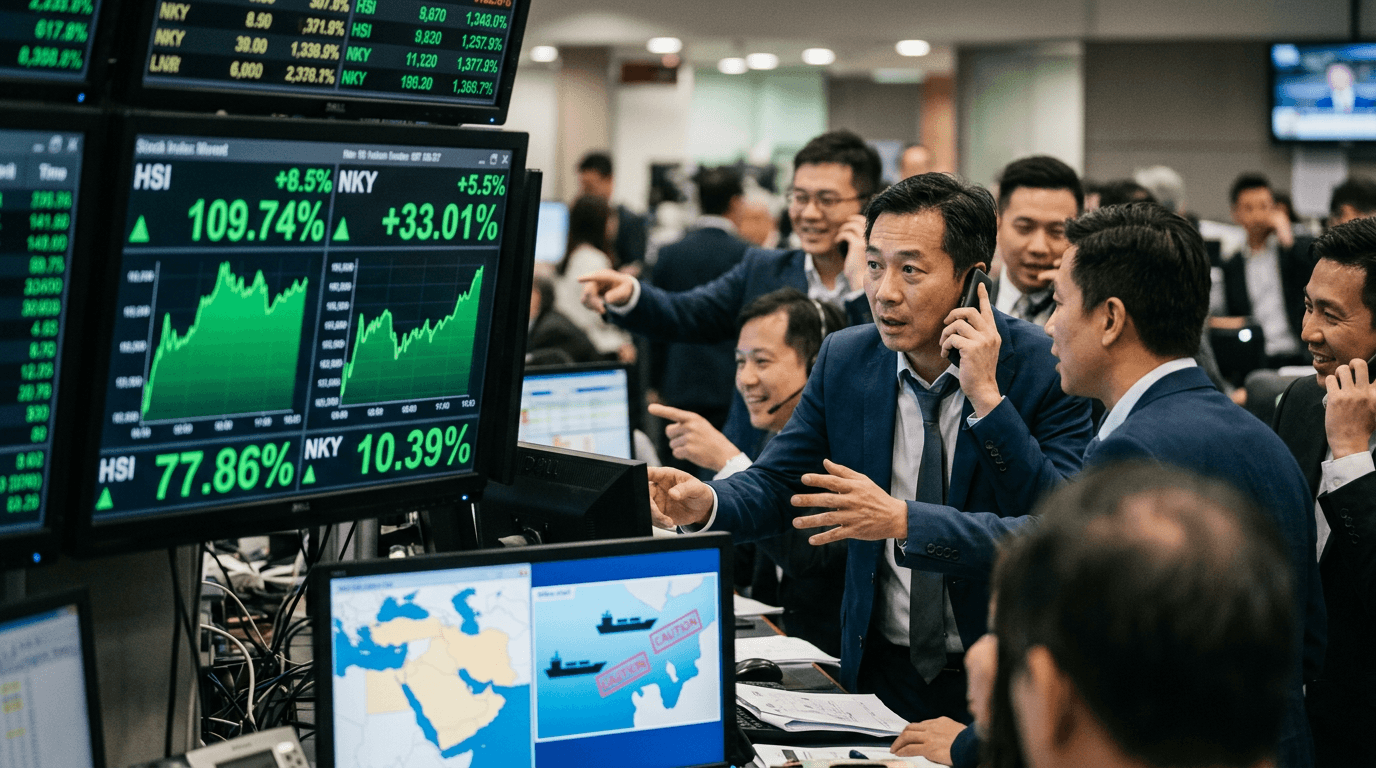
Asian equity markets are showcasing significant resilience amidst growing geopolitical tensions between the U.S. and Iran. Investors remain cautiously optimistic that peace talks could alleviate global economic pressures. Despite ongoing conflicts in the Middle East and the closure of the crucial Strait of Hormuz, stock markets across the Asia-Pacific region have demonstrated solid gains. This suggests that market participants are factoring in a potential resolution to the standoff. This cautious optimism reflects a sophisticated investor approach: recognizing real risks while wagering on diplomatic breakthroughs that could stabilize oil prices and promote economic growth.
Asian Markets Surge Amid Cautious Sentiment
The Asia-Pacific region has staged a notable recovery recently. The MSCI Asia-Pacific index surged 14.5% in April following initial declines due to the conflict. Individual markets across the region have varied but generally positive performances. Japan's Nikkei 225 climbed 1%, while South Korea's KOSPI advanced 1.1%, driven by strength in the technology sector. Singapore's FTSE Straits Times edged up 0.2%, and Hong Kong's Hang Seng gained nearly 1%. Despite broader cautious sentiment, investors are channeling capital into equities, assuming that geopolitical tensions will eventually de-escalate.
The MSCI Asia Pacific Index opened 0.4% higher on recent trading days, following Wall Street's record-setting performance. Traders are betting that a de-escalation of the Middle East conflict will ease oil prices and boost economic growth. Technology stocks have especially provided support across the region, with companies like SK Hynix jumping more than 3% after announcing the production of advanced server modules for next-generation chips. This sector strength indicates that investors are distinguishing short-term geopolitical noise from long-term growth narratives.
Geopolitical Tensions Fuel Diplomatic Hopes
Recent developments have fostered both risks and optimism equally. U.S. forces seized an Iranian-flagged cargo ship in the Gulf of Oman, while President Trump warned of potential strikes on Iranian infrastructure if a deal is not reached. However, these aggressive moves have been tempered by diplomatic progress. The U.S. and Iran are reportedly considering a two-week ceasefire extension to allow more time for peace negotiations, reducing the immediate risk of renewed conflict. Peace talks are expected to resume in Pakistan next week, with Israeli and Lebanese leaders set for ceasefire discussions.
Investors appear to be dismissing fears around Trump's threats, given his history of abrupt policy shifts, which have previously triggered sharp moves across global assets. This pragmatic approach reflects market experience with geopolitical volatility. The current consensus seems to be that diplomatic channels remain open and that cooler heads will likely prevail over the coming weeks.
Oil Prices And Inflation Concerns
Energy prices remain a pivotal factor influencing market dynamics. Brent crude fell to $98.14 a barrel, while U.S. West Texas Intermediate crude settled at $93.15, remaining below the $100 per barrel threshold that has traditionally signaled recessionary concerns. The closure of the Strait of Hormuz continues to influence market dynamics, creating supply uncertainty that has renewed concerns about inflation and economic growth, particularly for Asian economies reliant on oil imports.
Higher energy prices are limiting gains across the region, especially for economies heavily dependent on imported oil. With many Asian nations vulnerable to price swings, the geopolitical risk premium embedded in oil prices directly impacts corporate earnings and consumer purchasing power. A sustainable resolution to Middle East tensions would likely ease this pressure significantly, providing relief to margins and consumer sentiment.
Currency Pressures And Regional Variations
Asian currencies have faced weakness amid geopolitical uncertainty, reflecting risk-off sentiment and capital outflows from emerging markets. South Korea's won remains under pressure near 17-year lows, with the state-run National Pension Service engaging in strategic foreign exchange hedging operations. The Thai baht traded at 32.44 per dollar, while the Philippine peso weakened to 60.104. Malaysian stocks have been relatively resilient, thanks to strong fundamentals and limited energy exposure.
These currency dynamics create a dual impact on Asian markets: while weaker currencies make exports more competitive, they also increase import costs and complicate the earnings scenario for multinational corporations with substantial foreign currency exposure.
Investor Outlook And Key Takeaways
The consensus view among market participants is increasingly constructive, based on the assumption that diplomatic efforts will succeed. Investors are cautiously positioning for a scenario where ceasefire extensions lead to substantive peace negotiations, oil prices stabilize, and risk appetite gradually returns to emerging markets. However, experts caution that significant discrepancies exist between market sentiment and the cautious stance of policymakers regarding potential growth and inflation risks. Analysts emphasize that reopening crucial navigation routes, particularly the Strait of Hormuz, is imperative for sustained economic stability.
For traders and investors monitoring Asian equities, the key takeaway is that markets are currently operating on a base case assumption of diplomatic success. Until that assumption is challenged by concrete geopolitical deterioration, expect continued resilience in Asian equity markets, supported by technology sector strength and the anticipation that peace dividends will eventually materialize.