
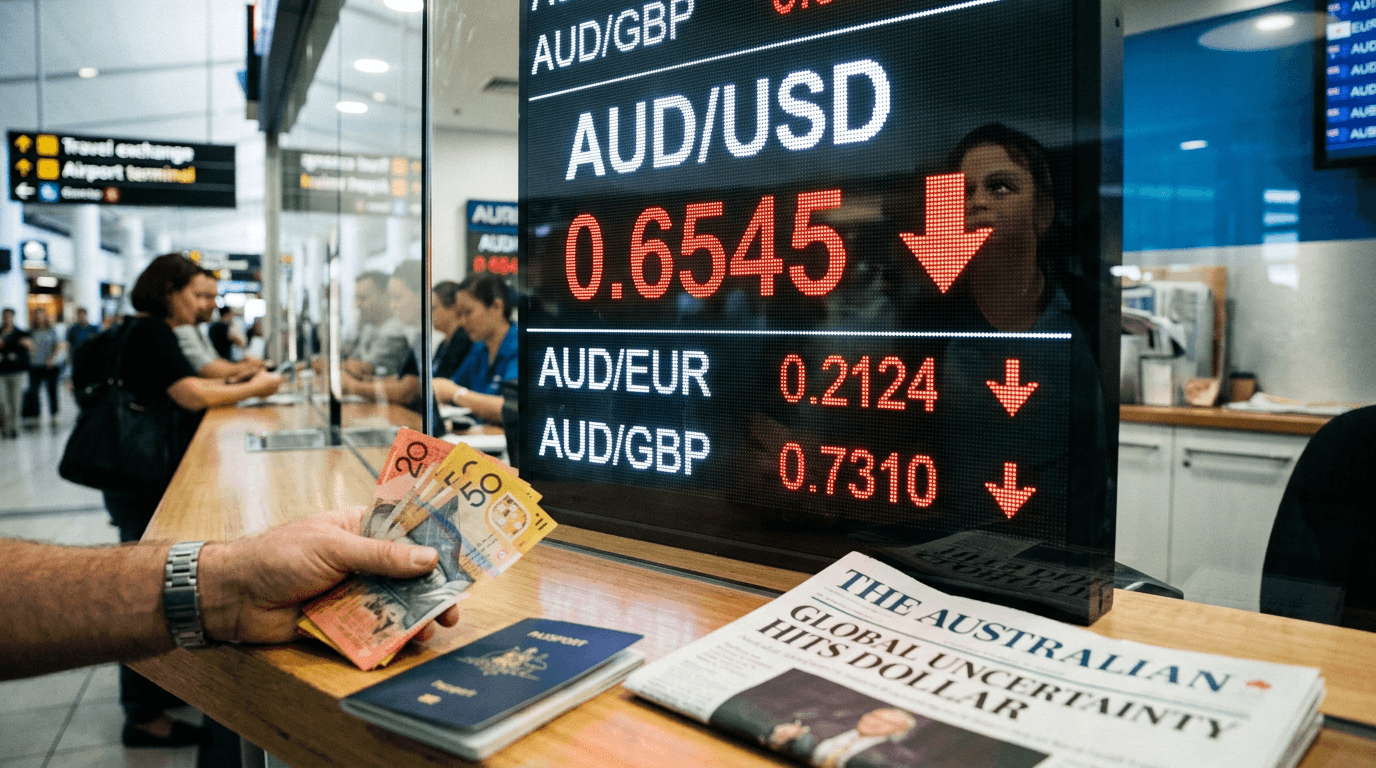
Australian Dollar Plunges To Two-month Lows Amid Us-iran Tensions
Geopolitical uncertainty surrounding US-Iran peace negotiations has sent the Australian dollar tumbling to two-month lows, unsettling global financial markets. On March 24, during the Asian trading session, the AUD/USD pair dipped approximately 0.6% to around 0.6970, eventually plummeting further to 0.6877 by Friday. This sharp selloff underscores a critical truth for currency traders: the Australian dollar is acutely sensitive to shifts in global risk sentiment. When international tensions escalate, the antipodean currency often bears the brunt of investor caution.
The Spark That Ignited The Downturn
The catalyst for this downturn emerged when Iran refuted optimistic statements from President Trump about peace negotiations. Iranian Parliament Speaker Mohammad Bagher Qalibaf explicitly stated, "no negotiations have taken place with the United States," dismissing Trump's claims and accusing the US leader of spreading misinformation to manipulate financial markets. This sudden reversal of expectations triggered a classic risk-off response, favoring safe-haven currencies like the US dollar and exerting pressure on risk-sensitive assets, including the Australian dollar.
Why The Australian Dollar Is Vulnerable To Geopolitical Shocks
Understanding the Australian dollar's dramatic fall requires recognizing its unique characteristics in the foreign exchange market. As a commodity-linked currency, the AUD's value is intrinsically tied to global trade flows and commodity prices. When geopolitical tensions rise, investors typically reduce their exposure to risk assets and shift capital toward safer alternatives. The Australian dollar, classified as a typical risk-sensitive currency, experiences significant selling pressure during periods of heightened international uncertainty.
Australia's economic structure compounds this vulnerability. The nation is heavily leveraged to global trade flows, making it particularly susceptible to disruptions in international stability. When markets enter a risk-averse mode—as they did following Iran's denial of peace talks—investors withdraw from emerging market currencies and commodity-linked assets, redirecting their capital toward defensive positions in the US dollar and other safe-haven currencies.
Domestic Economic Headwinds Amplify The Decline
The Australian dollar's weakness wasn't solely due to external geopolitical factors. Domestic economic data released during this period significantly contributed to the currency's decline. The preliminary S&P Global Purchasing Managers' Index for March revealed a contraction, with the Composite PMI falling to 47.0 from 52.4 in February, well below the 50.0 threshold that signals economic contraction. This sharp deterioration in business activity, primarily driven by weakness in the services sector, further undermined investor confidence in the Australian economy.
The combination of external risk aversion and weak domestic economic indicators created a perfect storm for the Australian dollar. While these forces might independently pressure the currency, their simultaneous occurrence created reinforcing downward momentum that pushed the AUD/USD pair decisively lower against major currencies.
Market Structure And Technical Levels
From a technical perspective, traders and investors monitoring the AUD/USD pair should note several critical support and resistance levels. The key support level is near 0.6900, with potential further downside possibly testing the psychological threshold at 0.6800. These levels represent zones where accumulated buying pressure historically has emerged. Above current levels, resistance is concentrated in the 0.7050-0.7100 range. Understanding these technical boundaries is essential for managing risk and establishing trade positions in an uncertain environment.
Looking Forward: Medium-term Outlook And Trading Implications
The medium to long-term trajectory of the Australian dollar will ultimately depend on developments in the Middle East, the overall outlook for global economic growth, and the performance of commodity prices. If tensions with Iran ease and diplomatic channels successfully reopen, a recovery in risk sentiment would be beneficial for the Australian dollar and likely trigger a rebound. Conversely, if tensions persist or escalate, the currency will continue facing headwinds from both elevated oil prices and persistent safe-haven demand for the US dollar.
For traders and investors, the current environment underscores the importance of closely monitoring US economic data releases and Reserve Bank of Australia policy signals. Market participants should implement appropriate risk management strategies to protect against continued volatility, particularly given the unpredictable nature of geopolitical developments.
The Australian dollar's decline to two-month lows serves as a powerful reminder that currency markets remain fundamentally shaped by global events beyond traditional economic indicators. While immediate pressure stems from US-Iran peace uncertainty, the broader lesson for investors is that commodity-linked currencies like the AUD will continue experiencing significant volatility whenever global risk sentiment shifts. Monitoring diplomatic developments alongside economic data releases will be essential for navigating the foreign exchange markets in the weeks ahead.