
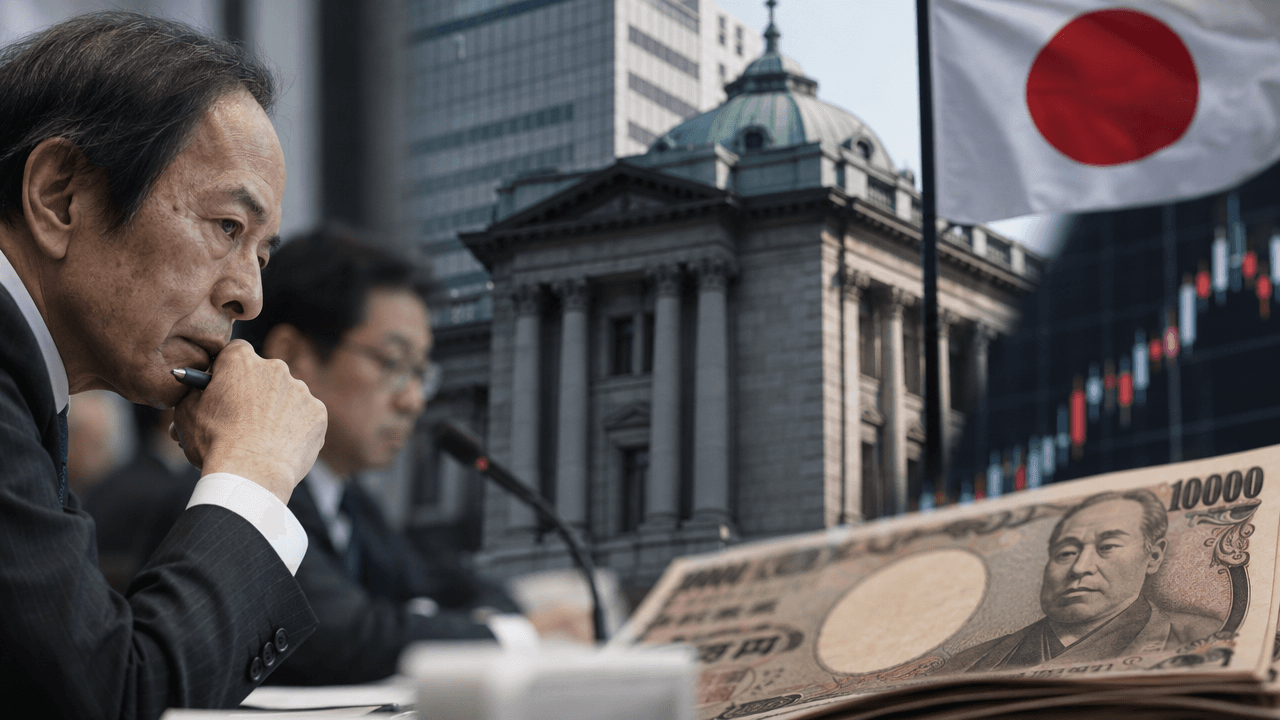
The Bank of Japan’s September meeting minutes have put the yen and the future path of Japanese interest rates back at the center of market attention. While the central bank raised its policy rate to 1.25%, the decision was not unanimous. Two policymakers opposed the increase, raising questions about how quickly the Bank of Japan can continue tightening monetary policy.
The minutes offer more detail than the original policy statement. They show whether officials viewed the September increase as the beginning of a faster normalization cycle or simply another cautious step away from ultra-loose policy. For yen traders, that distinction matters because currency markets respond not only to current interest rates but also to expectations for future policy.
THE SEPTEMBER RATE HIKE AND THE YEN’S INITIAL REACTION
At its September 17–18 meeting, the Bank of Japan lifted its overnight policy rate by 25 basis points, from 1% to 1.25%. The move took rates to their highest level since 1995 and passed by a 7–2 vote. Board members Toichiro Asada and Ayano Sato voted to keep rates unchanged at 1%. [2]
Ordinarily, a rate increase would be expected to support the currency by improving the return available on yen-denominated assets. However, the yen weakened after the decision, with the dollar rising as high as 156.91 yen. The market reaction reflected the cautious nature of the move and the presence of two dovish dissenters. [1]
This is an important lesson for traders: a rate hike is not automatically bullish for a currency. If investors had already priced in the increase, the decision itself may provide little fresh support. If the accompanying guidance suggests that future hikes will be difficult, the currency can weaken even as rates move higher.
What The Minutes Reveal About Policy Direction
The September minutes reportedly showed broad agreement among policymakers that the Bank should continue raising interest rates and reduce the degree of monetary accommodation. Members pointed to underlying inflation approaching the Bank’s 2% objective and financial conditions that remained accommodative. Some officials argued that rates might need to rise more quickly if inflation threatened to overshoot. [7]
That language gives the minutes a more hawkish tone than the split vote initially suggested. It indicates that the disagreement may be focused less on whether policy should eventually tighten and more on the timing and speed of additional increases.
The distinction is crucial. A central bank can have a clear long-term tightening direction while still moving gradually because of uncertainty over wages, consumption, global growth, and inflation. For the yen, a gradual path may limit near-term gains, especially when interest-rate differentials with other major economies remain wide.
The minutes also highlighted risks from a sharp rise in oil prices. A reported 50% increase in oil prices could lift headline inflation while simultaneously pressuring household purchasing power and business costs. That creates a difficult policy choice: raising rates may contain inflation expectations, but doing so too aggressively could weaken economic activity. [7]
Why Policy Dissent Matters For Currency Traders
Asada argued that core inflation was recently below 2% and that the economy could not necessarily be considered strong enough to absorb another rate increase. Sato similarly judged that economic and price developments had not accelerated substantially compared with earlier conditions. Both preferred to maintain the policy rate at 1%. [4]
Their objections initially weighed on the yen because they suggested that additional hikes could face resistance within the policy board. Markets often treat dissent as a signal about the central bank’s reaction function. If inflation rises, will officials respond quickly, or will they wait for clearer evidence that growth and wages can support tighter policy?
The picture changed somewhat at the Bank’s October meeting. The policy rate remained at 1.25%, but the vote was 8–1, with Hajime Takata dissenting in favor of raising rates to 1.5%. The absence of a fresh dovish dissent reduced one potential source of yen weakness and showed that the internal debate was evolving. [5]
Still, traders should avoid treating any single vote as a permanent shift. Committee members can change their positions as inflation, wages, consumption, and global energy prices develop.
How Traders Can Read The Yen Outlook
The most important signal in the minutes is whether officials describe further tightening as likely, conditional, or distant. Language suggesting that the policy rate should move closer to a neutral level “relatively soon” would reinforce expectations for another increase, potentially supporting the yen. [7]
By contrast, repeated references to weak consumption, below-target core inflation, or uncertainty surrounding energy prices could encourage traders to delay expectations for the next hike. In that environment, the yen may remain vulnerable, particularly against currencies issued by central banks that are still offering higher yields or clearer forward guidance.
Traders should monitor USD/JPY around key technical levels, but technical analysis should be combined with event risk. The minutes may produce an initial move that later reverses if markets reassess the details. Position sizing, defined risk, and awareness of liquidity conditions are especially important when central bank communication is being released.
The Bank of Japan’s recent decision to hold rates at 1.25% in October, while allowing a hawkish dissent, means attention is likely to remain focused on the possibility of a December move. [13] However, expectations can change quickly if inflation data, wage figures, or oil prices surprise.
Conclusion
The September minutes show that the Bank of Japan’s tightening cycle is not necessarily losing direction, but it is being shaped by a demanding internal debate. Some policymakers appear ready to continue normalizing rates, while others remain concerned that inflation is not yet supported by sufficiently strong economic conditions.
For the yen, the key question is therefore not simply whether the Bank of Japan has raised rates. It is whether officials can build a stronger consensus around additional increases. A clearer commitment to further tightening could provide the yen with renewed support, while cautious guidance and continued dissent may keep the currency under pressure.
For traders and investors, the practical takeaway is to focus on the policy path rather than the headline decision. The pace of future hikes, the balance of votes, and the Bank’s assessment of inflation and growth will determine whether Japan’s latest move becomes a durable source of yen strength or another temporary boost overshadowed by policy uncertainty.