
1. Output ONLY the article content in PLAIN TEXT format 2. NO preamble, introduction, or meta-commentary 3. Start directly with the first paragraph 4. Use ALL CAPS for section headings on their own line 5. Separate paragraphs with blank lines 6. Include 3-5 main sections with clear takeaways 7. Make it engaging and educational 8. At the END, provide TITLE, EXCERPT, and NEWSIMPACTSCORE on separate lines 9. Article content comes FIRST, metadata at the END 10. About 800 words 11. Plain text format - no markdown, no HTML
From the search results, I can see: - Bitcoin broke $80,000 recently (May 4, 2026 based on the search results) - This is the first time since January 2026 - Driven by multiple factors: CLARITY Act progress, US-Iran tensions, ETF inflows, spot buying, institutional demand - Technical breakout with short squeeze - $303-630 million in liquidations - Key resistance zones around $82K-$85K, potential $100K target - Shift from leveraged trading to long-term capital participation
Let me structure this as a blog post
1. Opening paragraph - immediate, compelling 2. Section on what happened (the $80k break) 3. Section on the drivers (geopolitical, regulatory, technical) 4. Section on market structure and capital flow 5. Section on what's next / key levels to watch 6. Conclusion with takeaways
I need to cite the search results appropriately using [1], [2], etc.
Let me write this as plain text, no markdown.
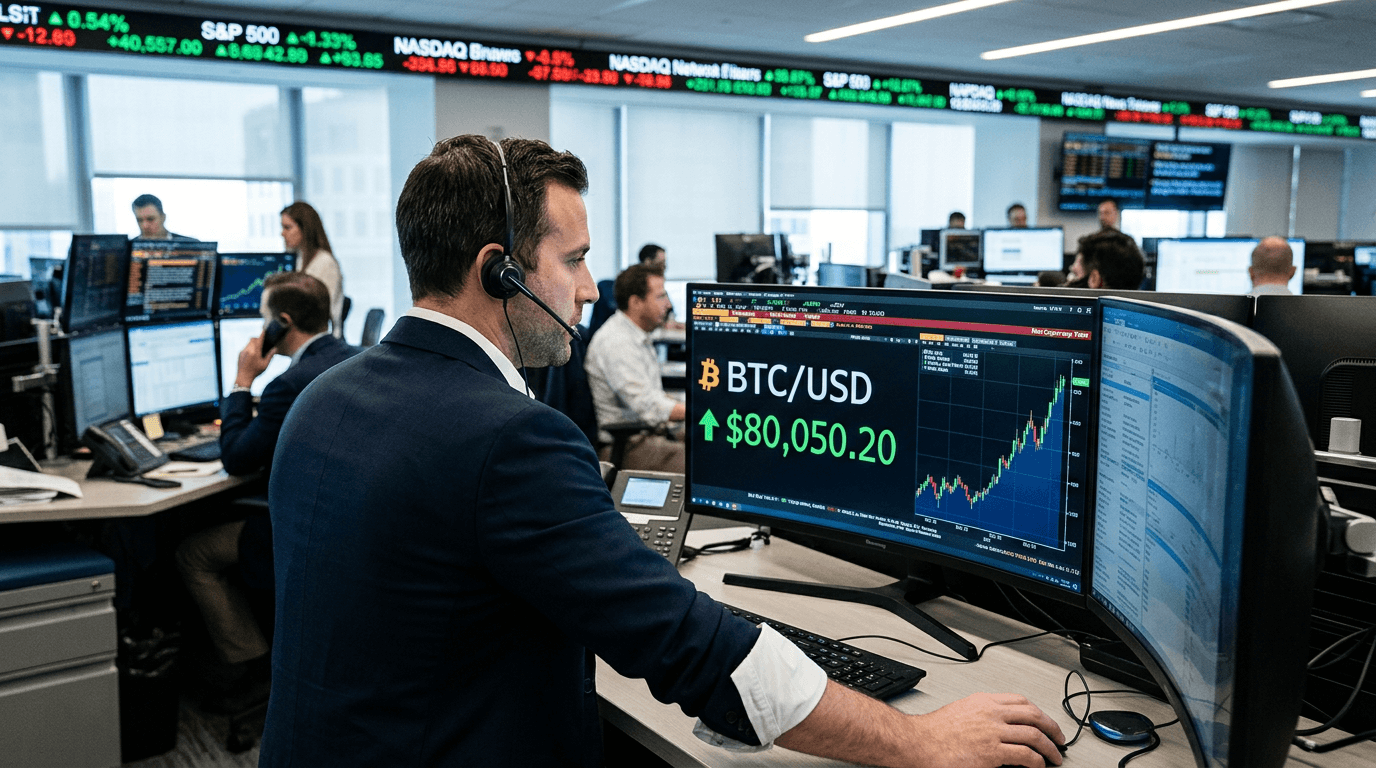
Bitcoin has reclaimed its $80,000 level for the first time since January, marking a significant technical milestone that signals a potentially broader shift in market dynamics and investor sentiment.[1][2][3] The surge represents far more than a simple price recovery—it reflects the convergence of geopolitical developments, regulatory progress, and a fundamental change in how institutional capital is participating in cryptocurrency markets.
THE BREAKTHROUGH: BITCOIN'S $80K RECLAMATION
On Monday morning, Bitcoin crossed above the $80,000 threshold, jumping 2.6% over 24 hours to reach an intraday high of $80,450.[2] This breakout carries particular significance because it marks the first time the world's largest cryptocurrency has sustained this level in nearly three months. The price action wasn't random market exuberance—instead, analysts identified a technical short squeeze as the immediate catalyst, with strong resistance that had capped Bitcoin's price action over previous weeks finally giving way to buyer momentum.[2]
What makes this breakout noteworthy is the underlying conviction behind it. Over $303 million in leveraged shorts were liquidated in a single 24-hour period, while simultaneous spot Bitcoin ETF inflows hit $630 million in one day.[5] This combination of margin liquidations and institutional ETF demand creates a powerful narrative about the type of capital now driving Bitcoin higher.
The Drivers: Geopolitical Tension Meets Regulatory Clarity
Multiple catalysts converged to create the conditions for this breakout. The immediate trigger involved geopolitical developments, specifically U.S.-Iran tensions and related military posturing. Investors historically view geopolitical risk as a factor that increases demand for non-correlated assets like Bitcoin, which operates outside traditional financial systems.[2]
However, the most significant driver may be regulatory in nature. The CLARITY Act, a bill designed to create a comprehensive regulatory framework for cryptocurrency, has gained substantial momentum after lawmakers reached a compromise on a major sticking point involving stablecoin yield treatment.[1] The legislation passed the House in July 2025 but had stalled in the Senate. With the compromise reached, prospects for the bill have brightened considerably—one source indicated the CLARITY Act hit 64% passage odds on Polymarket following the stablecoin resolution.[6]
Bitcoin's rally in response to regulatory progress is particularly meaningful because it demonstrates that investors view clear regulatory frameworks as net positive for the asset class. Instead of fearing regulation, markets are pricing in the stability and institutional adoption that could follow from legitimate oversight structures.
The Capital Shift: From Trading To Participation
Perhaps the most revealing aspect of Bitcoin's $80,000 breakout is how it reflects a fundamental restructuring of capital flows in cryptocurrency markets. Historical Bitcoin rallies were often driven by leverage-fueled short-term trading. This breakout appears different—it's being driven by what analysts describe as a shift from emotion-driven momentum to fund-driven dynamics.[3]
The evidence is compelling. During the breakout above $80,000, spot Cumulative Volume Delta (CVD) surged by nearly 200%, indicating that active spot buying—not leveraged positioning or short covering—was driving the move.[3] This distinction matters because it suggests more permanent capital entering the Bitcoin ecosystem, not temporary speculation.
Additionally, on-chain data reveals that "strong-hand" accumulation (purchases by long-term holders) surged 69% during the recent drawdown period, demonstrating that sophisticated investors were loading positions while markets were declining.[6] Notably, this accumulation occurred even as Michael Saylor's Strategy, one of the largest institutional Bitcoin buyers, took a deliberate pause in purchases—confirming that bullish momentum is coming from a broader base of support rather than depending on a single narrative.[1]
Global stock markets performing well and rising risk appetite have also contributed to improved conditions for institutional participation in digital assets.[3] The regulatory environment improvement makes it safer for traditional finance institutions to allocate capital to cryptocurrency in meaningful size.
The Technical Picture: What Comes Next
Traders and analysts are now focused on the next critical resistance zone between $82,000 and $85,000.[5] Bitcoin's ability to hold above the $78,300 support level—which flipped from resistance—will be crucial for confirming the sustainability of this breakout.[4]
The question many market participants are asking is whether this breakout has genuine legs or represents another near-term fakeout. Bitcoin's momentum is pressing higher, with some analysts suggesting the $100,000 level could be within reach if the current bullish structure remains intact.[7] However, there remains significant overhead resistance, including a notable concentration of call options sitting at $80,000 that could create selling pressure from options hedging activity.[1]
The key technical levels to watch are $81,000 for initial breakout confirmation, $82,000-$85,000 as the next major resistance zone, and ultimately $90,000-$100,000 as potential longer-term targets if momentum sustains.
Takeaway: A Market In Transition
Bitcoin's breakout to $80,000 marks more than a price recovery—it signals a market undergoing structural transformation. The combination of regulatory progress, geopolitical risk premium, and institutional participation through ETFs and spot purchases suggests this cycle operates on different mechanics than previous rallies. For traders and investors, the opportunity lies not in short-term volatility around key levels, but in recognizing that more stable, long-term capital participation may be reshaping Bitcoin's value dynamics for years to come.