
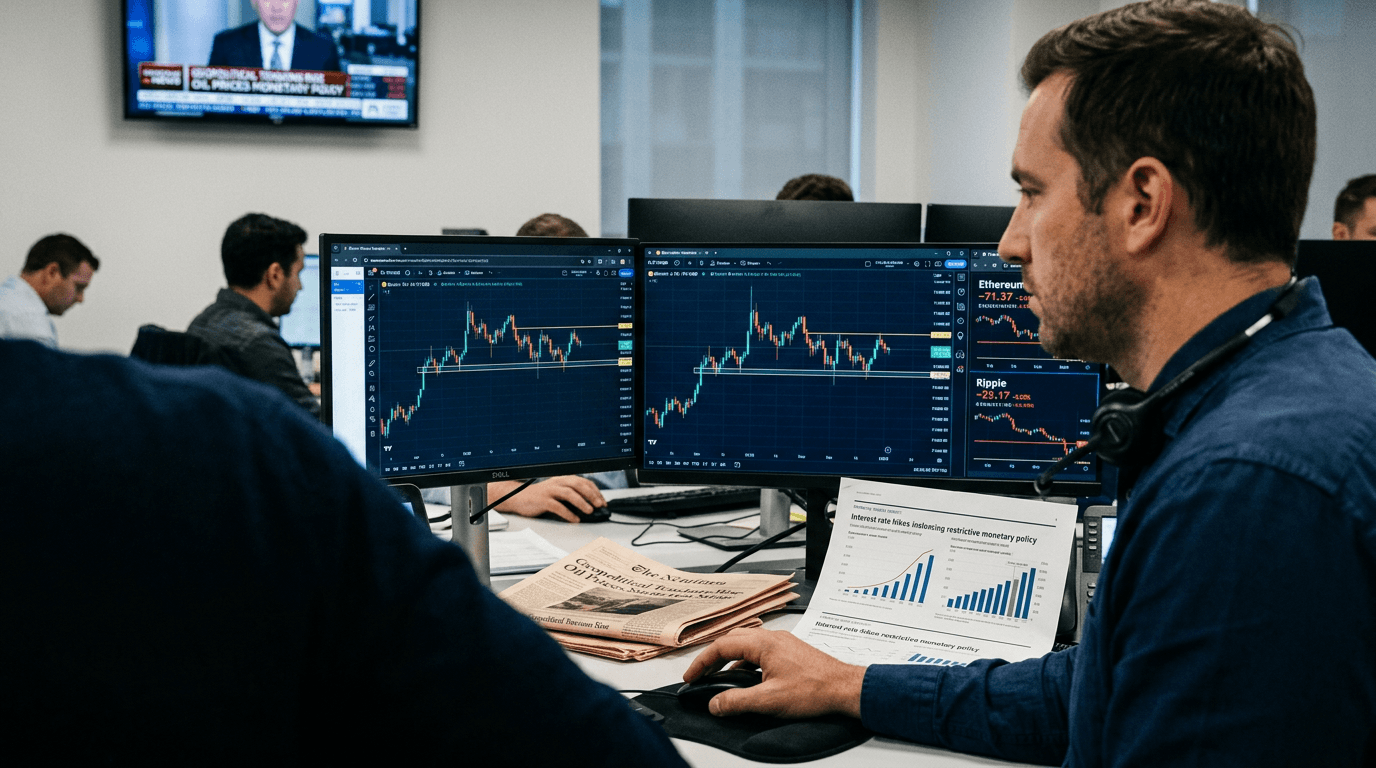
Cryptocurrency Markets Under Siege: Navigating the US-Iran Conflict's Impact
As the US-Iran conflict carries into spring 2026, the cryptocurrency markets of Bitcoin, Ethereum, and Ripple find themselves in a precarious situation, defined by a risk-averse climate and growing uncertainty. Bitcoin clings to the $71,000 mark, yet remains susceptible to further drops, while Ethereum battles to maintain its crucial $2,000 support, and Ripple consolidates post-pullbacks. Traders stand at a crossroads, with each policy and military development posing the threat of rapid market shifts. Understanding the intricate forces at play is vital for investors aiming to mitigate risk and spot recovery opportunities.
The Shadow of Geopolitical Uncertainty
The ongoing tensions between the US and Iran have profoundly altered investor behavior across all asset classes, with cryptocurrencies particularly vulnerable to this risk-averse environment. On February 28, following joint US-Israeli military actions against Iran, Bitcoin fell 6.4%, Ethereum dropped 8%, and Ripple plummeted 9%, showcasing the swift impact geopolitical shocks can have, overpowering technical factors and sentiment indicators. The pattern of fleeting optimism followed by renewed conflict concerns dominates the market narrative, eroding confidence and triggering systematic capital flight from risk assets.
President Trump's steadfast rhetoric about continuing military operations until strategic goals are met has intensified the fundamental uncertainty surrounding the conflict's duration and scope. Although the administration extended negotiations by 10 days, setting an April 6 deadline for potential ceasefire talks, Pentagon reports hinting at the deployment of up to 10,000 additional ground troops to the Middle East have negated any temporary relief from de-escalation headlines. This oscillation between hope and renewed concern has left traders hesitant to establish firm positions in digital assets.
The Crude Oil and Monetary Policy Nexus
A pivotal element linking geopolitical developments to cryptocurrency valuations is crude oil pricing dynamics. As Middle East tensions rise, oil prices have surged past $92 per barrel for West Texas Intermediate crude, with Brent crude hovering around $106. These heightened energy costs have ignited inflationary pressures that central banks view with increasing caution, prompting them to delay rate cuts and restrict liquidity injections that typically support risk assets like Bitcoin and Ethereum.
This relationship is crucial for understanding cryptocurrency performance during geopolitical crises. Digital assets have historically thrived under accommodative monetary policy and increased liquidity availability. Conversely, when central banks respond to inflation pressures by maintaining higher rates and limiting capital flows, cryptocurrencies face significant headwinds. The potential disruption to the Strait of Hormuz, a vital global oil shipping channel, further exacerbates supply chain anxieties and sustains elevated energy prices that could persist if hostilities continue.
Navigating Technical Levels and Risk Management
Technically, the three major cryptocurrencies are trading dangerously close to critical support levels that historically attract significant buying interest. Bitcoin's immediate support rests around $67,800, with a breach potentially leading to further declines toward the $65,800 to $65,000 range. Should losses deepen, the mid-March base around $63,000 serves as the final major support before descending to levels last seen in early 2025.
For Bitcoin to counter current bearish sentiment, it must reclaim and close above the 50-day exponential moving average at $72,081 and ultimately refocus on the March high of $76,000. Ethereum has pulled back toward the $2,000 to $2,100 support zone after declining from its March peak, with the 50-day, 100-day, and 200-day EMAs all positioned above $2,193, maintaining a persistent downtrend. A sustained break below $2,000 would pave the way toward the $1,930 to $1,980 range, where prior congestion and dip-buying activity were previously observed.
Ripple has similarly descended to $1.33, with each major cryptocurrency experiencing double-digit percentage drops over recent weeks. These technical levels represent critical battlegrounds where traders must decide whether to accumulate or continue reducing exposure.
Institutional Behavior and Market Sentiment
The extreme fear currently gripping markets is reflected in both sentiment indicators and institutional capital flows. The Crypto Fear and Greed Index reading of just 10 demonstrates widespread risk-averse attitudes across both traditional and digital assets. This fear has translated into measurable capital flight, with Ethereum spot ETFs experiencing six consecutive days of outflows, totaling approximately $8.5 million in a single day—a stark reversal from the cumulative $11.66 billion in inflows these products have historically attracted.
Institutional investors have systematically retreated from digital assets back to perceived safe-haven investments like US Treasury bonds and the US dollar, a rotation that typically signals capitulation in risk markets.
Looking Forward: Key Catalysts for Traders
The April 6 deadline for US-Iran negotiations represents the next significant catalyst for market direction. A genuine breakthrough in de-escalation could prompt a swift risk-on shift and help cryptocurrencies recover losses, while ongoing escalation would likely prolong the risk-off environment and test lower support levels. Should tensions ease and oil prices retreat, market analysts suggest that safe-haven flows could rotate back into traditional risk assets, ultimately benefiting cryptocurrencies. Lower oil prices would alleviate inflation pressures, potentially increasing the likelihood of more accommodative monetary policy.
Traders should maintain defensive positions near identified support levels while closely monitoring geopolitical developments, recognizing that even modest de-escalation signals could trigger sharp reversals in cryptocurrency valuations.
NEWSIMPACTSCORE: 7