
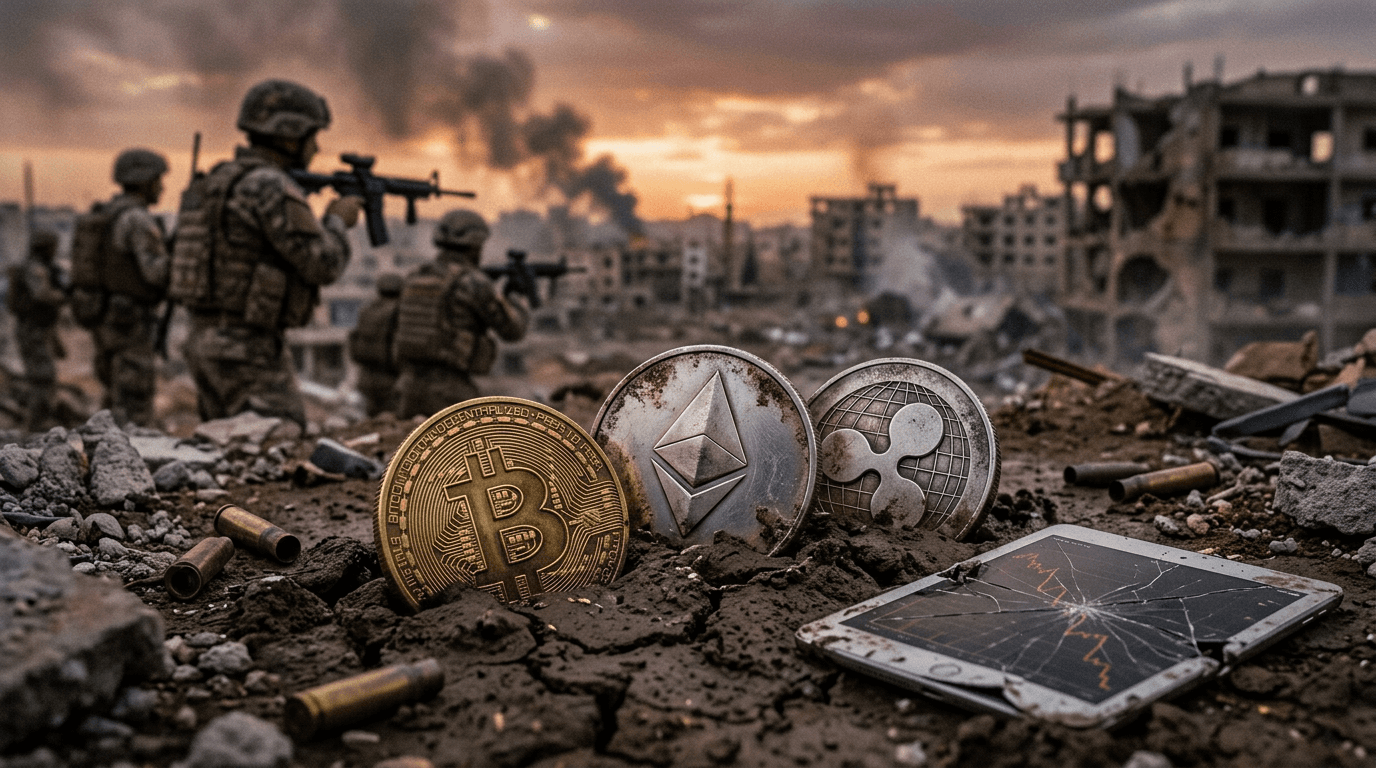
Crypto Markets at a Crossroads: Ceasefire Brings Temporary Relief Amid Lingering US-Iran Tensions
The cryptocurrency market finds itself at a pivotal juncture as Bitcoin, Ethereum, and XRP confront ongoing uncertainties stemming from an extended US-Iran conflict, despite a recent two-week ceasefire. The temporary halt in military operations has offered some relief to risk assets, but traders and investors remain wary of the fragile recovery. Bitcoin hovers near $71,000, Ethereum struggles around $2,000, and XRP consolidates after a 2% decline, leaving the market vulnerable to further downside if tensions flare post-ceasefire.
Over the past six weeks, geopolitical events have swiftly reshaped cryptocurrency dynamics. On February 28, intensified US-Israeli military operations against Iran saw Bitcoin plunge 6.4%, Ethereum drop 8%, and XRP fall by 9% within hours. These sharp declines underscored a broader market reality: geopolitical risks trigger unified sell-offs across asset classes, prompting simultaneous de-risking. The psychological impact went beyond price action, as risk appetite evaporated across traditional markets alongside crypto, with US stock index futures falling over 1% that day.
The Oil-Crypto Connection and Monetary Policy
The significance of geopolitical tensions to cryptocurrency can be traced to the interplay between oil prices and monetary policy. The Strait of Hormuz, accounting for over 20% of global oil supply, became a conflict flashpoint. Before the ceasefire on April 7, WTI crude oil neared $115 per barrel amid blockade fears. Rising oil prices affect inflation expectations, influencing central bank decisions. As energy costs rise, central banks face pressure to delay rate cuts and limit liquidity injections—the conditions that typically support risk assets like cryptocurrencies.
This dynamic poses a paradox for crypto investors. Analysts, including BitMex co-founder Arthur Hayes, highlight that Middle Eastern conflicts historically coincide with relaxed Federal Reserve monetary policy, yet the immediate effects are negative. The conflict's uncertain duration and scope complicate traders' efforts to establish confident positions. Until clear indications of rate cuts or liquidity injections emerge, caution remains prudent.
Current Technical Landscape and Key Support Levels
Bitcoin's position at $71,000 marks a critical technical battleground for bulls and bears. The $65,729 support level is crucial for short-term traders. A breach could trigger accelerated selling, potentially driving prices to $62,510 and testing the psychological $60,000 barrier. The concern isn't just price levels but the lack of strong recovery attempts. Muted buying interest across Bitcoin, Ethereum, and XRP suggests caution until geopolitical clarity emerges.
Ethereum's struggle to breach the $2,149 resistance reveals hesitancy among buyers at higher prices. The pullback toward $1,967, with $1,747 as the next critical benchmark, indicates a lack of market conviction. Sustained moves below $1,747 signal heightened downside risk. XRP faces similar challenges, testing a falling wedge pattern's lower boundary at weekly support near $1.35. A decisive break could accelerate losses and pressure the $1.30 support zone.
The Two-Week Ceasefire: Temporary Relief or False Dawn?
The April 7 ceasefire provided immediate relief, with Bitcoin jumping 2.2% to $71,416 within the hour and Ethereum gaining 1.8%. Brokered through Pakistan's diplomatic intervention, the agreement halted planned escalation and secured safe passage through the Strait of Hormuz. Crucially, the ceasefire is temporary, limited to two weeks, with negotiations based on Iran's 10-point proposal.
This timeline poses a dilemma for traders. Should they position for potential de-escalation and longer-term relief, or prepare for renewed tension if negotiations falter? The market's muted recovery suggests investors are hedging bets rather than committing to a direction.
Trading Strategies for Uncertainty
In this uncertain environment, tactical approaches are warranted. Short-term traders should maintain stops at critical support levels, ready to exit if key zones breach. Position traders might accumulate near support levels, betting that eventual monetary policy easing will support cryptocurrencies. Conservative investors should await clearer signals of de-escalation or negotiation breakdowns before increasing exposure.
The path forward hinges on developments beyond the crypto market. Oil price dynamics, central bank signals, and diplomatic progress factor into the equation. The next two weeks are pivotal in determining whether the ceasefire leads to lasting de-escalation or a mere pause before renewed tensions reshape market sentiment.
Title: Bitcoin, Ethereum, and XRP Remain Vulnerable Amid US-Iran Ceasefire Uncertainty
Excerpt: Despite a two-week ceasefire, crypto markets stay cautious as geopolitical tensions and oil dynamics continue pressuring risk assets. Key support levels remain critical for traders.