
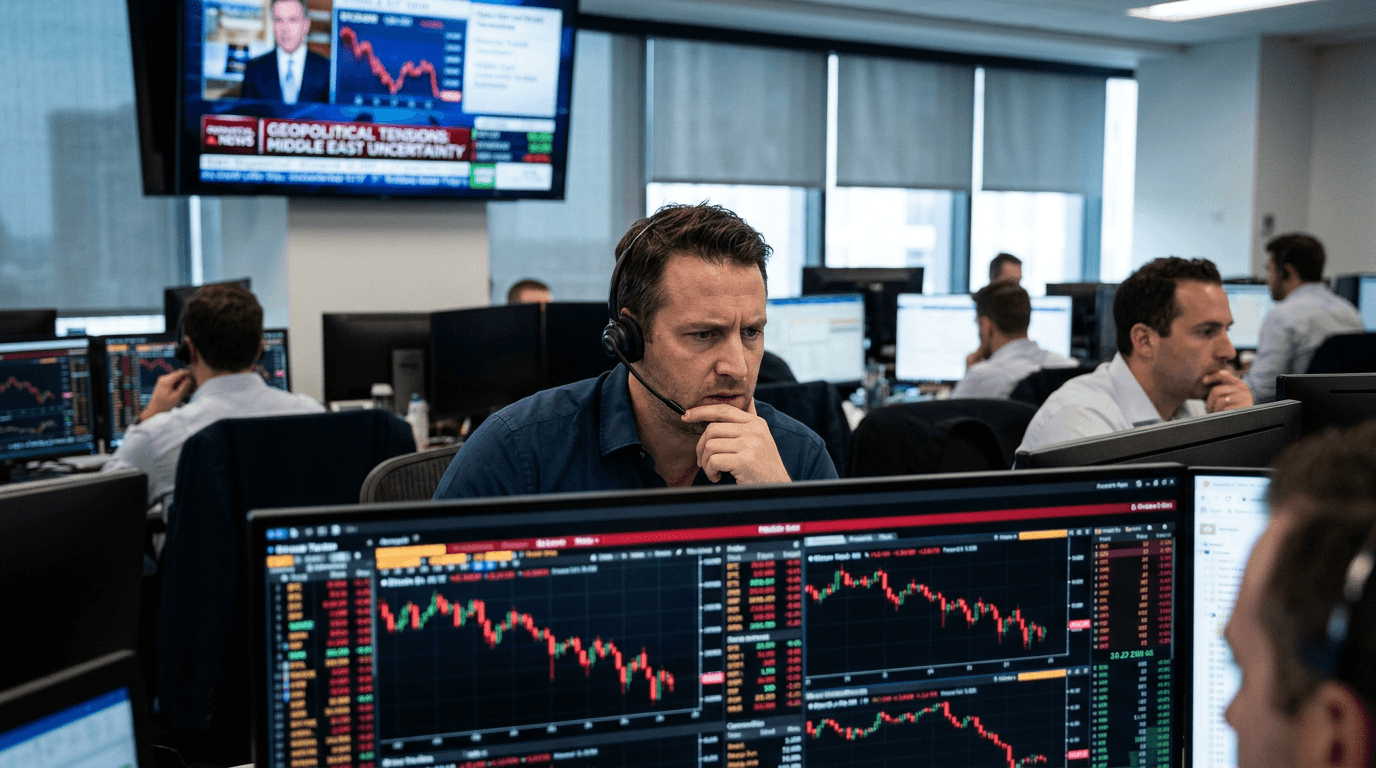
The cryptocurrency market faces mounting pressure as Bitcoin, Ethereum, and Ripple hover near critical support levels while the US-Iran conflict continues to dominate investor sentiment and reshape risk assessment across digital asset portfolios. What began as regional geopolitical tension has evolved into a sustained risk-off environment that challenges traditional technical analysis and forces traders to reconsider their fundamental assumptions about cryptocurrency valuations in times of extended global uncertainty.
The current market dynamics reveal a stark reality: external geopolitical shocks now carry more weight than conventional trading indicators. On February 28, following intensified US-Israeli military actions, Bitcoin plunged 6.4%, Ethereum slumped 8%, and Ripple tumbled 9 percent. These sharp declines demonstrated that cryptocurrency markets remain vulnerable to sudden shifts in global risk sentiment, regardless of what the charts might suggest. Each subsequent development in the conflict has triggered immediate repricing across all three major digital assets, with safe-haven flows rotating away from riskier investments toward traditional hedges like government bonds and commodities.
Critical Technical Levels Under Siege
Bitcoin is currently struggling to maintain its footing above the $71,000 level, a price point that carries both psychological and technical significance for the broader market. A sustained break below this threshold could accelerate selling pressure toward the $55,000 support zone, according to technical analysts monitoring the situation. The magnitude of potential downside represents a considerable risk for traders who positioned for higher prices before the conflict intensified.
Ethereum's situation mirrors Bitcoin's precarious condition. The digital asset has retreated toward the $2,000 to $2,100 support zone after declining from earlier peaks. A sustained break below $2,000 would clear the path toward the $1,930 to $1,980 range, where previous congestion and buying activity provided relief in past market cycles. This stacked support structure suggests that Ethereum retains some defensive characteristics, but each level breakdown would extend losses further.
Ripple faces comparable pressure at lower levels, having descended to $1.33 after experiencing double-digit percentage declines in recent weeks alongside Bitcoin and Ethereum. The consistency of weakness across all three major cryptocurrencies underscores the systematic nature of current selling pressure, driven primarily by macroeconomic and geopolitical factors rather than asset-specific concerns.
Understanding The Safe-haven Flow Dynamic
The relationship between crude oil prices and cryptocurrency valuations has become impossible to ignore in this environment. With West Texas Intermediate crude surpassing $92 per barrel and Brent hovering around $106, energy markets are pricing in genuine supply disruption risks. Rising oil prices feed through to inflation expectations, which in turn influences central bank monetary policy decisions. This transmission mechanism creates a direct link between Middle Eastern conflict escalation and cryptocurrency market sentiment.
Safe-haven flows represent the most powerful force currently reshaping portfolio allocations. Institutional investors and sophisticated traders are rotating capital away from risk assets like cryptocurrencies toward traditional hedges. Government bonds offer yield with perceived safety, while precious metals like gold provide inflation protection. In this environment, cryptocurrencies struggle to attract buying interest despite their historical positioning as alternative stores of value.
The Optimism-disappointment Cycle
Market participants have observed a repeating pattern throughout this conflict: temporary ceasefire announcements trigger sharp reversals in cryptocurrency prices as traders price in de-escalation scenarios. Bitcoin briefly broke above $78,000 following recent ceasefire extension announcements, demonstrating the market's desperate hunger for positive geopolitical developments. However, this optimism has repeatedly proven fragile when new military developments reignite tensions.
This cycle creates significant trading challenges. Traders face a dilemma between maintaining defensive positioning and risking missed rallies if tensions ease more substantially. The current environment penalizes overconfidence in either direction, favoring traders who remain flexible and responsive to headline developments rather than committed to rigid technical positions.
Implications For Crypto Traders And Investors
Understanding the intersection of geopolitical uncertainty, technical support levels, and market psychology has become essential for anyone navigating this period. Several key takeaways emerge for portfolio managers and active traders:
First, technical support levels matter less than usual when geopolitical shocks dominate price action. Chart patterns provide limited guidance when headlines trigger 6-9 percent daily moves regardless of technical positioning.
Second, diversification across asset classes has proven its value. Portfolios holding government bonds and precious metals alongside cryptocurrencies have demonstrated more resilience than cryptocurrency-only allocations.
Third, central bank communication regarding monetary policy provides an important secondary driver of crypto prices. If tensions ease meaningfully, central banks may pursue more accommodative policies, which would benefit cryptocurrencies over time.
Looking Forward
The path forward depends heavily on whether tensions ease and ceasefire agreements hold. Lower oil prices would ease inflation pressures, potentially increasing the likelihood of accommodative monetary policy from central banks. If this scenario materializes, safe-haven flows could rotate back into risk assets, benefiting cryptocurrencies. Conversely, any escalation would likely prolong the risk-off environment and test the lower support levels that many traders now monitor closely.
The cryptocurrency market remains resilient at critical support levels, but conviction requires belief that geopolitical risks will subside in coming weeks.