
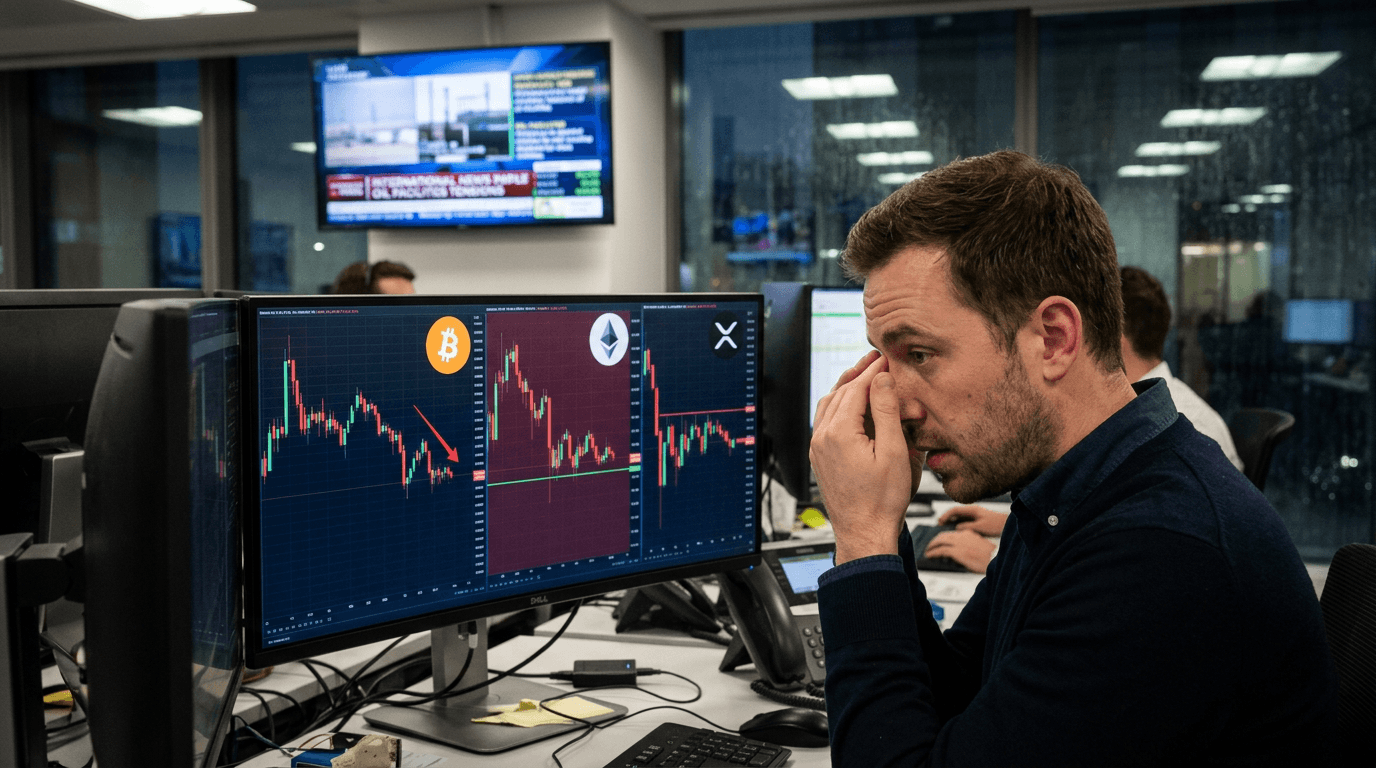
The cryptocurrency market is at a significant turning point as Bitcoin, Ethereum, and XRP face mounting pressure from escalating geopolitical conflicts while consolidating near key support levels. Over the past week, these major digital assets have seen a pullback of around 2% from recent highs, indicating a shift from risk-on to risk-off trading strategies among institutional investors. It is crucial for traders to understand the technical positioning of these assets and the factors driving current market sentiment to effectively navigate this period of heightened global uncertainty.
Current Market Conditions And Geopolitical Tensions
Bitcoin is currently trading around $71,000, Ethereum has stabilized near $2,100, and XRP is positioned at approximately $1.42, all under significant strain from rising geopolitical tensions and shifting investor sentiment. The ongoing US-Iran conflict, now entering its fourth week, has reshaped the broader market landscape. This prolonged geopolitical tension has prompted a shift from speculative trading to risk mitigation strategies, leading to capital outflows from digital assets into traditional safe havens.
The macroeconomic environment has deteriorated, with a stronger dollar, widening Treasury spreads, and the VIX volatility index approaching 25. These indicators suggest a challenging climate for risk assets dependent on abundant liquidity and speculative interest. Inflation expectations have also adjusted, with investors reducing expectations for Federal Reserve rate cuts and anticipating potential rate hikes. This combination of geopolitical uncertainty and evolving monetary policy expectations creates a difficult backdrop for assets that benefit from loose financial conditions. Rising oil prices, currency fluctuations, and widening credit spreads are additional factors prompting institutional investors to reduce cryptocurrency exposure.
Bitcoin's Technical Outlook And Support Levels
Bitcoin's current position near $71,000 marks a critical technical crossroad for this leading cryptocurrency. The asset faces multiple layers of support and resistance that traders should closely monitor. Despite recent choppy price action, the range between $50,000 and $78,000 represents potential outcomes based on technical developments and how the broader geopolitical situation unfolds in the coming weeks.
The primary concern for Bitcoin traders is the risk of sharper declines if key support levels are breached. Proper position sizing is essential given the wide volatility bands currently in play. Traders should understand that while institutional accumulation near support levels suggests confidence in Bitcoin's valuation, the geopolitical context could lead to rapid sell-offs if technical supports are decisively broken. Capital outflows from digital investment products add pressure to price discovery mechanisms, creating conditions where relatively small selling volumes can trigger cascading liquidations in leveraged positions.
Ethereum's Consolidation And Recovery Potential
Ethereum has rebounded from near $1,808 to regain its footing above the crucial $2,100 support level, a psychological and technical threshold. This recovery is significant as Ethereum has traded within the $2,100 to $2,800 range throughout much of 2024, making it a critical holding level for long-term traders invested in the broader Ethereum ecosystem.
The key technical question for Ethereum traders is whether the asset can maintain this support and potentially move towards the $2,800 resistance level. A breach below the February 2 candle low would confirm a bear flag pattern, potentially accelerating declines towards the $1,270 to $1,351 support range. Ethereum's ability to hold above $2,100 in the coming sessions will provide important signals about whether institutional buyers remain engaged or if selling pressure continues to mount. Mixed ETF flows, with reports of net outflows of $18.6 million on certain trading days, add to the uncertainty around near-term directional bias.
Xrp's Stable Consolidation And Support Structure
In contrast to Bitcoin and Ethereum, which face more dramatic breakdown scenarios, XRP seems to be consolidating more methodically around $1.42, offering a relatively stable technical picture for traders seeking lower-volatility opportunities. The asset maintains a neutral stance amid the broader risk-off environment affecting cryptocurrency markets, with technical indicators revealing a balance between buyers and sellers.
Initial support for XRP ranges between $1.38 and $1.40, determined by weekly reaction lows. A decline below this zone would uncover the next support near $1.34, followed by a more substantial level at $1.30. This structured support arrangement provides multiple defensive levels for traders managing downside risk. Moving averages converge around $1.49, forming an initial resistance zone for recovery attempts. The RSI hovers around 49, with the MACD slightly above its signal line but close to zero, indicating consolidation rather than directional conviction.
Practical Risk Management Strategies
The current environment necessitates disciplined risk management and a clear understanding of key technical levels. Conservative traders should wait for confirmation above resistance levels before entering bullish positions, while aggressive traders might consider measured entries near identified support zones with appropriate stop losses placed at clearly defined technical breaks.
Position sizing is crucial given current volatility. Traders managing cryptocurrency exposure during geopolitical uncertainty should consider reducing position sizes compared to normal market conditions. Additionally, monitoring developments in the Middle East should be part of any comprehensive risk framework, as each new headline appears capable of triggering rapid sentiment shifts and liquidation cascades in leveraged markets. The key takeaway is that while underlying cryptocurrency fundamentals may remain intact, short-term price action will likely remain highly reactive to external geopolitical developments until tensions ease and risk appetite returns to financial markets.
---