
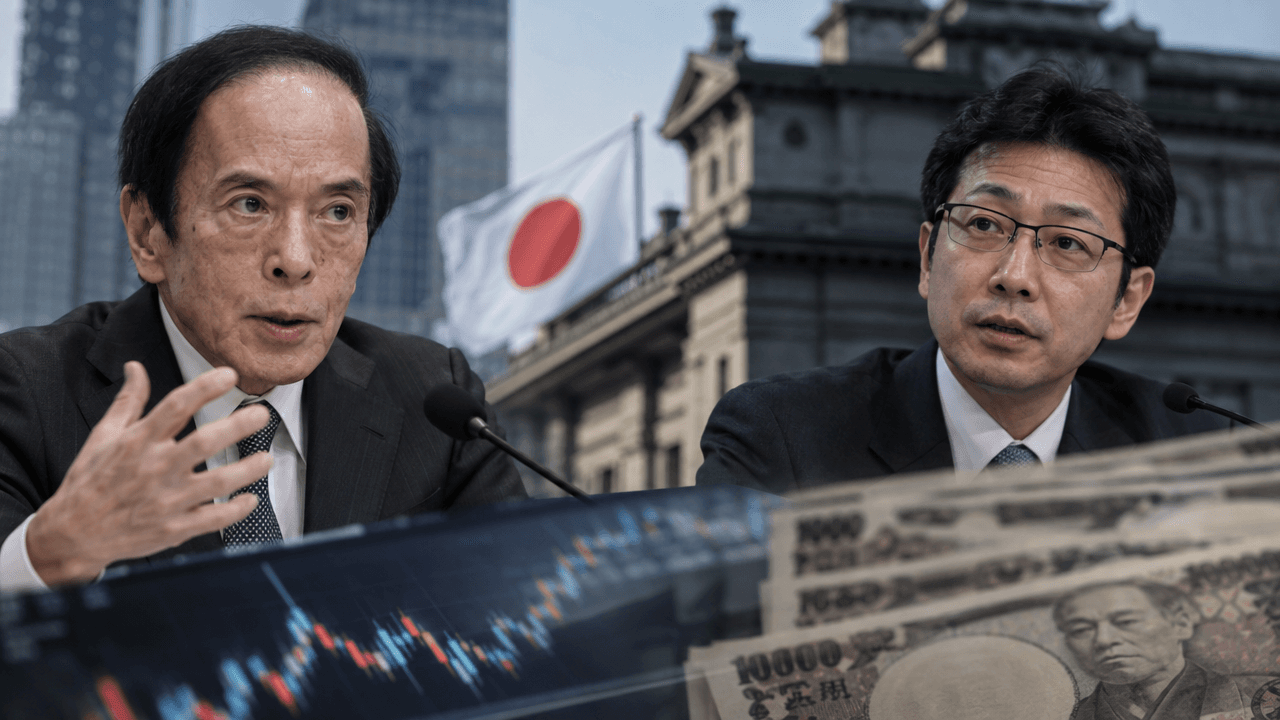
Foreign exchange traders may be focused on the usual mix of global risk sentiment and U.S. yields, but this week the real driver for yen markets is the Bank of Japan’s messaging on the next step for rates.[2][3][13] Governor Kazuo Ueda’s latest speech and recent comments from Deputy Governor Shinichi Uchida on artificial intelligence have put the policy path back at the center of every yen trade idea.[1][2][6][15] With speculation building around a possible October rate hike, even small shifts in tone can ripple quickly through USD/JPY and broader yen crosses.[2][3][13]
Boj Signals Back In The Spotlight
The Bank of Japan raised its policy rate to 1.25% at its September meeting and is widely expected to hike again before the end of the year.[2][5] That move marked another step away from the ultra-easy stance that had kept Japanese yields anchored and the yen structurally weak for years.[2][3] Governor Ueda has stressed that economic and price developments are broadly tracking the bank’s baseline scenario, with the economy recovering moderately and long-term inflation expectations edging higher.[3][4]
In his latest remarks, Ueda underscored that financial conditions remain accommodative even after September’s hike, and that the BOJ will continue to raise borrowing costs in line with economic activity, prices and financial conditions.[3][4][13] He framed the challenge as anchoring underlying inflation around the 2% target while avoiding an overshoot that could damage the economy.[3][12] For yen traders, this combination of gradual tightening and vigilance on inflation sets up a classic “hawkish vs. dovish” interpretation game around every BOJ communication.[3][4][13]
How Policy Guidance Drives Yen Flows
In practice, yen price action tends to be driven less by the actual level of Japanese rates and more by changes in expectations for where those rates are heading relative to the rest of the world. When the BOJ hints at faster tightening or a higher terminal rate, traders anticipate narrower yield differentials with the U.S. and Europe, which can support the yen. Conversely, any suggestion of caution or a slower pace is read as a signal that carry trades funded in yen may remain attractive.
This is why forward guidance and speeches can move markets even when no immediate policy decision is on the table. Subtle changes in phrases about inflation risks, the strength of the recovery or “accommodative” conditions can shift implied paths for Japanese yields. Traders who are comfortable reading central bank language often get an early edge, adjusting positions before the broader market reacts.
For E8 Markets users operating in a simulated environment, this period is a useful case study in how qualitative central bank signals translate into quantitative moves in FX rates. By building scenarios around hawkish and dovish readings of BOJ speeches, traders can see how different narratives affect yen volatility and risk-reward profiles without putting real capital at risk.
Ai, Inflation And The Neutral Rate
What makes the current episode particularly interesting is Uchida’s focus on artificial intelligence as a macro driver rather than just a tech story.[1][2][6] He recently described AI as a “big positive demand shock” that is lifting economic activity, pushing up prices and contributing to higher long-term interest rates.[1][2][6][10] In the BOJ’s assessment, robust AI-related demand is one factor that could push underlying inflation above the 2% target, potentially necessitating further monetary tightening.[1][9][11][14]
Uchida also highlighted potential supply-side effects, arguing that AI could raise productivity and encourage capital accumulation, ultimately affecting the neutral rate of interest—the level at which policy neither stimulates nor restrains the economy.[2][6][7][10] If AI raises that neutral rate, central banks may need to keep policy rates higher than investors previously assumed to keep inflation in check without unnecessarily slowing growth.[7][11] For yen traders, this means that BOJ tightening might not be a short-lived normalization but part of a longer structural adjustment.
These comments have drawn attention because they tie a secular theme—the AI boom—to near-term policy decisions.[1][2][6] By suggesting that AI-driven demand is already easing financial conditions and lifting long-term yields, Uchida has effectively broadened the set of forces that can keep upward pressure on Japanese rates.[1][10][15] Markets are now weighing how much of this AI-related impulse the BOJ will incorporate into its October policy narrative and beyond.[2][3][13]
Practical Takeaways For Yen Traders
With BOJ signals so central to current yen trading, there are several practical steps that discretionary and systematic traders alike can take:
1. Track the BOJ communication calendar and key venues. Major speeches from Ueda and Uchida often coincide with policy inflection points or updates to the bank’s baseline scenario, creating event risk for yen positions.[2][3][15]
2. Focus on language around inflation risks and the 2% target. References to anchoring inflation, overshoot risks, or the balance of risks can tilt expectations toward either a more aggressive or more cautious path of hikes.[3][12][13]
3. Pay attention to discussion of AI, productivity and the neutral rate. As AI becomes a “major focus” in BOJ meetings, commentary on its impact can shift views on where Japanese rates will ultimately settle.[2][7][15]
4. Combine qualitative signals with quantitative indicators. Moves in Japanese government bond yields, interest-rate futures and cross-currency basis can confirm whether markets are internalizing a more hawkish or dovish message from the BOJ.[1][3][4]
On a SimFi platform, these takeaways can be turned into structured trading exercises: for example, building conditional strategies that change exposure to USD/JPY depending on whether BOJ messaging is interpreted as hawkish or dovish, and back-testing performance across different speech dates.
Conclusion: Staying Nimble Around Boj Communication
The immediate question for markets is whether Ueda’s emphasis on anchoring inflation and Uchida’s warning about AI-driven price pressures translate into a back-to-back rate hike in October or a more cautious pause with a hawkish bias.[2][3][13] Even without a definitive signal, the BOJ has clearly moved into a phase where it intends to keep adjusting the policy rate as the economy and prices evolve, and where structural forces like AI play a growing role in that calculus.[1][2][6][13]
For yen traders, the lesson is straightforward: central bank signals remain paramount, and the most tradable information may now lie in how the BOJ talks about future inflation drivers rather than in any single data release.[3][4][15] By staying disciplined around event risk, building clear scenarios for BOJ communication, and using simulated environments to refine strategies, traders can better navigate the shifting landscape of Japanese monetary policy and its impact on the yen.