
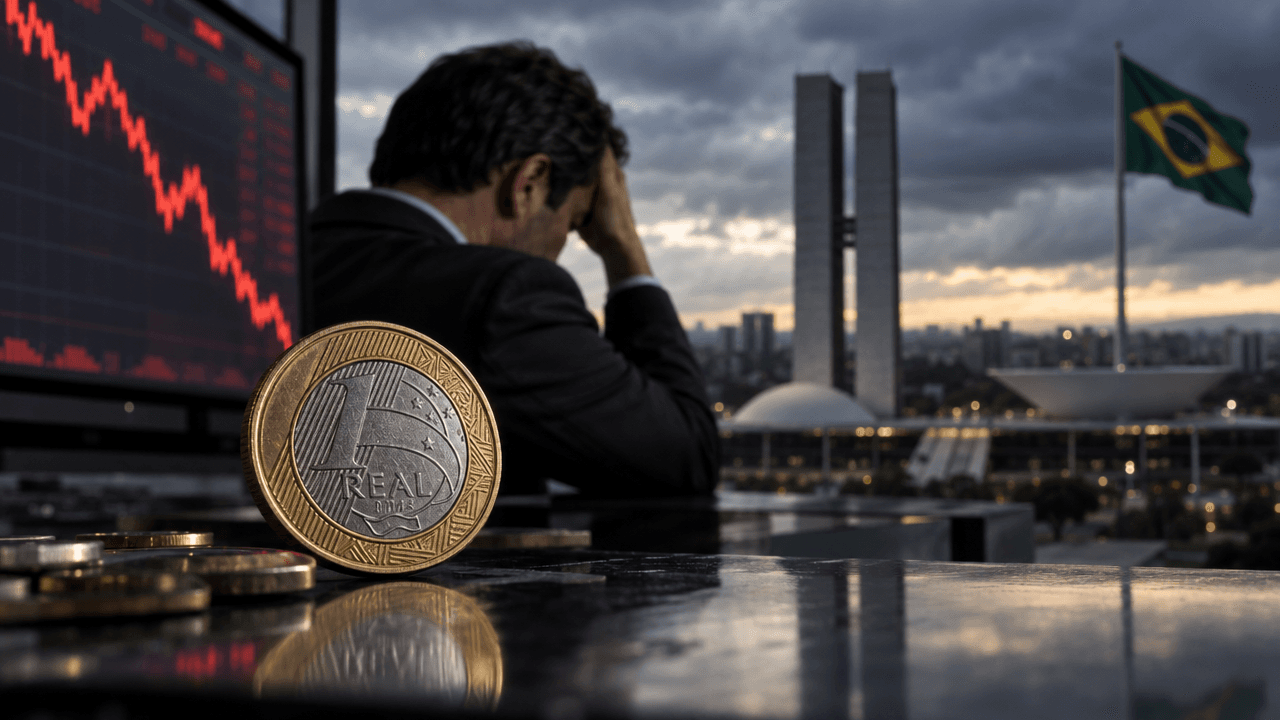
Brazilian markets delivered a powerful reminder that financial prices often reflect expectations before they reflect facts. After investors positioned for a right-leaning election victory, the unexpected reelection of Luiz Inácio Lula da Silva triggered a violent reversal in the Brazilian real and local equities. The real fell roughly 8% against the U.S. dollar, while the Bovespa suffered an 18.1% decline over the week, creating one of the sharpest emerging-market shocks of the year.
For traders, the episode was not simply a reaction to one election result. It was a rapid unwinding of crowded positions, a repricing of fiscal and economic risks, and a warning about the dangers of treating prediction-market probabilities as guaranteed outcomes.
The Trade That Everyone Expected
In the weeks before the runoff, financial markets increasingly priced in a victory for Flávio Bolsonaro, the right-wing challenger. Prediction markets gave Bolsonaro odds above 80% at several points, even though traditional polling suggested a much closer contest. Both Polymarket and Kalshi strongly favored Bolsonaro before the vote. [18]
That expectation shaped asset prices. Brazilian stocks rallied as investors anticipated policies they associated with tighter fiscal discipline, a more market-friendly economic direction, or at least a change from the incumbent administration. The real also strengthened as traders reduced hedges and increased exposure to Brazilian assets.
This is a common market pattern. An election can influence prices before ballots are counted because investors trade the expected consequences, not merely the final result. When the result confirms expectations, the market reaction may be limited. When the result contradicts those expectations, the adjustment can be immediate and disorderly.
The problem becomes more serious when many traders hold similar positions. A forecast that appears highly confident can encourage leverage, reduce portfolio diversification, and create a crowded trade. Once the outcome changes, investors may all attempt to exit at the same time.
Why The Reversal Was So Sharp
Lula’s victory forced markets to reassess several assumptions at once. The election result raised questions about government spending, debt sustainability, inflation management, and the future relationship between the executive branch and Congress. Investors began demanding greater compensation for holding Brazilian assets, particularly local-currency bonds and domestic companies sensitive to interest rates.
The first reaction was extreme. The real reportedly dropped more than 11% at one point in early trading before ending the day about 8% lower against the dollar. The Bovespa fell nearly 14% in a single session, its largest daily decline since March 2020, while trading was temporarily halted after the index breached the exchange’s circuit-breaker threshold. [11]
These moves illustrate how currency and equity markets can reinforce one another. A weaker real increases the local-currency value of foreign debt and can raise the price of imported goods. That may intensify inflation concerns and encourage expectations for higher interest rates. Higher rates, in turn, can pressure company valuations, household consumption, and economic growth.
The selloff was therefore larger than a simple change in political preference. It reflected a fast repricing of the country’s risk premium.
What Traders Should Watch Next
The immediate election shock is only the first stage. The longer-term performance of Brazilian assets will depend on policy execution and the credibility of the government’s fiscal framework.
Investors will focus on the composition of economic policy, spending proposals, tax measures, and signals from the central bank. They will also watch whether Congress constrains or supports the administration’s agenda. A government that communicates a credible plan for debt control could eventually stabilize markets, even after an initial selloff. Conversely, unclear spending commitments or confrontation with institutions could keep volatility elevated.
Sector performance may also diverge. Banks, retailers, utilities, and other domestically focused companies are often more sensitive to interest rates and consumer demand. Exporters, including companies that earn revenue in dollars, may benefit relatively when the real weakens. However, currency gains do not eliminate political or commodity risks, and no sector should be treated as automatically protected.
The real itself deserves close attention. A weaker currency can support exporters, but a disorderly decline may raise inflation expectations and make imported fuel, machinery, and technology more expensive. Traders should distinguish between a controlled adjustment and a loss of confidence.
Practical Lessons For Simfi Traders
This episode offers several valuable lessons for traders using simulated finance platforms.
First, separate probability from certainty. An 80% prediction implies that the less likely outcome can still occur. Position size should reflect the possibility of failure, not just the apparent strength of the consensus.
Second, identify crowded trades. If stocks, bonds, and the currency are all rising because of the same political expectation, the portfolio may have more concentrated risk than it appears to have. A trader holding several Brazilian positions could discover that diversification disappears when the same headline drives every market lower.
Third, plan for liquidity shocks. Stop-loss orders may not execute at the intended price during a gap or trading halt. SimFi traders can use smaller positions, predefined maximum losses, and scenario testing to understand how an overnight surprise might affect their account.
Finally, monitor the event calendar and cross-asset relationships. Elections, central-bank meetings, fiscal announcements, and court decisions can move currencies and equities together. Tracking the dollar, local interest rates, commodity prices, and volatility indicators can provide a broader view than watching an equity index alone.
Conclusion
Brazil’s post-election reversal demonstrates how quickly market narratives can change. The real’s decline and the Bovespa’s sharp weekly loss were driven not only by the election outcome, but by the unwinding of positions built around an outcome that prediction markets had treated as highly likely.
For experienced investors, the event is a reminder to respect political risk, liquidity risk, and crowded positioning. For newer traders, it provides an important lesson: successful trading is not about predicting one outcome with confidence. It is about managing exposure when the market chooses the other one.