
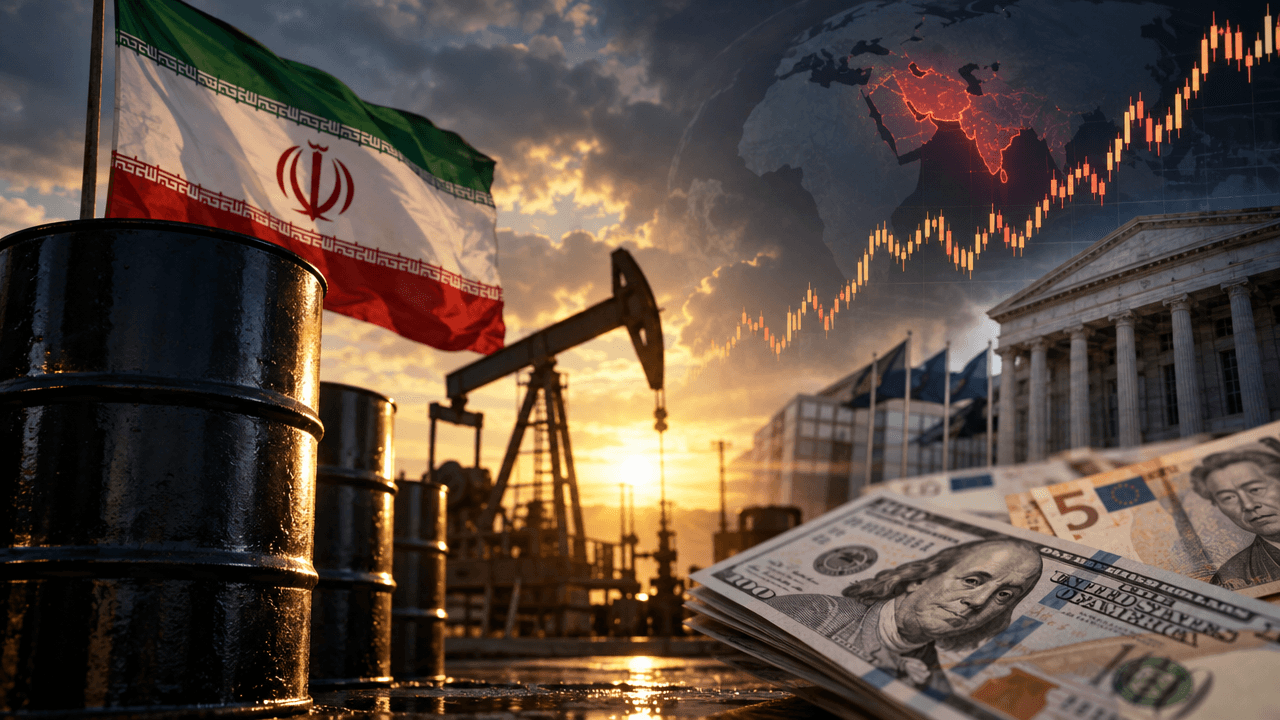
Brent crude is holding near $115–$116 per barrel as renewed concerns involving Iran and the wider Middle East keep a geopolitical risk premium embedded in energy prices. The international benchmark recently settled at $116.72, its highest level since late April, before easing as markets assessed diplomatic efforts and the possibility of further regional escalation. [1][3]
For traders, the significance of this move extends well beyond the oil market. A sustained rise in crude prices can lift fuel and transportation costs, intensify inflation pressures, alter expectations for central-bank policy, and reshape bond and currency markets. The key question is whether Brent remains elevated because of a temporary supply scare or begins to reflect a lasting disruption to global energy flows.
Why Iran Concerns Are Supporting Brent
Oil prices respond not only to barrels already removed from the market but also to the possibility that future supply could be interrupted. Iran sits at the center of this concern because of its geographic position, regional influence, and proximity to vital energy infrastructure and shipping routes.
Recent attacks involving Iran-aligned groups and reports of possible additional military action have increased uncertainty around production, refineries, pipelines, and tanker movements. Houthi attacks on Saudi energy-related sites have added to fears that the conflict could spread across the region, putting more of the Middle East’s oil infrastructure at risk. [4][7]
The Strait of Hormuz is especially important. A significant share of global oil and liquefied natural gas shipments passes through the waterway. Even without a formal closure, attacks, inspections, rerouting, higher insurance costs, and slower tanker traffic could reduce the reliability of supply. Market participants may therefore bid prices higher before an actual shortage occurs.
This is known as a geopolitical risk premium. Some analysts have estimated that around $27 of Brent’s price has recently reflected geopolitical uncertainty rather than ordinary supply-and-demand conditions. [3] That premium can rise quickly when headlines suggest escalation and fall just as rapidly when diplomatic channels appear to make progress.
The Inflation Channel
Higher crude prices affect inflation through several routes. The most direct impact appears at the petrol pump, where increased wholesale fuel costs can feed into household transportation expenses. Businesses also face higher costs for freight, aviation, manufacturing, agriculture, and energy-intensive production.
The initial effect is often visible in headline inflation. The more difficult question is whether higher energy prices begin to influence wages, services, and consumer expectations. If households and companies expect fuel and utility costs to remain high, they may adjust prices and pay demands accordingly. That can make an energy shock more persistent.
For central banks, this creates a difficult policy trade-off. Raising interest rates may help prevent inflation expectations from becoming entrenched, but tighter policy can also weaken demand at a time when consumers are already losing purchasing power. Holding rates steady may support economic activity, yet it risks allowing a temporary oil shock to broaden into wider inflation.
The source of the oil move matters. A supply-driven increase tends to push inflation expectations higher, while a demand-driven increase may signal stronger economic activity. Research indicates that supply shocks can raise inflation breakevens, making the distinction particularly important for bond traders. [10]
What It Means For Bonds And Currencies
The usual market sequence is straightforward: higher oil prices raise inflation expectations, investors anticipate tighter monetary policy, and government bond yields move higher. However, the outcome is not guaranteed.
If traders believe central banks will respond aggressively, short-term yields may rise as rate expectations adjust. Longer-term yields can also increase if investors demand greater compensation for inflation risk. But an oil shock can simultaneously weaken economic growth. If recession fears dominate, investors may seek the relative safety of government bonds, pushing yields lower despite elevated inflation.
This tension has already made the bond reaction less predictable. Recent market analysis noted that energy inflation and safe-haven demand can pull yields in opposite directions. [13] Traders should therefore examine whether a yield move is being driven by expected monetary tightening, rising fiscal concerns, or defensive demand.
Currency markets face a similar split. Oil-exporting currencies, including the Canadian dollar and Norwegian krone, may benefit from stronger energy revenues, although broader risk sentiment can limit those gains. Oil-importing economies may face a deteriorating trade balance as they pay more for energy.
The US dollar can receive support from safe-haven demand and expectations of higher US rates. Yet if the shock damages global growth or raises concerns about US economic conditions, the dollar’s response may become less consistent. The yen is particularly complex: higher oil prices increase Japan’s import bill, while risk aversion can create demand for the currency. [15]
Practical Takeaways For Traders
First, monitor the price of Brent alongside the news behind the move. A rally caused by confirmed supply losses is different from a rally driven by speculation about possible military action.
Second, watch the shape of the futures curve. Tightening near-term supply conditions may produce backwardation, while easing concerns or expectations of future oversupply can reduce the premium in front-month contracts.
Third, track inflation expectations, government bond yields, and central-bank communication together. Oil alone does not determine interest rates, but it can change the policy debate when inflation is already persistent.
Fourth, manage volatility carefully. Geopolitical markets can reverse sharply when negotiations resume, sanctions change, or reports are challenged. Stops, position sizing, and awareness of overnight headline risk are essential.
Conclusion
Brent crude near $115–$116 reflects more than a simple commodity rally. It represents a market pricing uncertainty around Iran, regional security, shipping routes, and the reliability of future energy supply. If tensions ease, part of the geopolitical premium could unwind quickly. If disruptions spread, Brent could remain elevated while inflation, yields, and currency volatility intensify.
For SimFi traders, the most valuable lesson is to follow the transmission mechanism rather than reacting to one headline. Oil affects inflation, inflation affects policy expectations, and policy expectations affect bonds, currencies, and risk appetite. Understanding those connections creates a more disciplined framework for navigating a market where geopolitical news can move prices within minutes.