
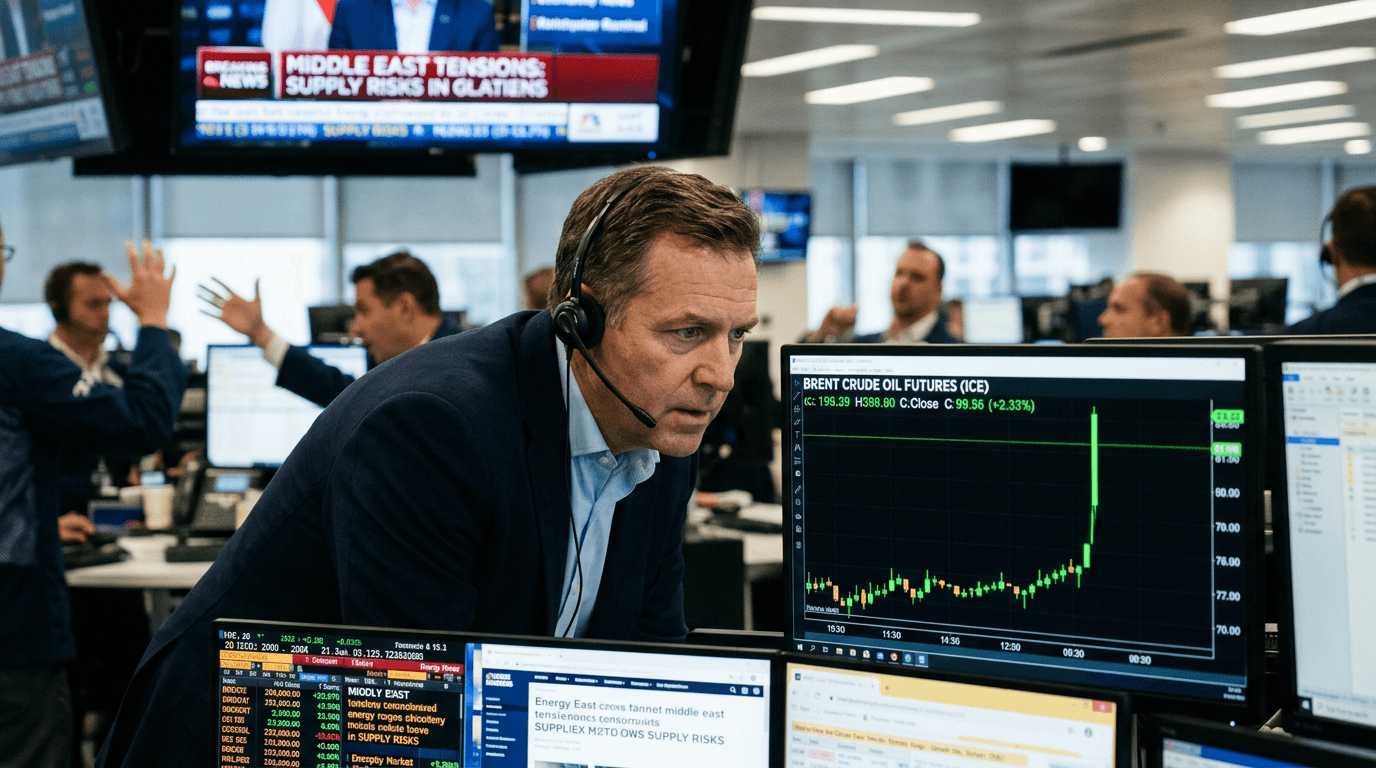
In 2026, Brent crude oil prices skyrocketed to levels unseen since mid-2022, driven by escalating geopolitical tensions in the Middle East. The conflict involving the U.S., Israel, and Iran has triggered what Goldman Sachs labels as the largest oil supply shock on record, compelling a global reassessment of energy pricing. This event has led to a stark divergence in perspectives among financial institutions, with some forecasting sustained high prices while others hold a bearish outlook on crude fundamentals in the long term.
The Strait Of Hormuz Crisis: A Game Changer For Oil Markets
The surge in oil prices can be attributed to turmoil at the Strait of Hormuz, the world's most vital energy chokepoint. One-fifth of the global oil and natural gas supply flows through this narrow passage daily, rendering it exceptionally susceptible to geopolitical disruptions. Since the conflict erupted on February 28, Brent crude has surged by over 36%, with West Texas Intermediate climbing approximately 39%, reflecting acute market concern over prolonged supply constraints.
The disruption is severe and unprecedented in scope. Over 150 tankers have anchored in the Gulf's open waters, crowded off the coasts of Iraq, Saudi Arabia, and Qatar, as producers slow or halt output due to onshore storage capacity limitations. Major shipping companies, including Maersk, Hapag-Lloyd, and CMA CGM, have halted operations through the Strait, opting to reroute vessels around Africa's southern tip. This detour adds 10 to 14 days to journey times and significantly raises shipping costs at a time when the industry is already under duress.
Goldman Sachs: Oil Prices Hit New Heights
Goldman Sachs has significantly revised its oil forecasts upwards, suggesting current price levels might represent a floor rather than a ceiling for crude in the short term. The bank anticipates Brent crude to average above $100 per barrel in March 2026, reflecting peak war disruption, before moderating to $85 in April as rerouting measures take effect. However, Goldman's long-term forecasts remain considerably elevated, with Q4 2026 base case projections of $71 per barrel for Brent and $67 for West Texas Intermediate, significantly above prior estimates.
For traders and policymakers, perhaps most concerning is Goldman's scenario that assumes a two-month disruption at Hormuz, pushing Q4 Brent estimates to $93 per barrel, underscoring the precarious path back to "normal" prices. The bank's analysts stress that sustained higher oil prices signify the largest oil supply shock on record, surpassing even the 1973 OPEC embargo and the 1990 Gulf War in terms of immediate impact on oil flows.
Economic Ripple Effects Hit The Federal Reserve
The repercussions of elevated oil prices extend well beyond energy stocks and gas prices. Goldman Sachs estimates indicate that a sustained 10% rise in oil prices boosts headline Personal Consumption Expenditures inflation by about 0.2 percentage points while simultaneously reducing GDP growth by approximately 0.1 percentage points—a stagflationary mix that policymakers are keen to avoid.
In Goldman's optimistic oil scenario, the bank foresees headline PCE inflation peaking at 4.5% in the spring before settling at 3.3% by year-end. Consequently, the firm has revised its December 2026 headline PCE inflation forecast upward by 0.8 percentage points to 2.9% while reducing GDP growth projections by 0.3 percentage points to 2.2% on a Q4-over-Q4 basis. Notably for investors, Goldman has postponed its Federal Reserve rate cut forecast, moving its first expected rate cut from June to September, with a second cut anticipated in December. The bank has also raised recession odds over the next 12 months to 25%.
MARKET DIVIDE: GOLDMAN VS. JPMORGAN
Despite the dramatic oil price spike, market consensus remains divided on the long-term outlook. J.P. Morgan Global Research maintains a more bearish stance, expecting Brent crude to average around $60 per barrel in 2026, underpinned by soft supply-demand fundamentals suggesting global oil supply will outpace demand growth of 0.9 million barrels per day. J.P. Morgan contends that while recent military tensions have pushed Brent trading about $10 per barrel above fair value, protracted oil supply disruptions are unlikely given elevated inflation concerns and the U.S. midterm election cycle.
This fundamental disagreement underscores the immense uncertainty currently gripping energy markets. Goldman highlights the unprecedented nature of the current disruption and the risk of prolonged supply constraints, while J.P. Morgan bases its outlook on structural supply surpluses and skepticism about the duration of geopolitical disruptions.
Navigating Volatility: A Challenge For Traders
For traders and investors, the current environment demands careful risk management and realistic expectations. Neither emergency measures—including the International Energy Agency's 400 million barrel reserve release nor U.S. waivers allowing Russian oil sales—have meaningfully cooled prices, as both measures require weeks to deliver real barrels to market while the Strait remains shut. The combination of higher inflation, slower growth, and shifting Fed policy creates a complex macroeconomic backdrop for positioning in energy markets.
The path forward critically hinges on how swiftly disruptions at the Strait of Hormuz are resolved. Until the chokepoint reopens, Goldman's message is clear: at $100 per barrel, crude oil prices have established a floor, not a ceiling.