
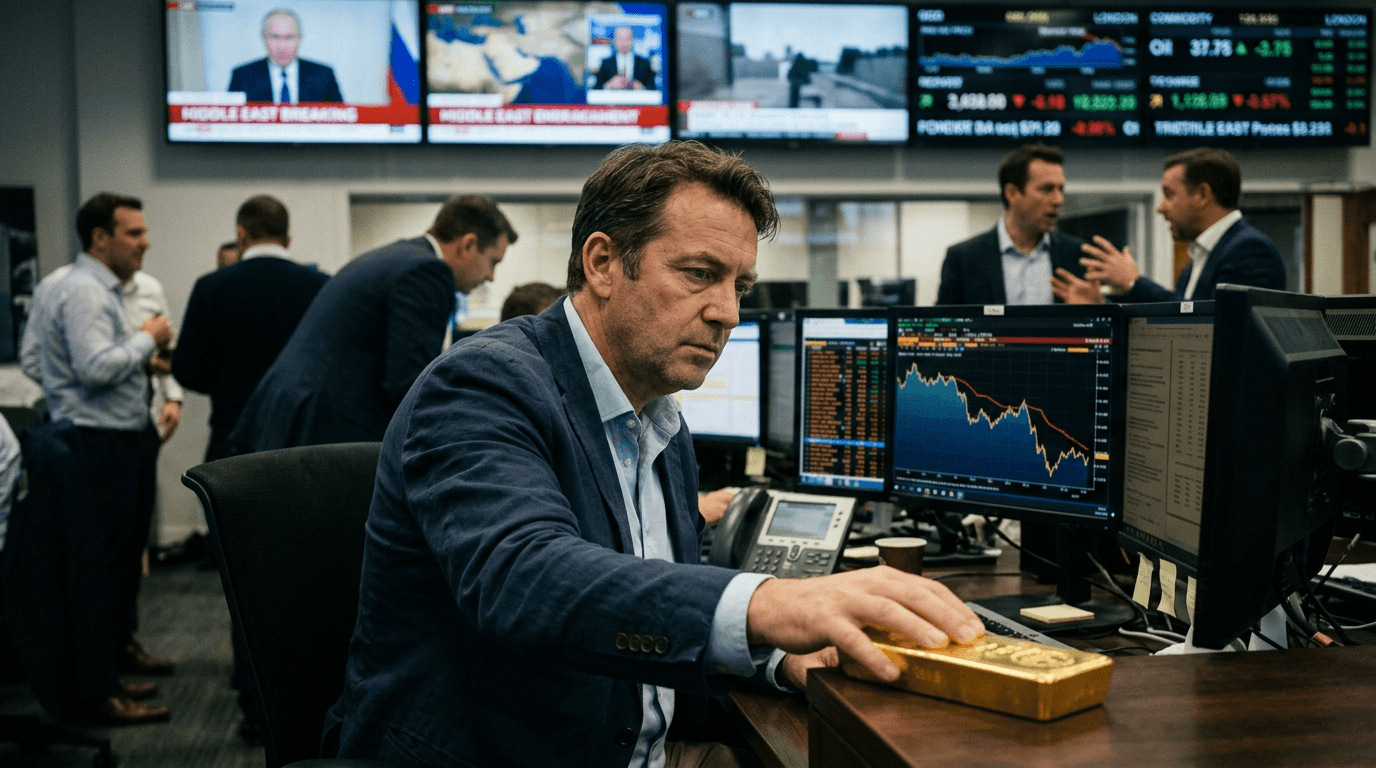
From the search results: 1. Gold is experiencing mixed signals - safe-haven demand from geopolitical tensions but facing headwinds from liquidity needs, rising oil prices, higher bond yields, and a stronger dollar 2. Q1 2026 saw ETF outflows for US gold demand despite safe-haven appeal 3. Recent tensions (Israel-Iran) pushed gold to near two-month highs with spot prices around $3,400/oz 4. Silver also strong at $36.32/oz (26% rise YTD) 5. Gold volatility has been historically elevated in 2026 6. Central bank buying remains supportive 7. Oil prices and rising inflation are putting pressure on gold's traditional safe-haven narrative 8. Interest rate expectations uncertain
The user wants: - Plain text format (no markdown) - ALL CAPS for headings on their own lines - Direct start with first paragraph (no intro) - 3-5 main sections - Engaging and educational - Approximately 800 words - At the end: TITLE, EXCERPT, NEWSIMPACTSCORE
I need to write this in plain text without markdown. Let me structure it:
1. Opening paragraph about the paradox 2. Section on safe-haven demand and geopolitical tensions 3. Section on inflation and rate concerns 4. Section on mixed market signals 5. Section on what this means for investors/takeaways
Let me write this carefully, following the format requirements exactly.
Gold markets are sending conflicting signals in May 2026, as the yellow metal holds its ground on safe-haven demand from geopolitical tensions while simultaneously tracking toward its first weekly decline in five weeks amid persistent inflation concerns. This paradox highlights the complex interplay between traditional risk-off flows and macroeconomic headwinds that are reshaping how investors view precious metals in the current environment. Understanding this dynamic is crucial for traders and investors looking to navigate an increasingly volatile precious metals landscape.
The Safe-haven Rebound
Recent Middle East tensions have reignited gold's classic role as a portfolio hedge during times of uncertainty. Spot gold prices have climbed to near two-month highs, with prices trading around $3,400 per ounce following intensified conflict between Israel and Iran. This $1,096 year-over-year increase reflects investors' continued appetite for safety during periods of global instability. Silver has similarly benefited from safe-haven flows, climbing to $36.32 per ounce and marking a 26% rise since the start of 2026.
The geopolitical backdrop remains a powerful driver of gold demand. Central bank buying continues to provide structural support, while ongoing policy rate uncertainty and broader macroeconomic risks sustain the longer-term investment case for gold. For investors accustomed to thinking of gold as an automatic hedge against crisis, the recent rebound feels reassuringly familiar. However, the bigger picture reveals a more nuanced story that challenges this conventional wisdom.
Inflation And Rate Expectations Create Headwinds
While geopolitical tensions push gold higher on a daily basis, the weekly chart tells a different story. Gold is on pace for its first weekly loss in five weeks, a decline driven primarily by inflation concerns stemming from rising oil prices. This shift in narrative is critical to understand: when oil prices spike, markets reassess inflation expectations and recalibrate their views on Federal Reserve rate policy. Higher inflation typically translates to expectations for higher interest rates, which increases the opportunity cost of holding non-yielding assets like gold.
Rising bond yields and a strengthening US dollar have compounded this headwind. These factors create a challenging environment for gold, as they reduce its appeal relative to yield-bearing alternatives. The Federal Reserve meeting on the horizon has amplified this dynamic, with analysts noting that markets are pricing in unchanged rates despite inflation concerns. This uncertainty about the path of monetary policy has created a tug-of-war in gold markets, with safe-haven demand pulling prices higher while inflation-sensitive flows push them lower.
Liquidity Concerns Override Traditional Dynamics
One of the most significant market developments in 2026 has been the subordination of traditional safe-haven dynamics to liquidity pressures. In Q1 2026, US gold demand softened considerably as physically backed gold ETFs recorded sizeable monthly outflows in March. These outflows erased inflows accumulated earlier in the quarter, signaling a shift in investor behavior. Rather than flooding into gold during uncertainty, investors are managing liquidity needs and weighing near-term cash requirements against longer-term defensive allocations.
This divergence represents a structural change in how gold markets are functioning. The elevated positioning in gold, combined with higher opportunity costs as yields rise, has created an environment where profit-taking and rebalancing can overwhelm safe-haven flows. Volatility in 2026 has reached historically elevated levels, reflecting this internal conflict between different drivers of gold demand. Past episodes suggest these volatility spikes are typically temporary, usually settling within a few months, but the current environment suggests we may be in the early stages of such a correction.
Mixed Signals For Traders And Investors
The current gold market environment presents both opportunities and challenges. On one hand, the spike in gold trading volumes during recent sell-offs signals continued investor engagement despite the weakness. Silver, with its higher beta profile, has demonstrated particular volatility, presenting tactical opportunities for those comfortable with short-term swings. Bar and coin investment has remained resilient despite record quarterly lows in jewelry demand, indicating that retail interest in physical gold endures even amid affordability pressures.
On the other hand, the inability of safe-haven demand to sustain a weekly rally despite genuine geopolitical risks suggests that macroeconomic forces have taken the driver's seat. The combination of rising oil prices, elevated bond yields, a stronger dollar, and uncertainty around Fed policy creates a challenging near-term backdrop for gold prices. Technical levels are being tested and retested as these competing forces play out.
Key Takeaways For Investors
The current environment requires nuanced positioning rather than simplistic directional bets. Gold remains supported by geopolitical uncertainty and central bank buying, justifying a core defensive allocation for longer-term portfolios. However, the near-term path is likely to remain volatile and dependent on oil prices, inflation data, and Fed rate signals more than traditional geopolitical risk factors.
Investors should monitor oil prices and bond yields as leading indicators for gold's direction, rather than solely focusing on headline risk events. The divergence between daily geopolitical shocks and weekly performance trends suggests that the macro backdrop is currently more important than individual crisis catalysts. As market participants navigate this uncertain environment, gold's role as a portfolio stabilizer remains intact, even as its day-to-day price action becomes increasingly unpredictable.