
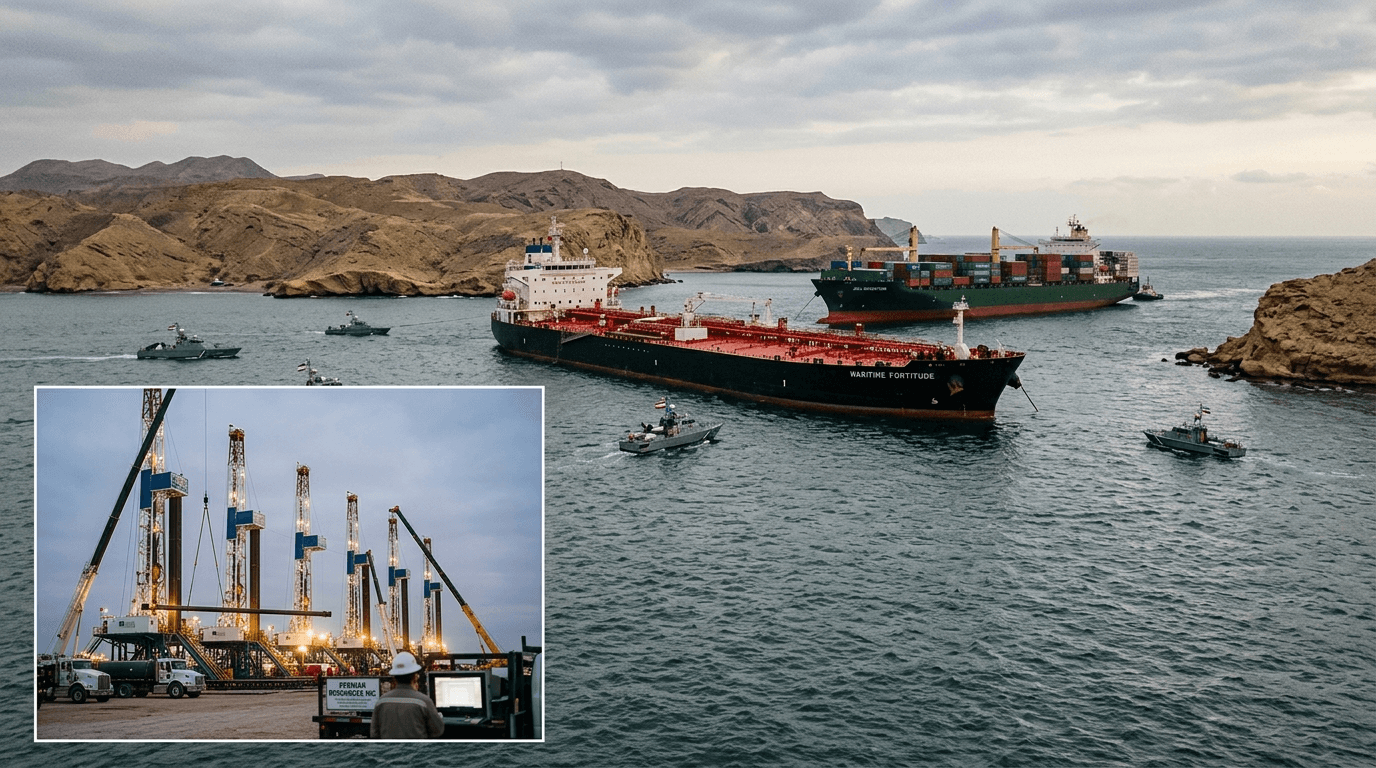
The Brent-WTI Spread: A Revealing Snapshot of the Global Oil Market
As of mid-March 2026, the oil market sends a clear message through a crucial yet often overlooked indicator: the Brent-WTI spread has soared to levels unseen in years. Brent crude now trades at $108.93, while WTI sits at $96.42, creating a spread of $12.51—nearly triple the typical $3 to $5 range. This spread is not mere market noise; it's a diagnostic tool revealing geopolitical tensions, supply constraints, and a lucrative window for US energy producers. For those with an eye on the energy sector, this spread offers insights far beyond mere price levels.
The Hormuz Crisis: A Supply Shock Unveiled
The immediate reason for this spike is the Strait of Hormuz blockade, which has halted roughly 20% of global oil transit. This strategic waterway, vital for Gulf crude distribution, is now a chokepoint, escalating insurance costs for tankers to unsustainable levels and forcing many to reroute or cease operations. Unlike typical geopolitical headlines, this crisis directly impacts market mechanisms. Brent crude, primarily sourced from or transiting the Gulf, now carries a risk premium that WTI, priced domestically in the US, does not. This divergence is the widening spread, reflecting a world of global risk versus domestic security.
The Brent-wti Spread: A Key Market Indicator
In normal times, arbitrage keeps the Brent-WTI spread narrow. If Brent becomes too costly compared to WTI, importers adjust sourcing, correcting the differential. Currently, this mechanism is broken. A $12.51 spread indicates that Gulf barrels are increasingly difficult to source or replace, and US domestic supply can't entirely compensate for lost Gulf volumes. This is more than a price anomaly; it's a signal of genuine supply strain, not merely speculative maneuvers. The persistence of this spread suggests a prolonged disruption, with traders anticipating weeks or even months of ongoing blockade risks.
Us Shale: A Golden Era For Producers
Amidst global disruptions, US shale producers find themselves in a highly profitable environment. With breakeven points ranging from $45 to $65 per barrel, even the highest-cost producers enjoy substantial margins with WTI at $96.42. This profitability translates into strong shareholder returns, with companies easily covering development costs and generating surplus cash for buybacks, debt reduction, or dividends. For investors, this is a rare period of exceptional profitability, potentially fleeting as the Hormuz situation evolves. The incentive for US shale to boost output is strong, supporting WTI prices while the Brent premium remains.
Scenarios For Spread Normalization
The $12.51 spread isn't sustainable indefinitely. Three scenarios could realign the Brent-WTI differential with historical norms. The most impactful would be a de-escalation of the Hormuz crisis, allowing immediate resumption of tanker traffic and rapidly compressing the spread. Alternatively, a gradual negotiated solution might unfold, easing the spread over weeks. Finally, OPEC+ could theoretically offset lost Gulf volumes with increased output, though this is fraught with challenges. The most significant catalyst remains Hormuz de-escalation, promising swift and substantial compression when it occurs.
Navigating The Volatility Ahead
For traders, the mid-March 2026 Brent-WTI spread is a lens into the crisis. It highlights the real, irreplaceable Gulf supply disruption, the exceptional profitability for US producers, and the geopolitical nature of potential resolutions. Understanding which assets thrive under elevated oil prices and which stand to gain from a Hormuz resolution is key. The spread, more than absolute prices, is the market's sharpest tool for predicting what's next.
NEWSIMPACTSCORE: 8