
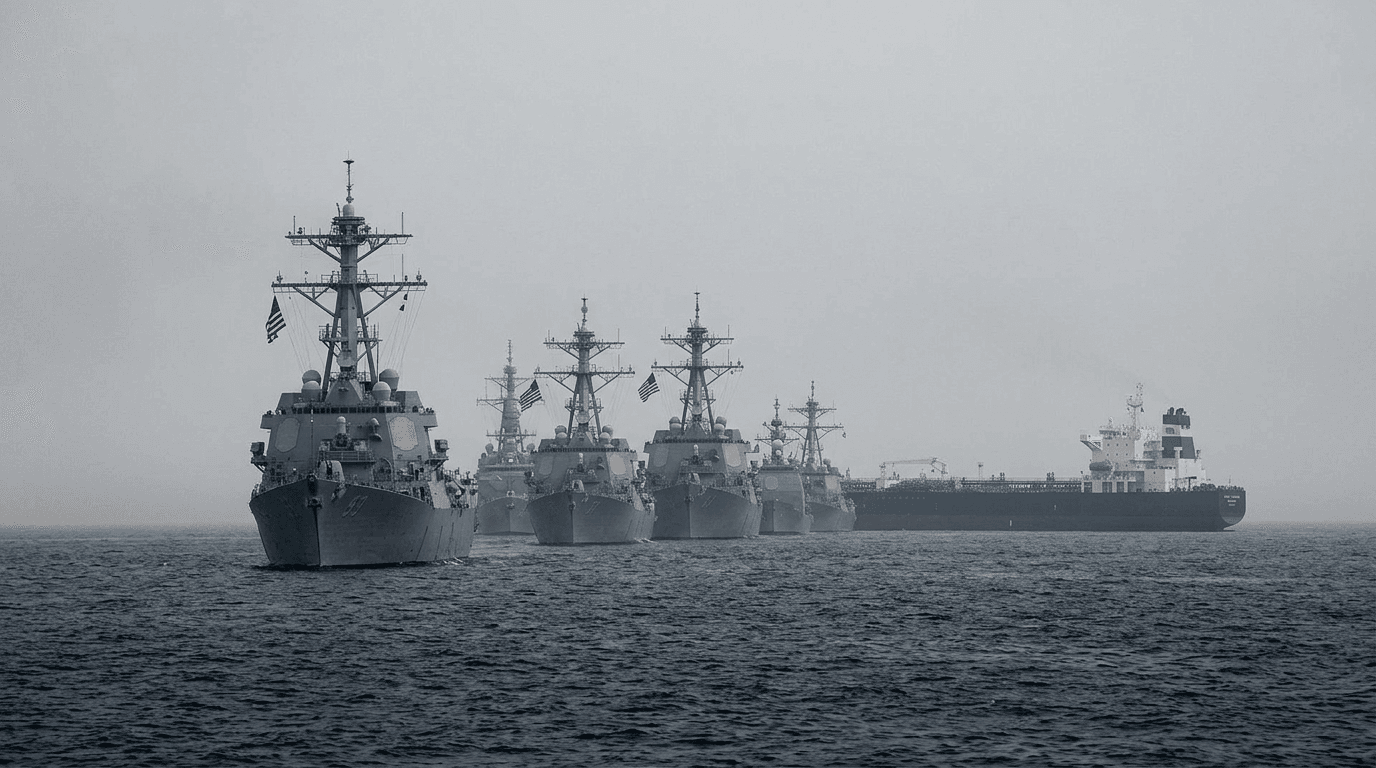
Diplomacy faltered dramatically this weekend in Islamabad as the United States and Iran could not secure an agreement after over 21 hours of high-level negotiations. This marked the most significant diplomatic engagement between the two countries since the Iranian Revolution in 1979. In response, President Trump swiftly announced a naval blockade aimed at Iranian maritime activities, effective immediately, escalating tensions in the Gulf and impacting global financial markets. The collapse of talks and the blockade announcement triggered a notable risk-off shift in the market, with crude oil prices soaring above $100 per barrel and increased demand for safe-haven assets as traders brace for geopolitical uncertainty and supply threats.
What Happened In Pakistan
The extended negotiation session offered a rare opportunity for direct dialogue between Washington and Tehran, facilitated by Pakistani officials. Led by Vice President JD Vance, the U.S. delegation pushed for Iran to agree to a strict "zero enrichment" policy, dismantle major uranium enrichment facilities, and eliminate its stockpile of highly enriched uranium. Furthermore, Washington demanded that Iran stop funding regional militant groups and allow free passage through the Strait of Hormuz without imposing tolls.
Iranian leaders viewed these demands as excessively stringent, perceiving them as tantamount to capitulation rather than genuine negotiation. They insisted on an agreement that included the release of billions in frozen assets and assurances against future military action. Despite ongoing conflict and the death of Iran's Supreme Leader, Tehran believed its control over the strategic Strait of Hormuz gave it leverage, as it is a vital chokepoint for global oil supplies. Iranian Foreign Minister Abbas Araghchi noted that, although the discussions came close to resolution, they ultimately faltered due to "maximalism, shifting goalposts, and blockade."
Despite the U.S. delegation's departure, Pakistani mediators continued efforts to salvage the discussions, with Iranian representatives staying for additional talks. However, the fundamental disagreement over nuclear policy proved insurmountable during this round of negotiations. Retired Lt. Gen. Mohammed Saeed, Pakistan's former chief of general staff, remarked in a Fox News interview that while the negotiations did not yield an agreement, diplomatic channels remain open, and a second round of talks might still be possible.
The Blockade And Strategic Implications
From the White House, President Trump declared the naval blockade, asserting that Iran would conduct "absolutely no business" under this stance, which the United States would maintain "very easily." This represents a significant escalation from economic sanctions, severing Iran's maritime commerce and further limiting its access to global markets.
Beyond the U.S.-Iran dynamic, the blockade has broader implications due to the Strait of Hormuz, a critical energy chokepoint through which approximately one-third of the world's seaborne oil trades. The Trump administration's enforcement of the blockade risks causing broader global economic repercussions, prompting warnings from Pakistan's military about potential worldwide fallout. Former Pakistani General Saeed warned of unintended global economic consequences from the blockade but noted that diplomatic solutions remain plausible through Pakistani mediation.
Market Implications For Traders
The market's immediate reaction has been acute and offers lessons for traders tracking geopolitical risk. Crude oil prices surged above $100 per barrel as energy markets adjusted for supply uncertainties and potential Iranian export disruptions. This strength in the energy sector has created intriguing cross-asset dynamics: while crude and energy futures have rallied, equities have faced downward pressure as the market takes a risk-off stance. Demand for safe-haven assets has increased in forex markets, bolstering traditional safe-haven currencies as traders reassess their exposure to geopolitical risks.
For SimFi traders on E8 Markets, this environment presents both challenges and opportunities. Energy sector instruments, oil futures, and volatility indices are likely to remain elevated amid ongoing tensions. Conversely, equity trading may benefit from strategic positioning, with cyclical sectors under pressure and defensive plays becoming more appealing. Currency markets present tradeable themes around safe-haven flows, particularly as the market gauges potential further escalation.
What To Watch Going Forward
Pakistani officials have expressed optimism about reopening diplomatic channels, suggesting Iran might return with a counter-offer after consulting with senior leaders. A second round of talks could occur if either side shows willingness to compromise on key issues, though no breakthrough seems immediate. Traders should monitor official statements from Tehran, Washington, or Islamabad regarding the possibility of resumed negotiations, as these could offer significant trading opportunities in commodity and equity markets.
Additionally, developments concerning alternative supply routes or potential OPEC responses to the blockade should be watched closely. Energy prices remain sensitive to both further escalations and unexpected diplomatic resolutions, creating a lively and dynamic trading environment.