
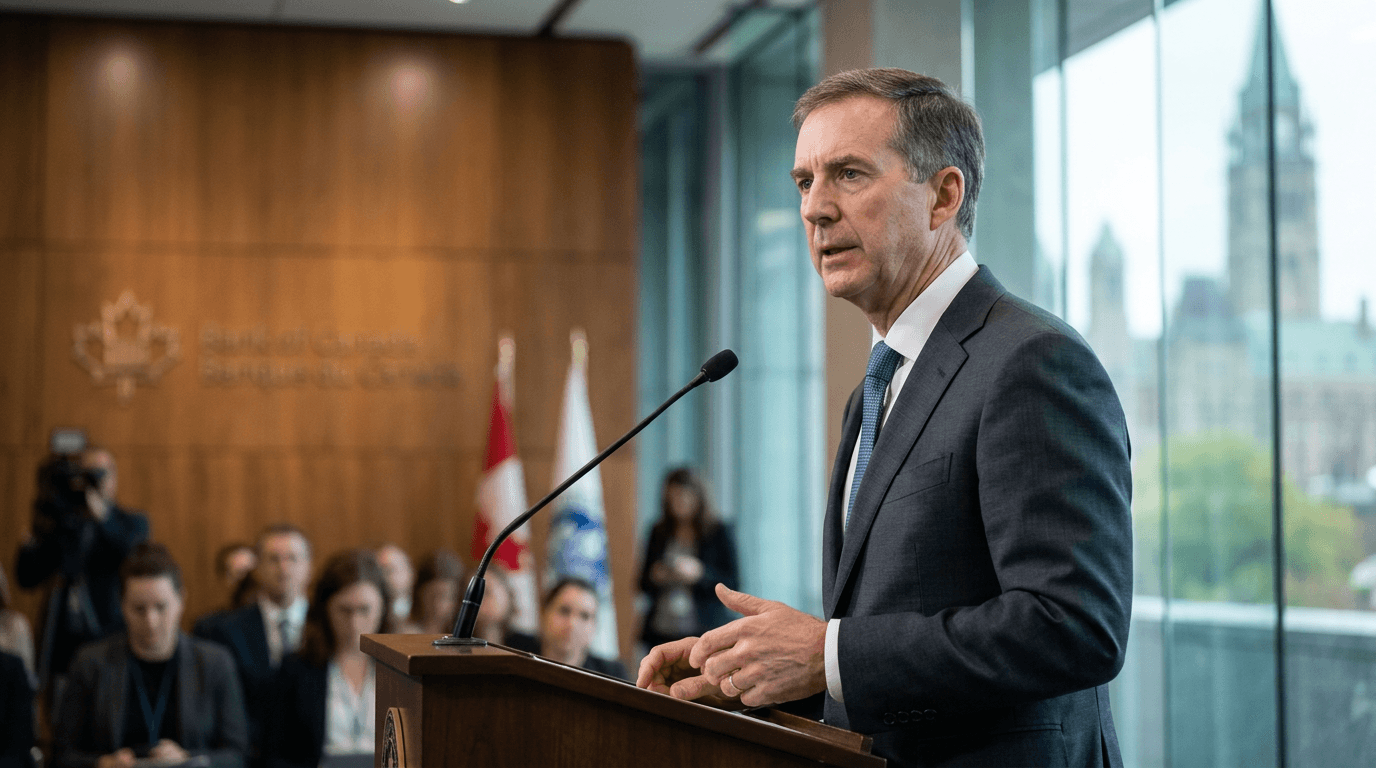
Canada's economic landscape is undergoing a profound transformation, with Bank of Canada Governor Tiff Macklem signaling that structural change is reshaping the country's monetary policy outlook. In a major speech to the Empire Club of Canada on February 5, 2026, Macklem outlined the forces reshaping Canada's economy and explained why the path forward will require more than traditional monetary policy tools to navigate successfully.
The Governor's remarks come at a critical juncture for the Canadian economy. Geopolitical tensions, shifting trade alliances, and unpredictable US trade policy have created an environment of heightened uncertainty that extends well beyond typical business cycle fluctuations. These aren't temporary headwinds that lower interest rates alone can resolve—they represent structural shifts that will reshape how businesses operate, where they invest, and how consumers allocate their spending.
What Macklem Said About The Current Outlook
During his address, Macklem provided a clear assessment of the Bank of Canada's expectations. The central bank is maintaining its policy rate at 2.25 percent while managing increased uncertainty around its economic forecast. The Bank continues to expect modest economic growth in the coming years, with inflation remaining close to its 2 percent target. However, Macklem emphasized that this optimistic inflation outlook exists alongside significant downside risks from geopolitical tensions and the unpredictable nature of US trade policy.
The Governor's message was measured but unmistakable: the economy is facing challenges that go deeper than the current business cycle. This distinction is crucial for anyone monitoring Canadian monetary policy, as it signals that the Bank's response will be calibrated differently than it might be during a typical slowdown.
The Structural Change Challenge
Perhaps the most important takeaway from Macklem's speech was his focus on structural change in the Canadian economy. Unlike cyclical downturns that can be smoothed through interest rate adjustments, structural change represents fundamental shifts in economic activity. This includes the impact of trade conflicts, tariff implementations, and the reallocation of capital and labor across sectors.
Macklem was candid about the adjustment ahead. He acknowledged that the economy's transition to a new structural reality could unfold faster than expected or prove more painful than desired. However, he emphasized that this adjustment is necessary and that the Canadian economy will ultimately emerge stronger on the other side. This framing is important—it suggests the Bank views current challenges as painful but ultimately productive, rather than purely negative.
The Limits Of Monetary Policy
One of the most significant and often-overlooked aspects of Macklem's address is what he said monetary policy cannot do. The Governor explicitly stated that monetary policy cannot offset the structural damage caused by tariffs, nor can it target assistance to the hardest-hit sectors of the economy. This represents an important acknowledgment of the tool's limitations.
What monetary policy can do, according to Macklem, is support overall demand while keeping inflation low and stable. In other words, the Bank can help smooth the transition, but it cannot prevent the transition itself. This distinction has major implications for businesses and investors who might be hoping for aggressive rate cuts to counteract trade-related headwinds. The Bank is not positioned to bail out specific sectors or reverse structural economic shifts.
What This Means For Traders And Investors
For those trading Canadian dollar exposure or analyzing Canadian equities, Macklem's remarks suggest several key implications. First, the Bank's monetary policy path will likely remain data-dependent and cautious, focused more on maintaining inflation stability than on aggressive stimulus. This could keep the Canadian dollar relatively stable despite economic headwinds, as the Bank balances growth concerns against inflation control.
Second, the emphasis on structural change suggests that sector rotation could become increasingly important. As the economy adjusts to new trade relationships and tariff regimes, winners and losers will emerge based on their exposure to US markets, domestic supply chains, and alternative trade partners. Traditional macro analysis alone may be insufficient to navigate these shifts.
Third, businesses with greater adaptability to structural change are likely to outperform those locked into vulnerable supply chains or tariff-exposed operations. This creates opportunities for investors who can identify which companies and sectors are best positioned for the economy's transition.
Key Takeaways For Market Participants
The Bank of Canada's position under Macklem's leadership represents a nuanced approach to monetary policy in turbulent times. Rather than attempting to reverse structural change through aggressive stimulus, the central bank is focused on managing the transition. This patience and strategic restraint may frustrate those seeking aggressive rate cuts, but it reflects a realistic assessment of what monetary policy can and cannot achieve.
As Canadian markets navigate these structural shifts, traders and investors should focus on understanding which sectors and companies will thrive in the new economic landscape. The Bank of Canada will provide monetary support for overall demand, but the real opportunities will lie in identifying winners within the broader structural transformation taking place.