
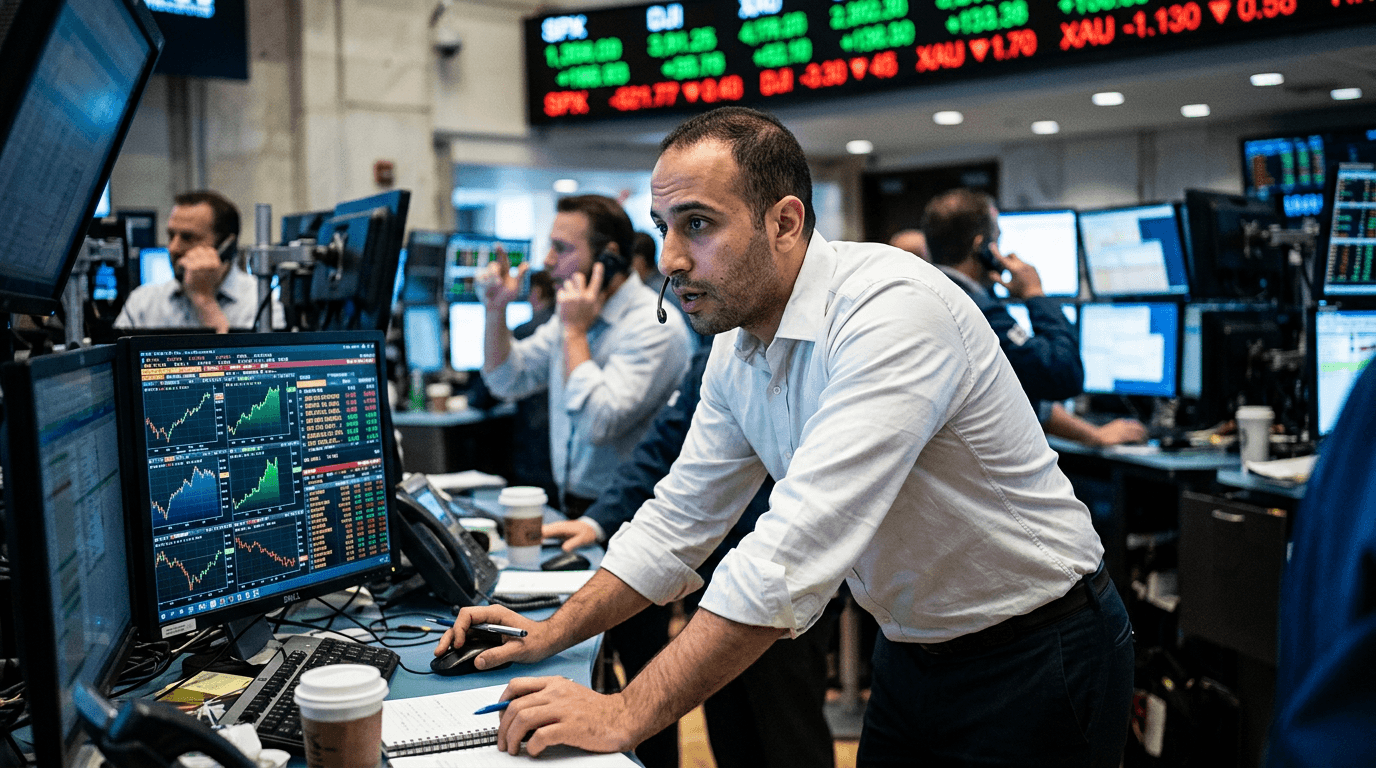
A tentative extension of the US–Iran ceasefire has given markets something they crave: time and breathing room. Reports suggest Washington and Tehran have agreed in principle to prolong the truce and ease restrictions on shipping through the Strait of Hormuz, while negotiations on broader issues, including Iran’s nuclear program, continue.[1][2] Even though final political approval is still pending, traders have reacted quickly, bidding up risk assets and rotating out of traditional safe-havens as the probability of an immediate escalation declines.[1][2]
Why The Ceasefire Matters For Markets
For global markets, the US–Iran relationship is not just a geopolitical story—it is a risk-pricing engine. The Strait of Hormuz is one of the world’s most critical energy chokepoints; any disruption to shipping raises the risk of oil supply shocks and broader trade dislocations.[1] By extending the ceasefire and allowing traffic to flow more freely, the deal helps reduce tail-risk scenarios such as sudden supply cuts, military confrontations, or sanctions-driven bottlenecks.[1][2]
When those tail risks recede, risk premia embedded in asset prices start to compress. That translates into lower implied volatility, tighter credit spreads, and a more constructive backdrop for equities and high-yield assets. In this case, the ceasefire headlines coincided with the S&P 500 and Nasdaq pushing to fresh record highs, signaling that investors were willing to reprice growth and earnings prospects in a less hostile geopolitical environment.
Risk-on: How Equities And Fx Respond
The rally in the S&P 500 and Nasdaq is a textbook risk-on response. Equities, especially growth and tech-heavy indices, tend to benefit when macro and geopolitical uncertainty subsides, as investors feel more comfortable projecting future earnings and discounting them at lower risk premiums. Financials, industrials, and cyclicals often gain as well, reflecting expectations of steadier global trade and investment flows.
In FX, a risk-on regime typically supports high-beta currencies—those that are more sensitive to global growth and capital flows—versus defensive ones. Traders tend to favor currencies linked to commodities or higher yields, and to rotate into emerging market FX, as long as volatility remains contained. This backdrop also tends to underpin equity index futures and equity-linked derivatives, as portfolio managers add exposure or rebuild positions they had previously hedged.
For SimFi traders, these moves are an opportunity to study how correlated assets respond to the same driver. By tracking equity indices, high-beta FX pairs, and volatility products side by side, you can build an intuition for how sentiment cascades across markets when a single geopolitical headline eases or intensifies.
Safe-havens Under Pressure
The flip side of a risk-on environment is pressure on safe-haven assets. When traders feel less threatened by geopolitical shocks, they typically reduce exposure to assets like the US dollar, Japanese yen (JPY), and Swiss franc (CHF), all of which tend to attract inflows during stress episodes. As risk appetite improves, investors shift capital from “safety” into “growth,” causing relative underperformance in these haven currencies.
The mechanics are straightforward: - Lower perceived tail risk reduces demand for cash and highly liquid reserve currencies. - Real money and speculative flows rotate into higher-yielding or higher-beta assets. - Volatility expectations fall, making defensive positions less attractive as a drag on performance.
This is why you may observe the dollar softening against growth-sensitive peers even as US equities hit record highs. The US currency is not just an equity proxy; it is a funding and reserve currency, so when global risk appetite rises, the dollar can weaken while US stocks rally.
For traders using a simulated environment, this dynamic is a powerful case study in cross-asset relationships. Building and testing strategies that watch for divergence—such as US equities at highs while the dollar sells off—can help refine your understanding of how capital reallocates in real time.
How Simulated Traders Can Navigate Headline Risk
Even with a ceasefire extension on the table, the US–Iran situation remains headline-driven. The agreement reportedly runs for about 60 days and still requires final political approval, leaving room for reversals or new flashpoints.[1][2] For traders, this means the story is far from over—and that volatility can reappear quickly if talks stall or incidents occur.
In a SimFi environment, this kind of story is ideal for practicing structured scenario planning:
- Map scenarios: continuation of de-escalation, prolonged stalemate, or re-escalation. For each, outline likely moves in equities, energy, high-beta FX, and safe-havens.
- Test playbooks: design strategies for each scenario—momentum in equity indices during de-escalation, defensive rotations back into JPY/CHF and volatility products if tensions flare.
- Stress-test positions: simulate how open trades would react to sudden headline reversals, using tighter or wider stop-losses and different position sizes.
The goal is not to predict headlines but to become fluent in reacting to them with a consistent, rules-based approach. Because simulated trading removes real capital risk, you can safely explore how different time frames (scalping vs swing), instruments (indices, FX, commodities), and risk parameters perform across various news paths.
Practical Takeaways For Your Next Trading Session
The latest ceasefire extension headlines offer several practical lessons that apply well beyond this single event:
- Geopolitics often reprices risk premia before it changes fundamentals. Markets can rally simply because the worst-case scenario looks less likely, even if growth data are unchanged.
- Risk-on vs risk-off is a cross-asset concept. Watch how equities, FX, bonds, and volatility products move together or diverge when major news hits.
- Safe-haven flows are reversible. Strong inflows into USD, JPY, and CHF during stress can unwind quickly when tensions ease, creating opportunities for mean reversion or trend trades.
- Headline risk favors prepared traders. Having pre-defined scenarios and playbooks is far more effective than improvising when markets move sharply.
By treating events like the US–Iran ceasefire extension as live case studies, you can sharpen your macro awareness, refine your risk management, and deepen your understanding of how sentiment drives price. Over time, this kind of structured practice in a simulated environment can make your real-world decision-making faster, calmer, and more consistent—regardless of what the next headline brings.