
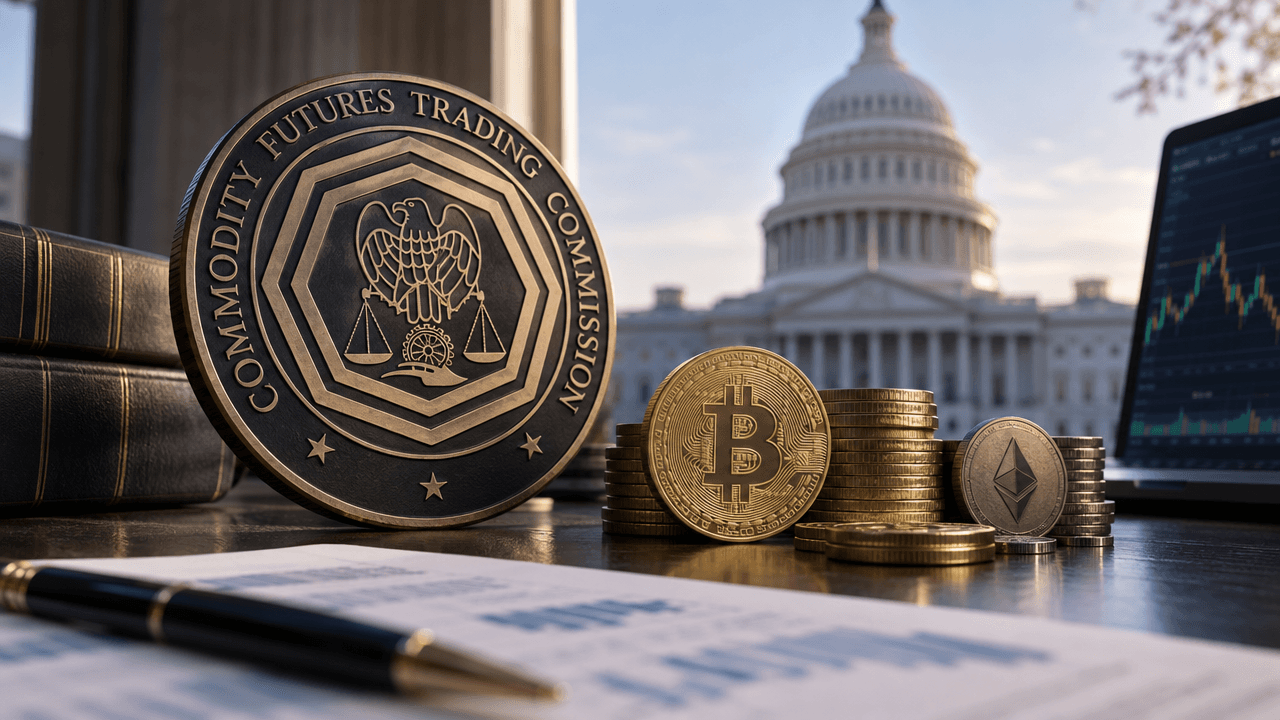
Perpetual futures have been a defining feature of crypto derivatives trading for years, but they have largely existed at the fringes of traditional regulation. With the CFTC now granting conditional relief for certain perpetual futures on eligible U.S. exchanges, a niche product is starting to move into the heart of regulated markets. That shift has meaningful implications for liquidity, market structure, and how both retail and institutional traders manage risk.
Regulatory Opening For Perpetual Futures
The CFTC’s conditional relief effectively clears a path for designated U.S. exchanges to offer perpetual futures contracts without fixed expiration dates, provided they meet specific safeguards and compliance requirements. Instead of being confined to offshore platforms, “always-on” futures can increasingly be listed and cleared in jurisdictions that institutional traders already trust.
This move is part of a wider trend: regulators are no longer trying to fit crypto derivatives into legacy frameworks by force; they are slowly tailoring rules to reflect how these markets actually trade. Perpetual contracts, 24/7 trading, and high-frequency funding mechanisms are now being addressed directly, rather than treated as anomalies.
Key takeaway: The relief does not mean a free-for-all in perpetual futures. It signals a controlled opening, in which regulators are willing to experiment as long as investor protection, disclosure, and oversight are clearly prioritized.
How Perpetual Futures Work
To understand why the CFTC’s step matters, it helps to revisit what makes perpetual futures unique. Traditional futures have defined maturity dates. As expiry approaches, traders roll their positions into the next contract, and prices converge with the spot market. That structure is well suited to hedging seasonal risks or specific time horizons.
Perpetual futures, by contrast, have no maturity. Positions are theoretically open-ended, and traders pay or receive a funding rate at regular intervals to keep the contract’s price aligned with spot. When the perpetual price trades above spot, longs typically pay shorts; when it trades below, the direction reverses. This mechanism anchors the contract while allowing continuous trading.
The result is a product that behaves like a leveraged, synthetic spot position but trades on a derivatives venue with margin, liquid order books, and programmable risk controls. For active traders, that means fewer roll costs, more flexibility in horizon, and the ability to maintain exposure without calendar-driven disruptions.
Key takeaway: Perpetual futures combine the flexibility of spot exposure with the leverage and risk tools of derivatives, making them attractive but complex instruments that demand robust risk management.
Impact On Institutional And Retail Participation
Bringing certain perpetual futures into a regulated U.S. environment changes the participation mix. Many institutions have been constrained by mandates that limit activity to regulated exchanges and central clearing counterparties. Even if they wanted exposure to perpetual crypto products, the venue risk and regulatory uncertainty were often prohibitive.
Conditional relief from the CFTC starts to break that barrier. Over time, more institutions can access perpetual futures through their existing infrastructure, using the same compliance and reporting workflows they already apply to traditional futures. This could deepen order books, dampen some of the extreme volatility seen on offshore platforms, and encourage more sophisticated hedging strategies.
Retail traders, particularly in the U.S., stand to benefit from clearer protections. Under a regulated framework, margin rules, liquidation processes, disclosure standards, and dispute resolution mechanisms are typically more transparent. At the same time, perimeter protections can limit excessive leverage and promote better understanding of product risks.
Key takeaway: Expect gradual institutionalization of perpetual futures as compliance teams become more comfortable with the product, but also expect stricter guardrails on leverage, margin, and customer onboarding.
Regulatory Risk And Market Design
Conditional relief is, by definition, temporary and contingent. The CFTC is signaling that it wants data and feedback before settling on a long-term framework. That means exchanges and market participants must treat this period as an experimental phase with real regulatory risk.
One central question is jurisdictional scope. Crypto markets are global, but U.S. regulators focus on activity involving U.S. persons and U.S. venues. As regulated perpetual futures grow, there will likely be more scrutiny around cross-border flows, the line between commodities and securities, and the potential overlap between different regulators’ mandates.
Another key design issue is how risk controls adapt to perpetual products. Clearinghouses and exchanges must calibrate margin models, stress scenarios, and circuit breakers for instruments that trade around the clock and can be highly correlated with broader crypto market sentiment. Funding rate dynamics, liquidity during stress, and procyclicality of margin calls are all live topics.
For traders, this adds a layer of regulatory strategy to the trading strategy. Position sizing, venue selection, and even instrument choice may be influenced by how different exchanges interpret and implement regulatory guidance.
Key takeaway: Regulatory relief is an opportunity, but it is also a test. Traders and venues need to assume that policy can tighten or evolve, and build strategies that remain resilient under changing rules.
Preparing In A Simulated Environment
For many market participants, the most practical response is to use this window to learn how regulated perpetual futures behave—without rushing into full-size live positions. Simulated finance platforms like E8 Markets are well suited to this kind of preparation.
In a SimFi environment, traders can:
1) Practice trading perpetual futures with realistic funding rates and margin mechanics, but without real capital at risk.
2) Test strategies across market regimes, including high-volatility scenarios and long, trending periods, to see how funding costs accumulate or erode performance.
3) Explore position management techniques, such as scaling in and out, adjusting leverage, and hedging spot exposure, within a controlled environment that mimics professional tools.
4) Build playbooks for regulatory events—for example, modeling how changes in margin requirements or contract specifications could impact liquidity, slippage, and risk.
By treating simulated trading as a laboratory, traders can develop robust habits: disciplined position sizing, awareness of funding and basis, and a firm grasp of how perpetual futures interact with spot and options markets. When the real products roll out on more regulated exchanges, those habits become a competitive edge.
Key takeaway: Use the current transition period to train and stress-test strategies in simulation. The goal is to arrive at live regulated perpetual markets with a rehearsed, data-backed approach rather than reacting on the fly.