
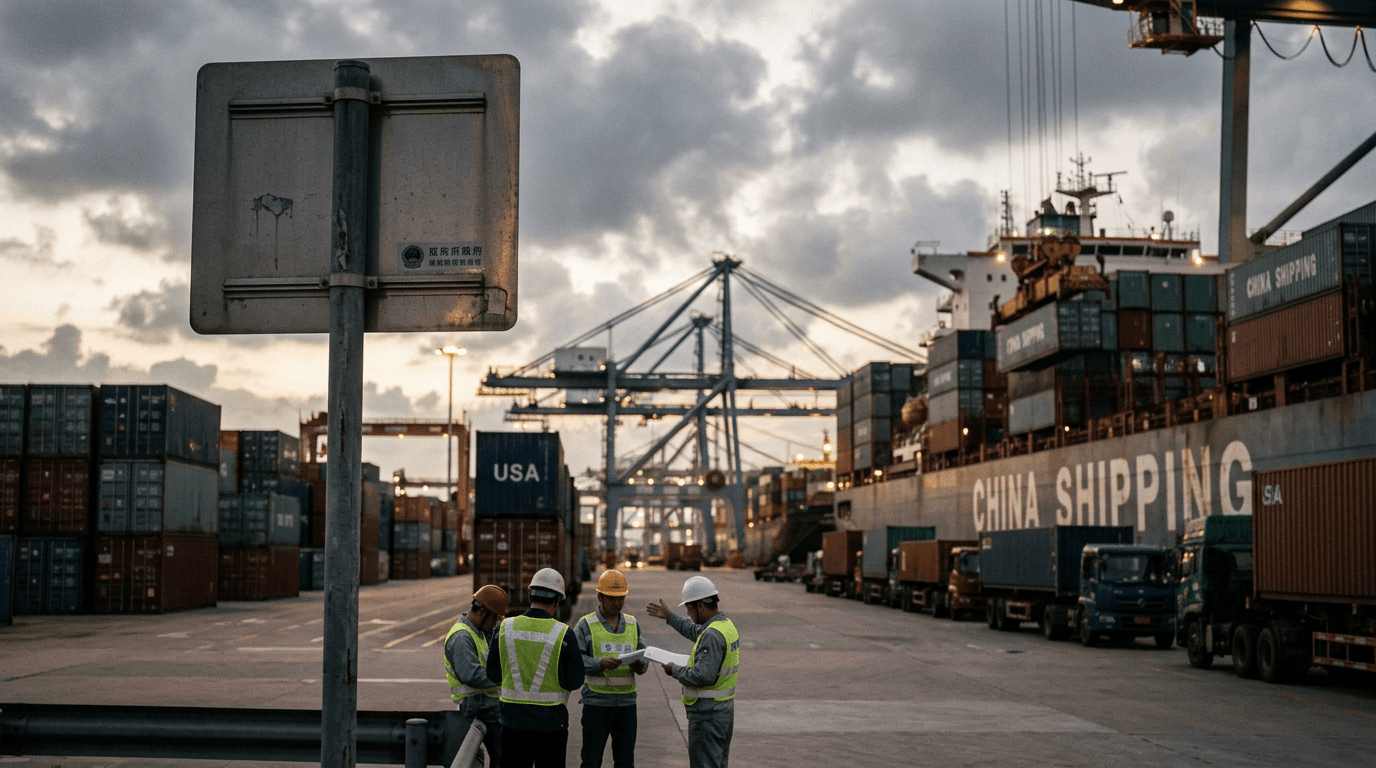
China’s latest tariff announcement has reignited fears of a full-blown trade war with the United States, sending a fresh shockwave through global markets.[8][11] By lifting duties on a wide swath of US goods to levels as high as 125%, Beijing has signaled that it is prepared to match, and potentially sustain, the aggressive stance taken by Washington on Chinese exports.[3][8][11]
Trade War Enters A New Phase
In recent months, the United States has sharply increased duties on imports from China, with effective rates on some product categories reaching as high as 145% as part of a reciprocal tariff framework.[3][11] China has now responded by raising its own retaliatory tariffs on US goods to as much as 125%, transforming what began as targeted measures into a broad-based escalation across the world’s two largest economies.[8][11] State media coverage inside China has framed the move as a necessary countermeasure, underscoring that US-origin products will face sharply higher costs at the Chinese border.[8]
Previous rounds of US–China tariffs affected specific lists of goods; today, the dispute has evolved into near-universal coverage of bilateral trade flows.[4][11] According to trade tracking analyses, earlier actions had already pushed average Chinese tariffs on US exports dramatically higher, with recent steps cementing triple‑digit rates across many product lines.[4][11] With neither side openly signaling a clear path to de‑escalation, the latest announcement looks less like a one‑off shock and more like the consolidation of a long‑running, structurally higher tariff regime.[11]
At a macro level, steep tariffs act like a tax on cross‑border commerce. They raise landed prices, compress margins for exporters, and force importers either to absorb the hit or pass it on to end consumers. Over time, this can weigh on trade volumes, investment decisions, and corporate earnings, especially in sectors heavily exposed to US–China flows.
Market Reaction: Volatility And Flows
The renewed trade war narrative is being felt first in markets that price global growth expectations, such as equity index futures and cyclical commodities. Traders are now reassessing earnings prospects for multinational companies with significant China revenue, as well as for US firms that rely on the Chinese market for scale and cost efficiency. Volatility tends to spike when policy shock meets uncertainty over the next headlines, and tariff announcements are a textbook example.
Foreign exchange markets are particularly sensitive to US–China tensions. China‑linked and China‑sensitive currencies, including CNH and proxies like AUD, often react quickly as participants price in changes to trade flows, commodity demand, and risk appetite. Safe‑haven assets—typically USD, JPY, and to some extent CHF and gold—tend to see inflows when investors seek protection from policy‑driven volatility, especially if they fear knock‑on effects into broader geopolitics.
For portfolio managers and active traders alike, the key dynamic is not just direction but regime change. A world in which tariffs can leap to 125% overnight is one in which policy risk must be treated as a core factor, alongside growth and inflation. That shift favors strategies that are nimble, hedged, and explicitly aware of headline risk.