
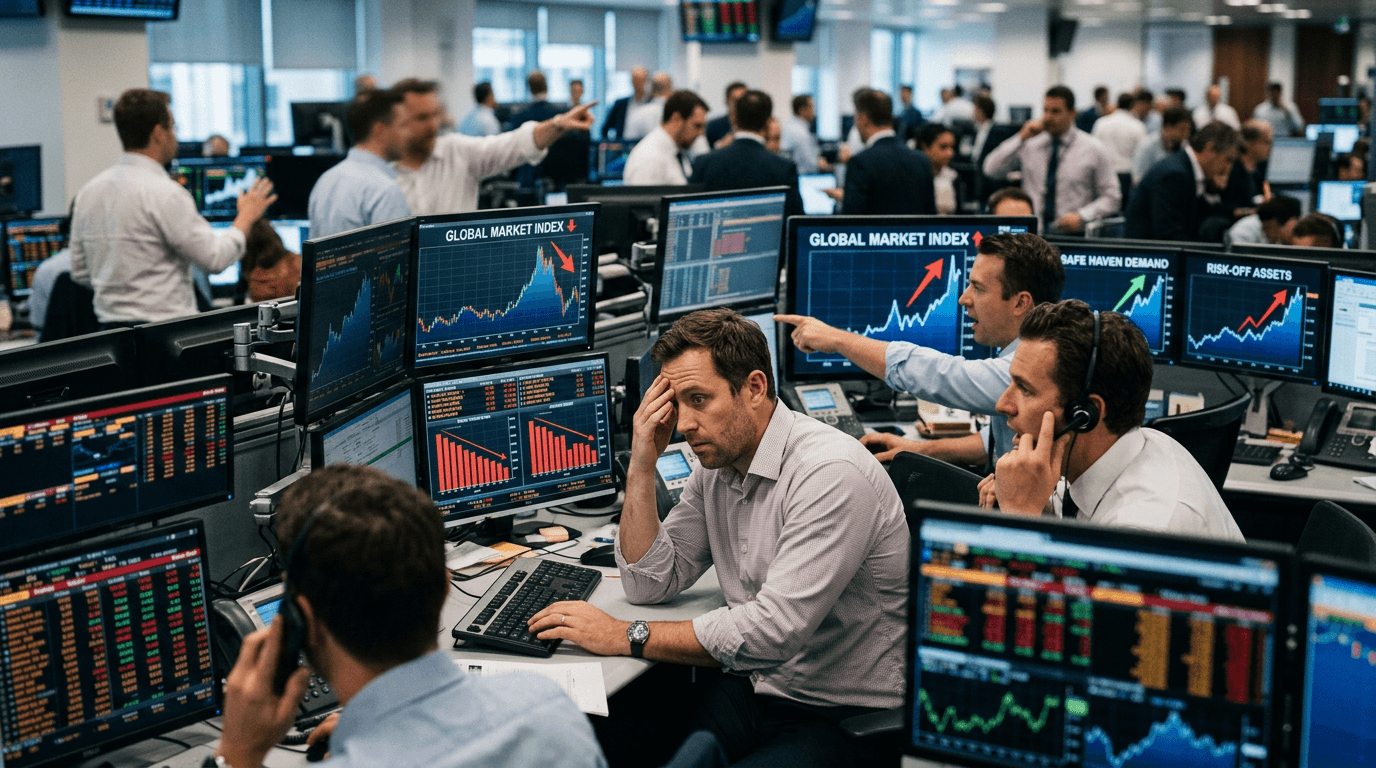
Chinese tariffs are back in the spotlight, and this time the move is aggressive enough to rattle global markets. Beijing has announced steep retaliatory tariffs of up to 125% on select U.S. imports and warned it will “ignore the U.S.” if Washington continues to raise tariffs, triggering risk-off flows in Asian trading, pressure on regional stock index futures, and fresh safe-haven demand for the dollar and yen. For traders, this is not just a political story – it is a volatility story.
WHAT HAPPENED – AND WHY IT MATTERS
China’s latest decision to raise tariffs on U.S. goods up to 125% marks a new escalation in an already entrenched trade confrontation. In previous rounds of the U.S.–China trade war, Beijing has repeatedly responded to U.S. tariff hikes with its own additional levies and non-tariff measures.[1][3][7] This new move continues that pattern but pushes the effective rate on some products into genuinely punitive territory.
Historically, China has aimed its retaliatory tariffs at politically sensitive sectors such as agriculture and key manufacturing industries, including products like soybeans, pork, corn, wheat, and other farm goods, alongside certain industrial and high-tech imports.[1][3][6] While details of the latest list are still being parsed, markets are assuming a similar focus on areas that maximize pressure on U.S. exporters and policymakers.
The language accompanying the announcement also matters. Beijing’s warning that it will “ignore the U.S.” if Washington keeps hiking tariffs signals less willingness to negotiate around each incremental move and more readiness to let the conflict run. That increases the perceived probability of a drawn-out tariff cycle rather than a short, tactical flare-up.
Key takeaway: This is not a routine adjustment – it is a clear escalation, both in tariff levels and tone, which raises the risk of a prolonged and more damaging trade confrontation.
Market Reaction: Risk-off In Real Time
Markets have responded in a familiar pattern. Asian equity index futures moved lower as investors priced in weaker export demand, potential supply chain disruption, and a hit to corporate margins. Export-heavy indices, particularly those with significant technology, industrial, or auto exposure, tend to underperform when tariff headlines break, as earnings expectations get marked down.
In foreign exchange, the initial reaction has been classic risk-off: stronger dollar and stronger yen, driven by safe-haven demand and deleveraging of carry trades. During previous tariff escalations, the yen typically rallied against high-yielding and emerging market currencies as traders cut risk and sought liquidity. Similar flows can pressure Asian and commodity-linked currencies, especially those tied to global trade and manufacturing.
Credit and rates markets often echo this shift. Government bond yields in developed markets tend to fall as investors rotate into perceived safe assets, while credit spreads can widen on concerns about slower growth and weaker corporate balance sheets. Meanwhile, volatility tends to rise across asset classes, particularly in equity index options and FX.
For commodities, the impact is more nuanced. Tariffs that target agricultural or energy products can directly disrupt trade flows, alter price relationships between benchmarks, and create relative-value opportunities. Earlier rounds of Chinese retaliatory tariffs were associated with sharp drops in U.S. agricultural exports and price dislocations in products like soybeans.[6]
Key takeaway: The initial market response aligns with a standard risk-off playbook – weaker equities, stronger safe havens, and higher volatility – creating both hazards and opportunities for active traders.
WHO REALLY BEARS THE COST – ECONOMIC AND SECTOR IMPACTS
A key question for investors is who ultimately pays for these tariffs. Empirical research on earlier phases of China’s retaliatory tariffs found that they significantly reduced the value and volume of imports from the U.S., with near-complete pass-through of the tariffs into import prices.[5] In other words, Chinese importers and consumers largely bore the higher costs, rather than U.S. exporters absorbing the hit via lower pre-tariff prices.[5]
However, U.S. sectors targeted by Chinese tariffs have still felt meaningful pain. One study estimated that China’s retaliatory tariffs on U.S. agricultural goods wiped out around $15 billion in export sales over a 12‑month period, with soybeans taking the largest hit.[6] That kind of disruption can depress farm incomes, erode market share, and force U.S. producers to seek alternative buyers, often at less favorable prices or with long delays.
At a macro level, widespread tariffs act as a tax on cross-border trade. They can weigh on global manufacturing, deter capex, and add uncertainty to corporate planning. For China, higher tariffs on imported inputs may raise production costs and eventually consumer prices. For the U.S., reduced market access in China hurts export-focused industries and can feedback into employment and investment decisions.
Markets will be particularly focused on sectors most exposed to China for revenue or supply chains: semiconductors, autos and auto parts, machinery, and certain consumer brands. Company guidance, order books, and forward-looking indicators like PMIs and export orders will be closely watched for signs that this latest escalation is filtering into real activity.
Key takeaway: Tariffs are not costless for either side – they disrupt trade volumes, pressure targeted sectors, and increase macro uncertainty, with both Chinese buyers and U.S. exporters feeling the strain.
How Traders Can Navigate Heightened Trade Tensions
For traders in a Simulated Finance (SimFi) environment and in live markets, the goal is not to predict every twist in trade rhetoric but to build a robust process for reacting to it.
First, anchor on scenarios. In a “contained tension” scenario, tariffs rise but remain narrow and negotiations continue in the background; risk assets might sell off initially but later stabilize. In an “escalation and entrenchment” scenario, both sides ratchet up tariffs and rhetoric, amplifying risk-off moves, hurting trade-sensitive sectors, and supporting safe havens for longer. Having pre-defined scenarios helps you size positions, set stop levels, and avoid emotional decision-making when headlines hit.
Second, watch the right indicators. Key signposts include: – Any U.S. response in the form of new or higher tariffs, or non-tariff measures. – Details of China’s tariff list: which sectors, what effective dates, and whether exemptions exist. – Exchange rate policy signals around the yuan, which can either cushion or compound the impact of tariffs. – High-frequency data such as export orders, shipping rates, and business sentiment surveys in trade-exposed economies.
Third, adjust risk management to reflect higher uncertainty. Elevated headline risk often means fatter tails in price distributions. That argues for more conservative position sizing, tighter intraday risk limits, and more active use of volatility-aware tools. In a SimFi setting, traders can use this type of news shock to practice managing gaps, slippage, and correlation shifts that often occur when macro risk spikes.
Finally, be wary of chasing the first move. Trade-war headlines can produce sharp, short-lived swings followed by reversals as details emerge or policymakers soften their tone. Momentum can be powerful, but liquidity may thin out in fast markets, increasing execution risk. A disciplined approach that combines technical levels with macro context tends to outperform reactive trading driven purely by emotion.
Key takeaway: Treat trade tensions as a recurring macro factor, not a one-off shock; build scenario plans, monitor key signposts, and adapt risk management to handle sudden bursts of volatility.
LOOKING AHEAD: TARiffs AS A STRUCTURAL RISK FACTOR
The latest Chinese move to lift tariffs on select U.S. goods up to 125% underscores that trade policy remains a structural source of risk for global markets, not a resolved issue.[1][3][7] For investors and active traders alike, this means tariff headlines will continue to drive periodic spikes in volatility, shifts in sector leadership, and abrupt rotations between risk-on and risk-off positioning.
Rather than trying to forecast political decisions, traders are better served by focusing on how those decisions transmit into prices: which assets act as shock absorbers, which sectors are structurally vulnerable, and how quickly correlations can change when uncertainty rises. In that sense, episodes like this are not just events to trade; they are stress tests that help refine strategy, risk controls, and decision-making processes.