
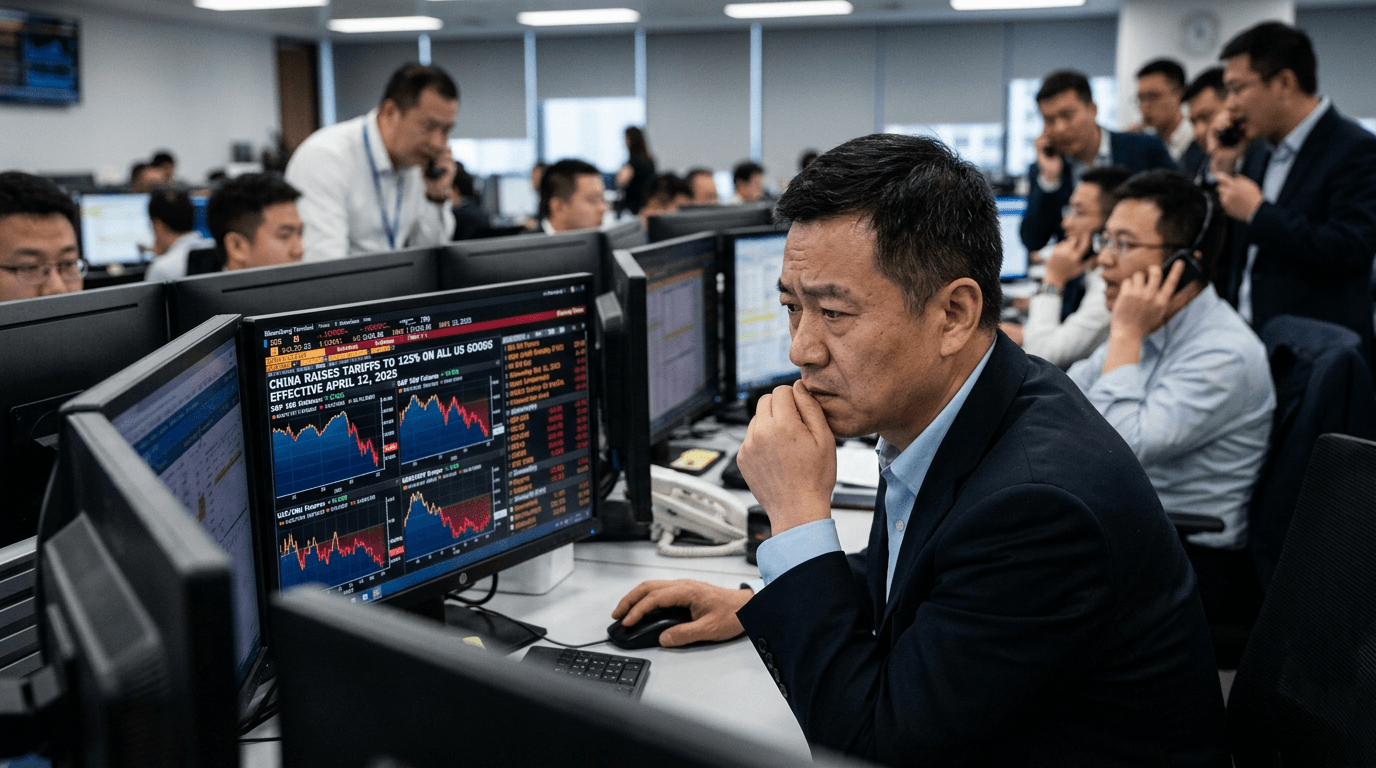
The trade tensions between the United States and China reached a critical inflection point on April 12, 2025, when Beijing announced a sweeping 125% tariff on all American goods. This move represented far more than a routine tit-for-tat response in an ongoing trade dispute. It signaled China's willingness to escalate economic warfare to unprecedented levels and marked a decisive moment that would reshape market dynamics across global financial systems. For traders and investors monitoring these developments, understanding the full scope of this tariff announcement proved essential to navigating the turbulent months ahead.
THE RAPID ESCALATION LEADING TO 125%
The 125% tariff did not emerge in isolation. Rather, it represented the culmination of a breathtaking escalation that unfolded over just a few days in early April 2025. The Trump administration had initiated aggressive tariff increases on Chinese goods, beginning with a 145% rate and introducing an additional 50% tariff on April 9, bringing the total to 104%. When the US raised rates again to 125% on April 10, China wasted no time in responding. On April 11, China's State Council Tariff Commission announced it would match the US rate at 125%, effective the following day. This rapid response demonstrated Beijing's resolve to maintain tariff parity while sending a clear signal that further escalation would meet swift retaliation.
What made China's announcement particularly significant was the language accompanying it. The Ministry of Finance stated this represented the "final adjustment," suggesting that the market had reached a breaking point where it could "no longer accept US goods exported to China." However, officials added a crucial caveat: should the US continue escalating, China would cease negotiating entirely. This messaging indicated Beijing's belief that 125% represented a ceiling, yet left room for even steeper increases if American policy remained unchanged.
Immediate Market Consequences
The ripple effects across global markets were immediate and substantial. For equity traders, the announcement triggered significant volatility across multiple sectors. Companies with substantial China exposure faced sharp selloffs, particularly those in technology, automotive, and industrial manufacturing. Energy markets reacted to the uncertainty, with crude oil futures experiencing notable swings as traders reassessed demand forecasts in light of potential economic slowdowns in both China and the United States.
Currency markets proved especially sensitive to the tariff announcement. The Chinese yuan faced immediate depreciation pressure, but the People's Bank of China intervened strategically. On April 9, the USD/CNH reference rate was set at 7.2066, the lowest level since September 2023, indicating a deliberate weakening strategy. This currency depreciation served a dual purpose: it aimed to boost the global competitiveness of Chinese exports by making products cheaper in dollar terms, while also providing some offset to the tariff burden on exporters. For forex traders, this intervention marked a critical policy signal that Beijing was willing to deploy multiple economic tools simultaneously.
Beyond traditional tariffs, the economic impact assessments proved sobering. Economists forecasted that China's annual GDP growth could decline by one to two percentage points due to combined pressures from elevated US tariffs and reduced purchasing power in American markets. For an economy accustomed to 4-6% growth rates, this represented a meaningful drag on expansion prospects.
Non-tariff Measures And Strategic Escalation
What often received less attention than the headline tariff numbers were the accompanying non-tariff measures. China's Ministry of Commerce added 12 US companies to its export control list, effectively cutting them off from access to Chinese dual-use goods with both civilian and military applications. Additionally, six companies landed on the Unreliable Entity List due to their involvement in arms sales or military technology cooperation with Taiwan. These moves extended the conflict beyond simple import duties into investment pathways and technology transfer mechanisms, creating broader barriers that would prove difficult to dismantle even if tariffs were eventually negotiated downward.
What This Means For Traders And Investors
For traders monitoring these developments, the 125% tariff announcement required a comprehensive reassessment of portfolio positioning. Companies reliant on Chinese supply chains faced margin compression from higher input costs. Those dependent on US exports to China confronted severely diminished market access. Technology stocks proved particularly vulnerable given China's historic role as both a supply source and end market for many firms.
The forward guidance from Chinese officials merited careful attention. By explicitly stating this represented their final adjustment absent further American escalation, Beijing provided traders with a potential floor for near-term tariff levels. However, the accompanying warning that China would cease negotiations if the US continued escalating introduced tail risk that could justify maintaining hedges or reducing leverage in sensitivity positions.
Key Takeaways For Informed Decision-making
Traders needed to recognize that this tariff structure reflected not just trade friction but potential structural shifts in global supply chains. Companies began immediately evaluating supply chain diversification away from both the US and China. Currency weakness in the yuan presented both risks and opportunities depending on positioning. Most importantly, the messaging around "final adjustments" and no further negotiations suggested that while tariff rates might stabilize at these levels, the uncertainty around implementation and potential workarounds would persist for an extended period.
Understanding the full context of China's 125% tariff announcement enabled traders to move beyond headline reactions and develop more sophisticated strategies accounting for the multi-dimensional nature of modern trade disputes.