
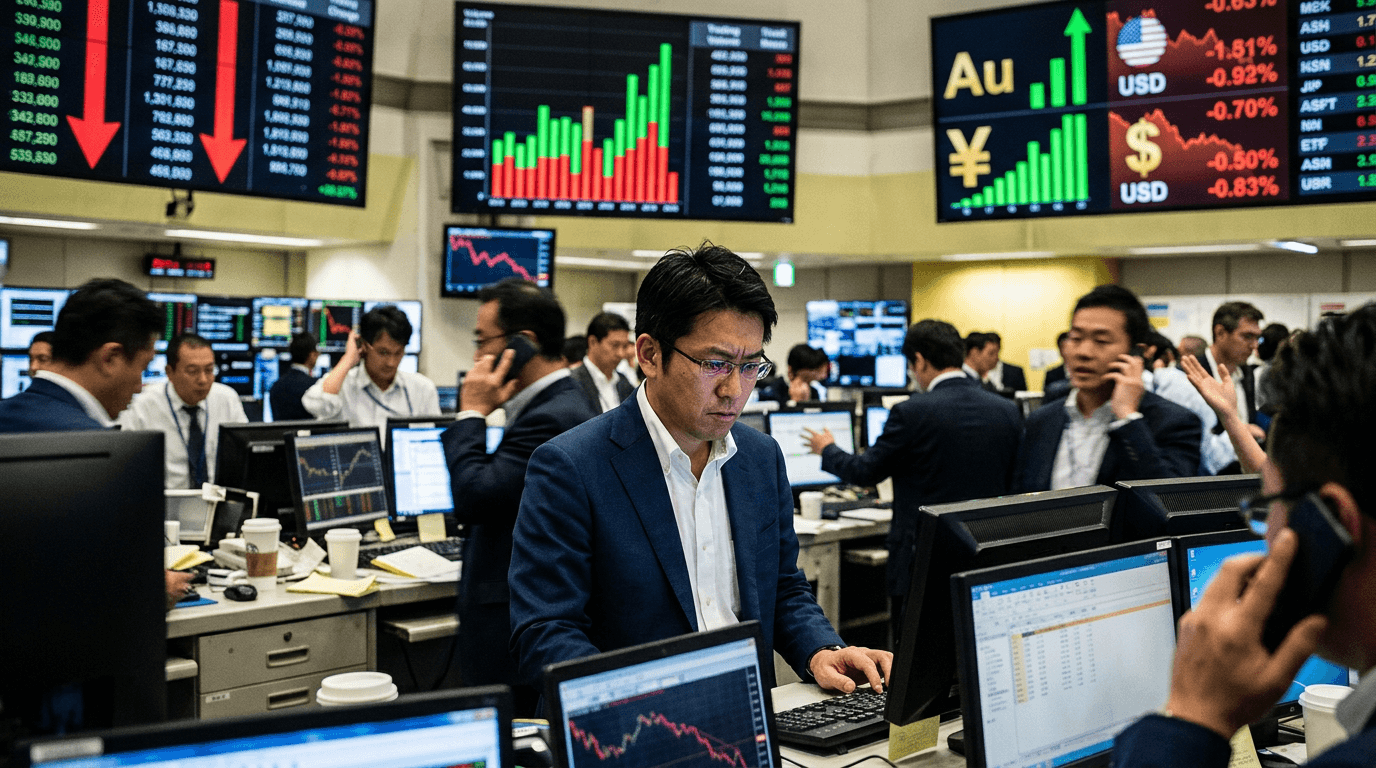
China’s decision to roll out additional tariffs of up to 125% on U.S. goods marks a new, more aggressive phase in the trade confrontation between the world’s two largest economies.[1] By warning it will “ignore” Washington if the U.S. keeps raising duties and insisting the U.S. must bear responsibility for any damage, Beijing is signaling it is prepared for a prolonged standoff rather than a quick compromise.[1] For traders, this is not just political theater; it is a volatility engine that can reshape trends in FX, commodities, and global equity indices.
WHAT EXACTLY CHINA ANNOUNCED – AND WHY IT MATTERS
China has progressively escalated its tariff response to U.S. measures this year, moving in steps before landing on additional duties as high as 125% on U.S. imports.[1] Earlier moves included double‑digit tariffs on U.S. agricultural products and a broad hike that initially matched and then overshot U.S. rates, before China declared it would halt further increases after reaching the 125% level.[1] The latest announcement confirms that upper range and sets an April implementation date, effectively locking in a punitive tariff wall around a wide swath of U.S. exports.
This escalation comes against a backdrop where average U.S. tariffs on Chinese goods have already surged to nearly 40–50% when stacked across various programs, including Section 301, Section 232, and newer global or reciprocal tariffs.[1][2][3][4] China’s average tariffs on U.S. exports have also risen into the 30%+ range, covering virtually all goods.[4] In other words, the trade relationship is already heavily taxed; the new measures are less about first‑order price changes and more about signaling and risk.
The message from Beijing is twofold. First, it wants to show domestic audiences that it is not backing down under U.S. pressure. Second, it is trying to raise the economic and political cost for Washington by targeting sectors where U.S. exporters had remaining competitive advantages. The result is a higher perceived probability of a drawn‑out trade war, which markets immediately translate into growth, inflation, and risk sentiment adjustments.
Market Reaction: Fx, Safe Havens, And Volatility
The immediate reaction has been classic “risk‑off.” Growing trade‑war risk has weighed on Asian FX, with regional currencies under pressure as investors price in weaker export demand, potential supply‑chain disruptions, and lower growth visibility.[2] Currencies closely tied to global trade and manufacturing cycles, such as the Korean won or Taiwanese dollar, tend to be particularly sensitive to headlines that imply slower world trade volumes.
Safe‑haven flows have supported the Japanese yen and gold as investors seek assets perceived as resilient during geopolitical and macroeconomic stress.[2][3] The yen typically benefits in risk‑off episodes due to Japan’s net creditor status and the unwinding of carry trades, while gold is treated as a hedge against policy uncertainty, financial instability, and the risk that trade conflict bleeds into broader economic or monetary disruptions.[2][3]
Equity and commodity futures linked to global growth have also seen increased volatility.[2][3] Export‑heavy equity indices in Asia, cyclical sectors like industrials and semiconductors, and growth‑sensitive commodities (such as copper or energy benchmarks) are all vulnerable to the perception that trade frictions will dampen capex, trade volumes, and industrial output. Volatility here is not just directional; traders are repricing the distribution of outcomes, which tends to lift implied volatility across options markets.
How Tariff Shocks Filter Through The Macro Landscape
To trade this kind of headline risk effectively, it helps to understand the transmission channels:
1. Growth expectations Higher tariffs act like a tax on cross‑border trade and production networks. They can reduce export volumes, discourage investment in globally oriented manufacturing, and slow productivity‑enhancing specialization. Over time, that pressures corporate earnings in trade‑exposed sectors and can trim GDP growth forecasts, especially for open economies and key hubs in Asian supply chains.[1][4]
2. Inflation dynamics Tariffs raise the landed cost of imported goods. Depending on the degree of pass‑through, this can push up consumer and producer prices. The impact is not uniform: some sectors see substitution towards domestic suppliers, while others simply pass higher costs down the chain. For markets, the key question is whether central banks treat tariff‑driven inflation as temporary or as a trigger for tighter policy.
3. Risk sentiment and positioning Even before the economic data reflect any damage, the uncertainty alone can cause investors to de‑risk. Portfolio shifts out of equities and into safe havens, de‑leveraging of carry trades, and wider credit spreads can all occur just on the expectation of prolonged tension. That is why we often see outsized price moves around tariff headlines relative to the immediate economic impact.
4. Policy and retaliation loops Tariff announcements can spark retaliation, which then provokes further measures, creating a feedback loop. The more markets believe policymakers are locked into a tit‑for‑tat spiral, the more they price in a “trade war regime” rather than a short‑lived skirmish. China’s explicit warning that it will ignore Washington if tariffs continue—and that the U.S. must bear responsibility—reinforces the perception of a hardened stance.[1]
Implications For Traders: From Fx To Equity Index Futures
For traders and SimFi participants, the key is translating these macro themes into trading frameworks and scenarios rather than reacting emotionally to every headline.
In FX, the pattern so far supports a stronger yen and relative resilience in other safe‑haven or lower‑beta currencies when trade tensions flare, versus pressure on export‑heavy Asian FX and high‑beta EM currencies.[2][3] Simulated strategies might include testing long JPY versus a basket of trade‑sensitive currencies during periods when tariff risk is rising, then stress‑testing those positions against scenarios where tensions unexpectedly ease.
In commodities, gold remains a primary beneficiary of elevated geopolitical and trade uncertainty.[2][3] At the same time, industrial metals tied to global manufacturing can underperform if traders downgrade growth expectations. Scenario analysis can explore how different tariff paths—such as further broadening of covered goods versus a negotiated pause—affect both spot prices and futures curves.
Equity indices and single‑stock exposures require more granular thinking. Export‑oriented markets and sectors (for example, certain Asian indices, global industrials, and supply‑chain‑driven tech names) may show higher beta to trade headlines. On the other hand, domestically focused sectors or companies less reliant on cross‑border supply chains might offer relative defensiveness. Simulating portfolio performance under various tariff shock assumptions helps highlight concentration risks and potential hedges.
Practical Takeaways: How To Approach Heightened Trade Tensions
There are several practical steps traders can take in response to this new tariff phase:
• Focus on regimes, not single headlines Treat the move to 125% tariffs as part of a broader “high‑tariff, high‑uncertainty” regime rather than a one‑off event.[1][4] Build strategies that are robust across a range of trade‑war scenarios, from escalation to partial de‑escalation.
• Monitor cross‑asset signals Watch how Asian FX, the yen, gold, and global equity futures respond around policy announcements. Divergences—for example, equities selling off while FX remains calm—can highlight mispricings or short‑term opportunities.[2][3]
• Use volatility as an input, not just an outcome Rising implied volatility in FX, equity, and commodity options is itself a tradable signal. Test strategies that either harvest volatility when it becomes excessively elevated relative to realized moves, or that use options to structure asymmetric payoff profiles around key policy events.
• Separate structural from tactical views Structurally, elevated tariffs and hardened rhetoric point to a more fragmented, less predictable trade environment in the coming years.[1][4] Tactically, however, sharp risk‑off moves driven by headlines can overshoot and then mean‑revert. SimFi environments are well suited to testing how portfolios behave under both the long‑term trend and the short‑term noise.
China’s latest tariff announcement is less about the exact percentage points and more about the signal: neither side appears ready to back down quickly. For traders, that means treating trade policy as an ongoing macro driver, integrating it into cross‑asset analysis, and using robust, tested strategies to navigate the volatility it creates.