
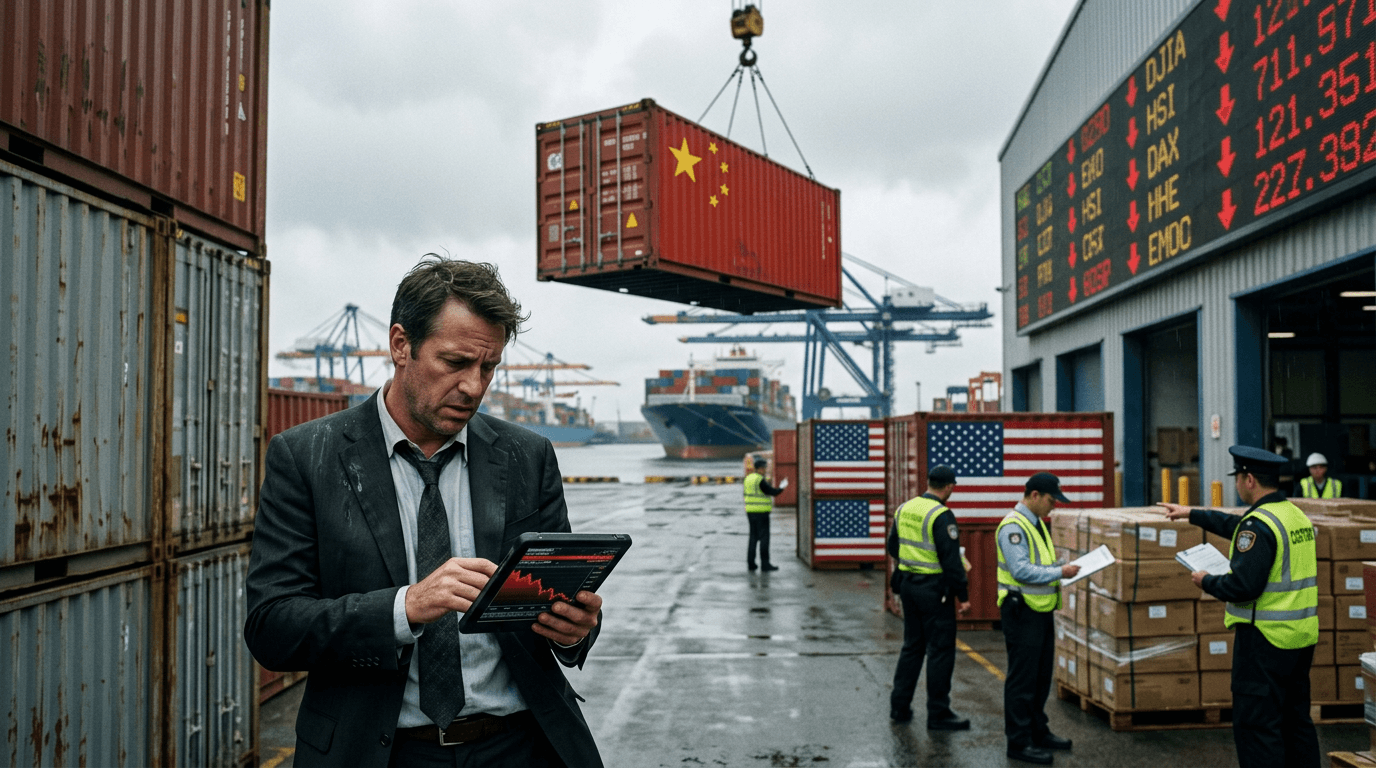
China's recent decision to increase tariffs on American imports marks a pivotal point in the ongoing trade dispute between the two economic giants. The tariff rate on US goods has been elevated to 125%, a substantial jump from the previous 84%[1]. This move, effective from Saturday, has intensified market uncertainty, prompting traders and investors to reevaluate their strategies amidst these new economic challenges[1].
The Escalating Tariff War
The announcement of the 125% tariffs is the latest episode in the escalating trade war. The US has responded with its own set of tariffs on Chinese imports, bringing the total tariff rate on Chinese goods to 145%[1]. This retaliatory cycle reflects a shift towards protectionist policies, moving away from traditional free trade agreements and signaling a potential long-term restructuring of global trade dynamics.
China's Finance Ministry has openly criticized the escalation, labeling further US tariff increases as "a joke in the history of the world economy"[2]. Despite the heated rhetoric, there are indications that China might refrain from imposing further levies at this time, suggesting a calculated approach to its response strategy[2]. Additionally, China has lodged complaints with the World Trade Organization regarding US tariffs, indicating its intention to pursue both economic and legal avenues in addressing these issues[1].
Immediate Market Reactions
The tariff announcement had immediate repercussions for global markets. European stock indexes, which initially showed slight gains, fell sharply following the news of China's tariff increase[1]. This reaction underscores the intricate interconnections of today's global economy, where trade tensions between major powers can have far-reaching effects across continents and asset classes. Volatility is now a hallmark of current market conditions, with traders remaining vigilant about developments in the trade conflict.
The severity of the current tariff rates raises fundamental concerns about the sustainability of normal trade flows. According to China's assessment, US exports to China are now facing an unviable market scenario[2]. This stark reality underscores the disruption these measures have caused to bilateral trade relations, suggesting that American exporters may need to reconsider their business strategies and supply chain configurations.
Trade War Dynamics And Strategic Positioning
The trade conflict is becoming increasingly complex, with both nations leveraging various tactics. The Trump administration has implemented reciprocal tariffs as part of a broader strategy aimed at addressing what it perceives as unfair trade practices and persistent US trade deficits[3]. By invoking national emergency provisions, the administration justifies these tariffs as necessary for national security and economic protection.
China, on its part, has shown a readiness to engage in high-stakes negotiations while maintaining a defensive stance. Reports suggest that Chinese leaders, including President Xi, are reaching out diplomatically to other nations and international bodies, aiming to form coalitions against American trade policies[2]. This suggests the conflict is not limited to tariffs but also involves broader geopolitical strategies.
Implications For Traders And Investors
The present tariff environment poses both significant challenges and opportunities for market participants. Traders should be aware that high volatility is likely to persist as long as trade tensions remain unresolved. Companies with substantial exposure to US-China trade face the risk of margin compression and reduced profitability, indicating that sector rotation strategies might be beneficial. Industries reliant on Chinese supply chains or export access, such as manufacturing, technology, and consumer goods, are particularly vulnerable.
Investors should assess how increased tariff costs may translate to higher prices for imports, potentially leading to inflationary pressures that could affect monetary policy decisions. The uncertainty surrounding future trade policies complicates long-term strategic planning, possibly deterring investment in capital equipment and expansion across various sectors.
Strategic Takeaways
Grasping the current trade environment is crucial for anyone involved in financial markets today. The 125% tariff rate represents more than just a number—it signifies a significant alteration in how governments handle international trade. Traders and investors need to closely monitor developments in trade negotiations, policy shifts, and retaliatory actions, as these can drive major market movements. Employing diversification strategies that mitigate concentration risk related to US-China trade exposure could provide a buffer during this period of heightened uncertainty.
Though the path forward remains uncertain, current signals suggest both nations are prepared to maintain pressure while leaving room for potential negotiation. Successfully navigating the market in this climate requires staying informed, retaining flexibility, and understanding the complex nature of global trade and financial systems.