
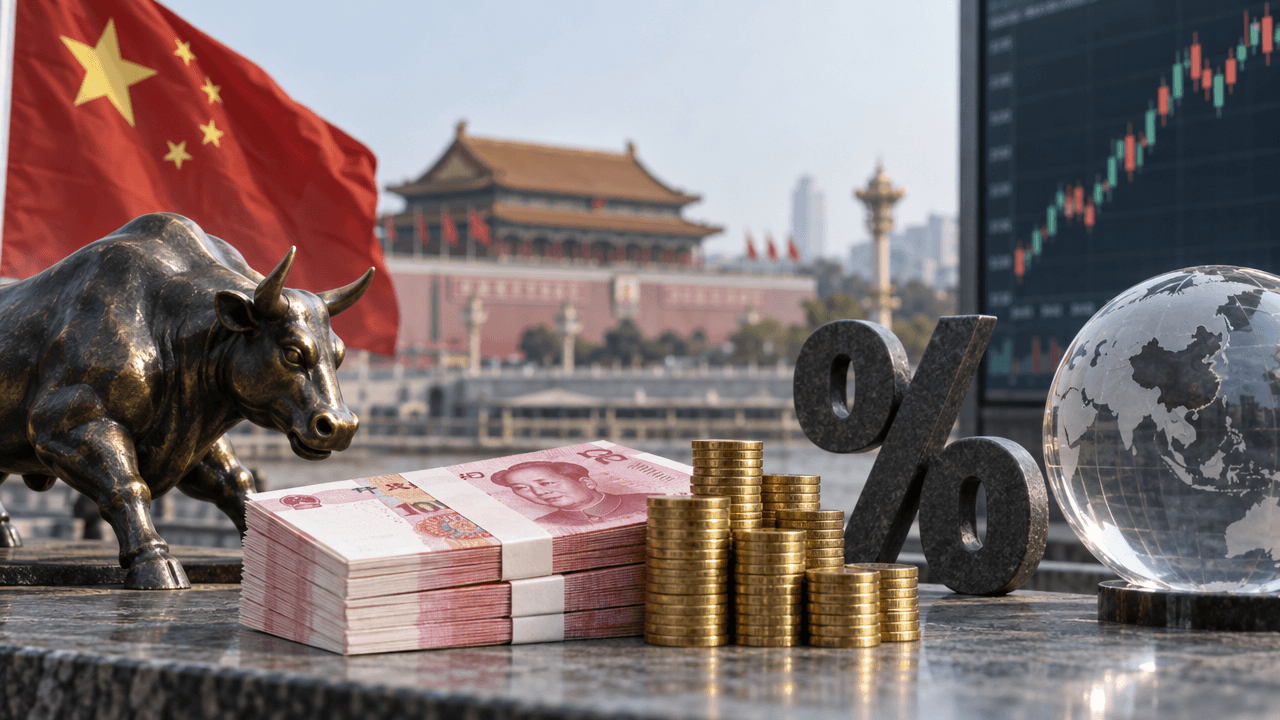
China’s latest policy moves reveal a central challenge for policymakers: support a fragile equity market without allowing the yuan to appreciate so quickly that it creates new pressure on exporters and the broader economy. Authorities have revived tools designed to stabilize stocks, encouraged companies to buy back shares, and asked banks to hold more foreign currency reserves as the yuan’s rally reached its longest winning streak in decades. Together, the measures show Beijing is actively managing both asset prices and exchange-rate expectations. [1]
Stock-market Support Returns
The People’s Bank of China has reintroduced a swap facility for securities firms, fund managers, and insurers. The program allows eligible financial institutions to exchange certain assets for central-bank liquidity, giving them additional resources to invest in equities and improve market functioning. More than 30 securities firms and fund managers reportedly applied for quotas exceeding 100 billion yuan. [6]
The central bank has also made its relending program for share buybacks and shareholder stake increases a permanent arrangement rather than a temporary measure. At the same time, the financing rate was reduced from 1.25% to 1%, lowering the cost for participating institutions and listed companies. [5]
The China Securities Regulatory Commission separately urged major index constituents and leading technology companies to “actively buy back shares” and help stabilize their market value. Rules governing buybacks are also being adjusted, including greater flexibility for companies seeking to support share prices. [3]
The policy objective is straightforward: improve liquidity, reinforce investor confidence, and reduce the risk that falling share prices undermine business sentiment and household wealth. However, these measures do not guarantee an immediate market rebound. Chinese equities still depend on earnings growth, consumer demand, property-market conditions, and confidence in future economic policy.
Why Buybacks Matter
A share buyback occurs when a company uses its cash or borrowed funds to repurchase its own stock. By reducing the number of shares available in the market, buybacks can increase earnings per share and signal that management believes the company is undervalued.
Buybacks can also provide a direct source of demand when investors are selling. This is particularly relevant for large index constituents and technology companies, whose price declines can weigh heavily on broader benchmarks.
There are important limitations. A buyback is most useful when a company has strong cash flow, manageable debt, and attractive long-term investment opportunities. If a company borrows excessively to repurchase shares, the short-term price benefit may come at the cost of weaker financial resilience.
Investors should therefore distinguish between a buyback announcement and an actual repurchase. Key questions include how much stock the company plans to buy, how quickly it will execute the program, how it will be financed, and whether insiders are purchasing shares alongside the company.
THE YUAN’S WINNING STREAK ENDS
While authorities were supporting equities, the central bank acted to slow the yuan’s appreciation. The onshore yuan weakened as much as 0.4% against the dollar, ending a 13-session winning streak that had been the longest since 1996. [4]
The PBOC said it would raise the foreign-exchange reserve requirement for financial institutions by two percentage points, from 4% to 6%, effective November 15. [14] In practical terms, banks will need to hold more of their foreign-currency holdings with the central bank. The move reduces the amount of foreign exchange readily available in the domestic financial system and communicates that officials are uncomfortable with the speed of the yuan’s rise. [9]
A stronger currency can reduce the cost of imported goods and improve purchasing power for Chinese consumers. It can also make overseas debt cheaper to service. But rapid appreciation may hurt exporters by making Chinese products more expensive for foreign buyers. It can also encourage speculative inflows if traders expect the currency to keep rising.
By cooling the rally, policymakers gain greater control over the pace of adjustment. The message is not necessarily that officials want a sharply weaker yuan. Rather, they appear focused on avoiding a one-way market that could attract short-term speculation and create difficulties for trade-oriented businesses.
What Markets Should Watch Next
The effectiveness of the equity measures will depend on follow-through. Investors should monitor whether listed companies complete announced buybacks, whether large technology firms participate, and whether stock-market liquidity improves beyond the initial policy reaction.
Market participants should also watch the CSI 300 and technology-heavy indexes for evidence that selling pressure is easing. Early skepticism is understandable: Chinese equities still declined even after the latest support announcements, indicating that investors may want stronger evidence of improving fundamentals before committing significant capital. [11]
In the currency market, the key question is whether the yuan settles into a more stable trading range or begins a sustained decline. The reserve-ratio adjustment may interrupt appreciation without reversing longer-term forces such as China’s trade balance, interest-rate differentials, dollar conditions, and foreign investor positioning.
For traders, this environment favors disciplined risk management over assuming that policy support creates a permanent market floor. Volatility can remain elevated as investors weigh official intervention against economic data and corporate earnings.
The Broader Policy Signal
China’s actions demonstrate a preference for targeted, incremental intervention rather than a single large stimulus announcement. Authorities are using liquidity facilities, lower-cost financing, regulatory flexibility, and currency-management tools at the same time.
For equity investors, the measures can provide a short-term backstop and improve the probability of stabilization. For currency traders, they signal that rapid yuan appreciation may face official resistance. For global markets, the developments matter because China’s equity and currency policies influence capital flows, commodity demand, regional currencies, and investor sentiment across Asia.
The central takeaway is that policy support can change market incentives, but it cannot replace sustainable earnings growth or stronger economic confidence. Buybacks may help establish a floor, while currency management may reduce exchange-rate volatility. Whether those measures produce a durable recovery will depend on the fundamentals that policy alone cannot permanently manufacture.