
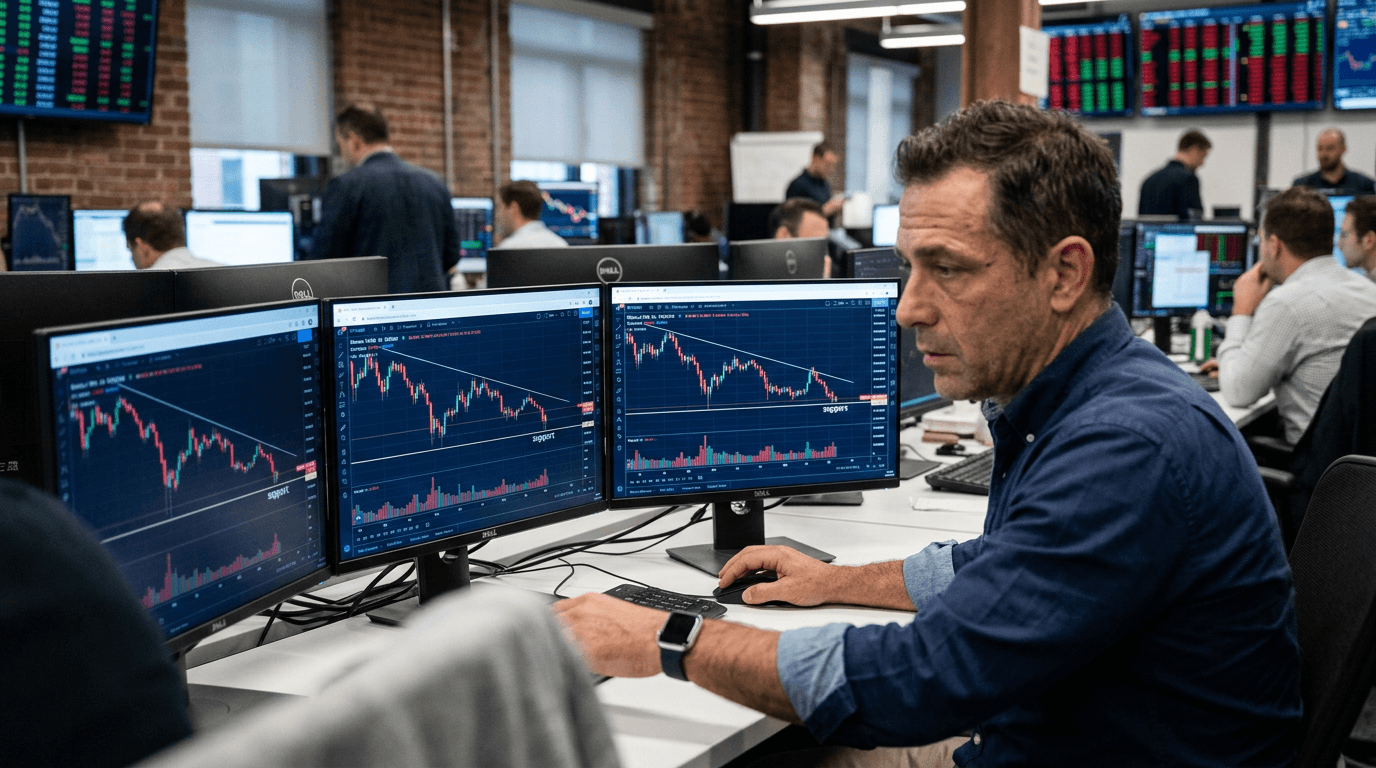
Major cryptocurrencies are pausing at crucial price levels as the US‑Iran war drags on and energy prices remain elevated, keeping risk appetite in check. After a roughly 2% pullback, Bitcoin, Ethereum and XRP are hovering near important technical supports, reflecting a market that is nervous but not yet in outright panic. These three coins sit among the largest and most closely watched crypto assets globally, often acting as bellwethers for sentiment across the broader digital asset market[3][5][6].
Macro Geo-politics And Crypto Risk Sentiment
Crypto markets no longer trade in isolation from the macro backdrop. Bitcoin, Ethereum and XRP are widely traded by U.S. and global investors and increasingly behave like high‑beta risk assets during periods of stress[6][7][9]. When geopolitical tensions escalate, correlations between major cryptocurrencies and equities or other risk assets tend to rise, as broad risk‑off flows dominate individual narratives.
The ongoing US‑Iran war adds multiple layers of uncertainty: potential supply disruptions in energy markets, shifting alliances, and the possibility of wider regional escalation. Historically, such conflicts push investors toward cash, short‑term government bonds and, occasionally, traditional safe havens like gold, while reducing exposure to speculative assets. In this environment, crypto’s dual identity—as both a potential “digital gold” and a high‑volatility asset—creates mixed behavior. Some long‑term holders stay put or add to positions, viewing Bitcoin as a hedge against geopolitical and monetary instability, but short‑term traders often reduce leverage and tighten risk limits.
Surging energy prices amplify the macro stress. They feed directly into inflation, complicating central bank policy decisions and potentially keeping interest rates higher for longer. Higher real yields and tighter financial conditions tend to weigh on growth‑oriented and speculative segments of the market, including cryptocurrencies, as discount rates rise and liquidity becomes more scarce.
Key Supports And What They Signal
The fact that major coins are consolidating near key supports rather than breaking down is an important signal. Technical “support” refers to a price zone where buying interest historically has been strong enough to halt declines, often around previous lows, major moving averages, or psychologically important round numbers. Recent trading has seen Bitcoin hold above a critical support area even as sentiment indicators flash “extreme fear,” highlighting the tug‑of‑war between pessimism and structural demand[10].
When prices approach these levels after a modest pullback, as they have following the recent 2% decline, traders watch several things closely: depth of buy orders, reaction to intraday news, and whether bounces are supported by volume. A clean hold and bounce from support can trigger short covering and fresh long entries, setting the stage for a potential reversal. Conversely, a decisive break—especially on heavy volume—can unlock a next leg lower as stops are triggered and forced selling accelerates.
For active traders, support zones are more than markers on a chart; they are planning tools. Position sizing, stop‑loss placement, and timing of entries are often built around these areas. In simulated finance environments, traders can test how different strategies behave when price repeatedly tests or breaks major supports, revealing how their rules perform across varied volatility regimes without risking real capital.
Energy Prices, Financial Conditions And Digital Assets
Energy is a critical input for both the macro economy and the crypto ecosystem. Elevated oil and gas prices tighten household and corporate budgets, weigh on growth expectations, and sustain inflation pressures. That, in turn, nudges central banks toward a more restrictive stance, reinforcing tighter financial conditions. When borrowing costs rise and liquidity recedes, speculative assets often face valuation headwinds, and crypto is typically among the first areas where risk is trimmed.
For cryptocurrencies, there is an additional link: mining economics. Bitcoin and certain proof‑of‑work assets rely on large quantities of electricity to secure their networks[9]. Higher energy costs compress miner profit margins, particularly for less efficient operations. If prices stay near support while energy costs climb, some miners may need to sell a larger share of their holdings to cover expenses, increasing potential supply and adding to downward pressure.
At the same time, the broader digital asset complex includes categories such as stablecoins, which are designed as cash‑like instruments pegged to fiat currencies and used as transactional and parking vehicles during volatile periods[6][8]. In risk‑off episodes tied to macro shocks, traders often rotate from volatile coins into stablecoins to reduce price exposure while staying within the crypto ecosystem. That behavior can help explain why headline tokens hold support: some selling is offset by tactical reallocations rather than wholesale exits from digital assets.
Trading Psychology: Caution Near Support
The current environment illustrates how psychology shapes market behavior. With war headlines constant and energy prices elevated, traders are highly sensitive to negative surprises. Sentiment gauges frequently show fear dominating greed, and order books can thin out, making markets more prone to sharp, short‑lived moves when news hits. The decision to “trade cautiously” near support reflects an awareness that the next catalyst—whether de‑escalation or escalation—could trigger an outsized move.
Practically, caution takes several forms: smaller position sizes, lower leverage, tighter stops, and more selective trade entry criteria. Many participants prefer to wait for confirmation (a sustained hold above support, a clear momentum shift, or concrete signs of geopolitical progress) before committing significant capital. Others focus on relative value, such as whether major coins like Bitcoin and Ethereum, which rank among the top cryptocurrencies by market capitalization, are outperforming or lagging alternative assets[3][5][6].
For portfolio builders and longer‑term investors, this is a time to revisit risk budgets and scenario plans. How does the portfolio behave if war escalates further and energy prices spike again? What if tension eases and central banks signal a more benign rate path? Thinking in probabilities and ranges rather than certainties helps avoid emotional decision‑making driven solely by the latest headline.
How Simulated Finance Can Help Navigate Uncertain Markets
Simulated finance platforms are particularly valuable when major cryptocurrencies are pinned near critical supports against a backdrop of war and macro stress. By trading in a risk‑free environment that mirrors real market conditions, participants can rehearse their responses to different scenarios: a sudden break of support on escalation, a relief rally on ceasefire rumours, or a slow grind higher as energy prices normalize.
Traders can design rule‑based strategies that explicitly incorporate volatility, correlation shifts, and macro indicators—then stress‑test them across historical periods of geopolitical tension and commodity shocks. How does a trend‑following system handle repeated tests of support? Does a mean‑reversion approach survive a sharp downside break? These are questions that can be answered empirically in simulation, with detailed performance analytics.
Beyond strategy testing, simulated finance encourages disciplined habits: journaling trades, documenting thesis and risk parameters, and reviewing outcomes with data rather than emotion. That discipline is crucial when live markets are dominated by fear and uncertainty. By the time traders transition from simulation to real capital, they have a clearer playbook for handling volatile conditions like those currently facing Bitcoin, Ethereum and XRP—conditions where caution near key supports is not just prudent, but essential.