
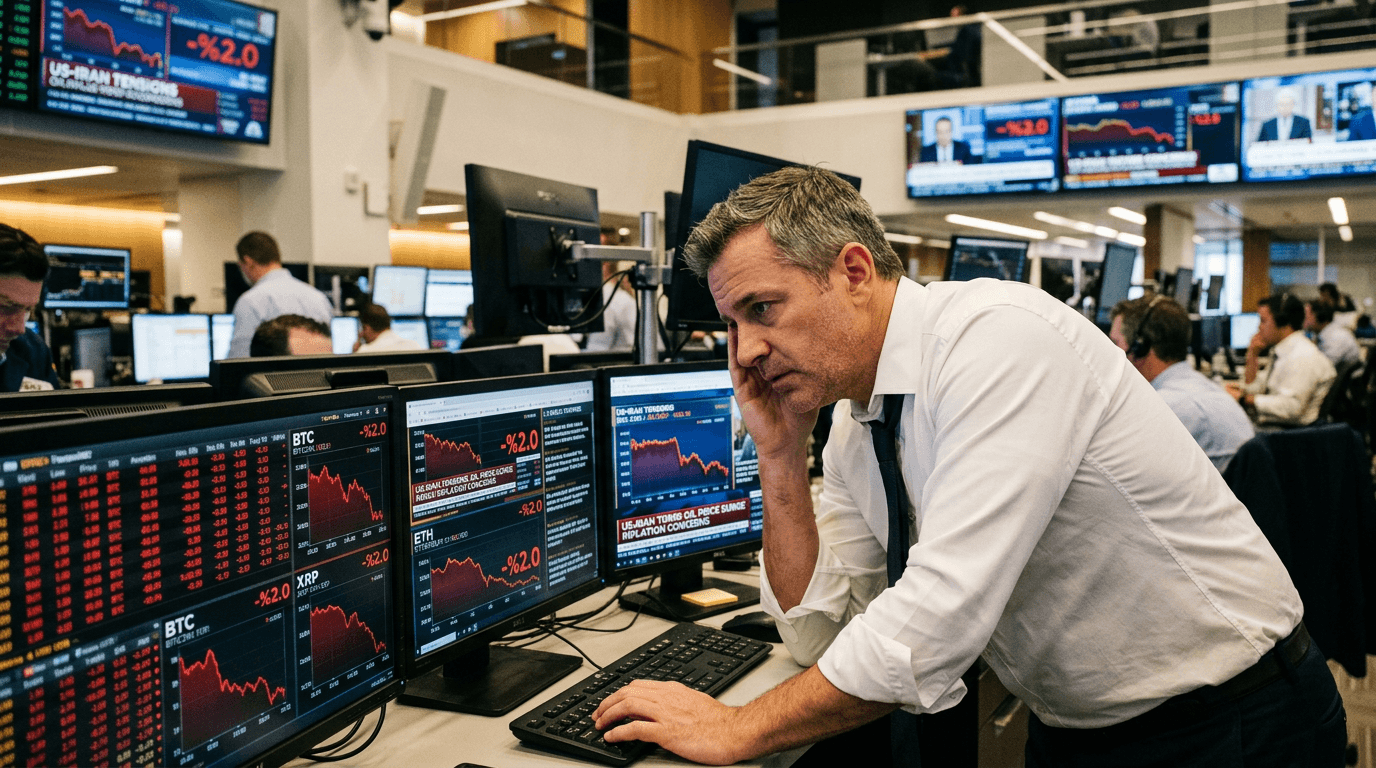
The cryptocurrency market is sending a cautious signal as Bitcoin, Ethereum, and Ripple retreat toward critical support levels amid escalating geopolitical tensions. Currently trading near $71,000, $2,000, and $1.33 respectively, these three major digital assets have experienced a modest 2% pullback that reveals far more about market psychology than typical price fluctuation. While the decline may appear routine on the surface, the underlying dynamics expose the ongoing tension between bullish fundamentals and the risk-averse positioning that dominates whenever global uncertainty spikes. For traders navigating this environment, understanding both the technical implications and macroeconomic forces behind this pullback is essential.
Geopolitical Tensions Reshape Market Sentiment
The cryptocurrency market's sensitivity to geopolitical headlines has become increasingly apparent throughout 2026. Extended US-Iran tensions have created a persistent risk-off environment that extends far beyond traditional geopolitical risk hedges. What makes this particularly significant is that digital assets—once viewed as uncorrelated macro plays—are increasingly being repriced alongside traditional risk assets when uncertainty peaks. This marks a fundamental shift in how cryptocurrencies behave during periods of global stress.
The current pullback comes as the US-Iran conflict enters its fourth week with no clear resolution in sight. Unlike previous geopolitical flashpoints where investors fled to assets like gold and Treasury bonds, cryptocurrencies are no longer receiving safe-haven flows. Instead, Bitcoin and Ethereum have become liquidity-sensitive risk assets, moving lower alongside equities as investors reduce exposure to anything perceived as speculative or vulnerable to broader financial stress.
Technical Levels Tell The Consolidation Story
Bitcoin's position near $71,000 represents a critical juncture. This level holds both psychological and technical significance, as it sits atop important support zones that have attracted buying interest throughout this pullback. The 2% decline is moderate, suggesting that institutional investors are not panicking but rather taking measured steps to reassess their risk exposure. The consolidation pattern indicates market participants are waiting for clearer signals about both geopolitical outcomes and macroeconomic conditions before committing fresh capital.
Ethereum's struggle to maintain ground above $2,100 deserves close attention. This level represents a key support zone that Ethereum has traded within throughout 2024 and into 2025. A sustained breach below this area would confirm weakness and potentially accelerate declines toward $1,747 and beyond. However, the current price action around $2,000 reflects buyers defending this level rather than capitulation. Ethereum has already rebounded from $1,808, suggesting some resilience despite macroeconomic headwinds.
XRP remains range-bound between $1.33 and $1.42, displaying less dramatic price swings than Bitcoin or Ethereum. This compressed range reflects trader hesitation and a wait-and-see approach until either broader market sentiment improves or geopolitical tensions ease. Paradoxically, XRP's lack of volatility indicates confidence in its support structure—traders are comfortable holding within this range rather than panic selling.
Macroeconomic Pressures Mounting
The geopolitical crisis has triggered a cascade of macroeconomic challenges that directly pressure speculative assets. Oil prices have surged above $92 per barrel, raising inflation concerns and prompting markets to reassess Federal Reserve policy expectations. The VIX volatility index is nearing 25, signaling growing fear in traditional markets and pressuring any asset class dependent on abundant liquidity for valuation support.
Perhaps most notably, investors have begun revising their expectations for Fed rate cuts in 2026 downward. The consensus has shifted toward anticipating potential rate increases later in the year as inflation remains stickier than previously believed. This fundamental change in monetary policy expectations directly diminishes the appeal of speculative positions, as higher rates increase discount rates and reduce the present value of future cash flows—a particular burden for growth and speculative assets like cryptocurrencies.
The US dollar has strengthened amid flight-to-safety flows, further complicating the environment for digital assets. Rising Treasury spreads and tightening financial conditions reflect genuine stress in global markets, not merely headline-driven panic selling. This systemic tightening in financial conditions represents genuine headwind for cryptocurrencies.
What Traders Should Know
Current market conditions offer three critical insights for positioning. First, geopolitical risk remains a primary driver of short-term crypto price action, more so than on-chain metrics or fundamental blockchain developments. Traders should maintain vigilance on Middle East developments and US-Iran diplomatic signals. Second, the current support levels represent realistic entry points for investors with adequate time horizons willing to weather near-term volatility. A hold validates the consolidation narrative; a breach signals weakness. Third, position sizing becomes crucial during elevated geopolitical risk periods, as volatility can spike rapidly if headlines deteriorate.
Institution inflows into crypto products have slowed, with Ethereum spot ETFs experiencing $41 million in daily outflows. This institutional hesitation reflects a genuine reassessment of how cryptocurrencies perform during macroeconomic stress, exposing vulnerabilities previously believed to be uncorrelated to traditional risk factors. That said, the pullback has been measured rather than chaotic, suggesting underlying demand waiting for improved conditions.
Conclusion
The current cryptocurrency pullback represents consolidation rather than capitulation. Bitcoin's 5.7% weekly gain prior to this latest sell-off demonstrates there is underlying demand waiting for conditions to improve. The market has not panicked; rather, it is recalibrating around critical technical support levels while monitoring geopolitical developments and monetary policy expectations. Traders who maintain disciplined position management and stay alert to both technical levels and macroeconomic signals will navigate this period more effectively than those chasing quick trades.