
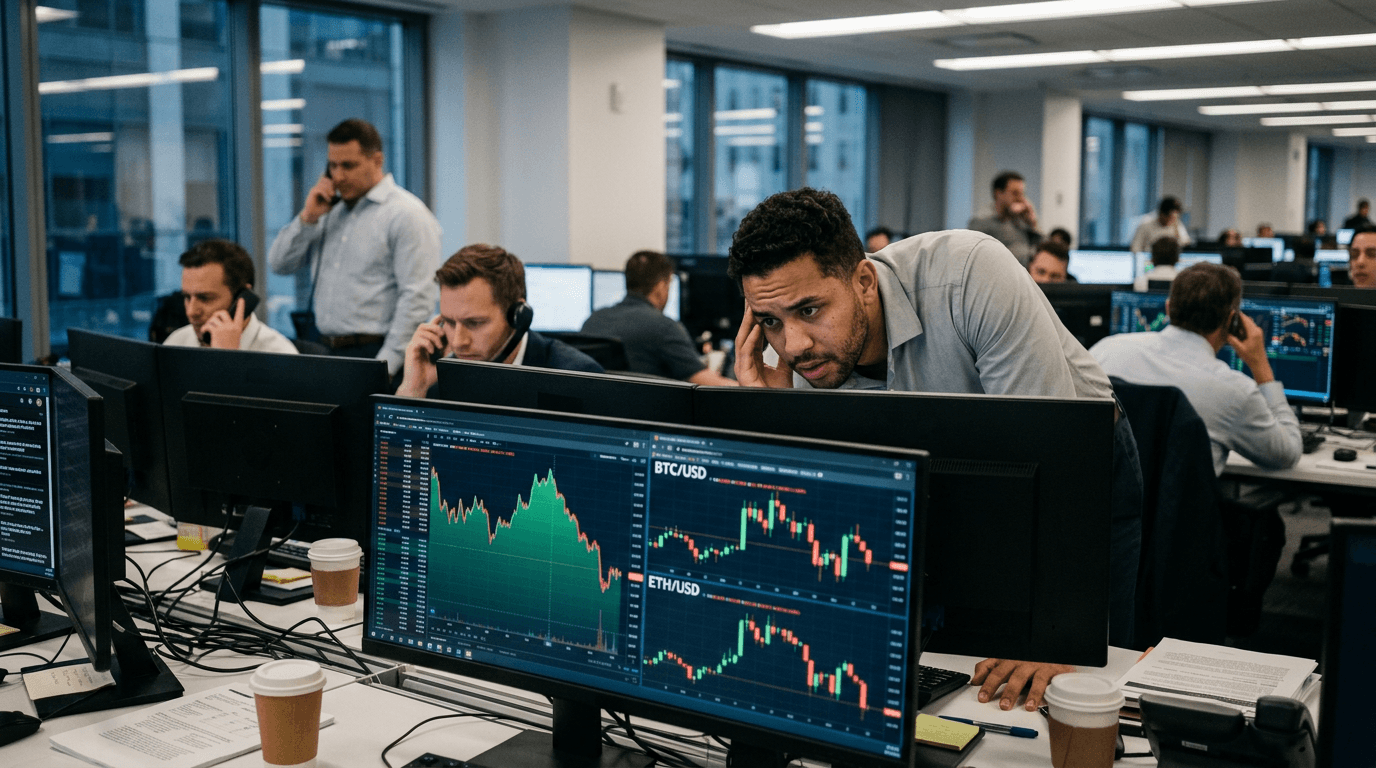
Bitcoin and major cryptocurrencies are pausing after a roughly 2% pullback, with Bitcoin holding just above $71,000 and Ethereum near $2,000 as traders digest rising US–Iran war risks and a sharp move higher in oil prices. In this environment, digital assets are trading defensively near key technical support levels, reflecting a broader cooling in risk appetite across crypto markets.
Market Snapshot: Defensive Trading After A Sharp Pullback
After an extended run-up, a modest 2% decline may not sound dramatic, but the context matters: Bitcoin, Ethereum, and large-cap altcoins are now hovering near levels that many traders view as important support zones. These are price areas where buyers previously stepped in, and where market participants now watch closely for signs that demand is still intact.
This kind of “defensive” trading typically shows up as smaller position sizes, tighter risk limits, and more selective entries. Rather than chasing upside momentum, traders become more willing to wait for clearer confirmation that support will hold before committing fresh capital. Crypto markets are often among the first to absorb pressure when investors shift toward a more defensive stance, because they are seen as higher-risk assets in the broader portfolio mix[1].
At the same time, long-term holders tend to stay put. Many investors view Bitcoin and other major cryptocurrencies through a multi-year lens, and see short-term drawdowns as part of the normal volatility of the asset class[2][4]. That tension between traders going cautious and long-term holders staying firm can create the choppy, range-bound price action that often appears near key support.
Why Geopolitics And Oil Shocks Matter For Crypto
The driver of this latest bout of caution is not a crypto-specific event, but an external shock: rising war risk between the US and Iran, coupled with a spike in oil prices. In traditional markets, such developments are classic catalysts for risk-off behavior. They can raise concerns about global growth, supply disruptions, and renewed inflation pressures.
Crypto is increasingly intertwined with this macro backdrop. Bitcoin and major altcoins often trade as “high beta” risk assets, meaning they tend to move more sharply than stocks or credit when sentiment shifts[4][8]. When geopolitical tensions rise, investors commonly move toward safer, more predictable assets and cut exposure in areas perceived as speculative.
Higher oil prices can also feed worries about inflation and central bank policy. If energy costs surge, inflation expectations may move up, which can increase the odds of tighter monetary conditions. Tighter conditions tend to weigh on liquidity and risk-taking across markets, including crypto, where liquidity and speculative flows play a significant role in price swings[4].
The net result: even if blockchains themselves are not directly affected by geopolitical events, the capital that flows in and out of crypto markets absolutely is. In periods of heightened uncertainty, defensive positioning in digital assets is less about the technology and more about the macro environment in which that technology is priced.
Technical Landscape: Why Support Levels Matter
The phrase “trading defensively near key support” points to a technical picture that many traders will recognize. Support levels are price zones where demand has previously overwhelmed supply, often marked by prior lows, moving averages, or trend lines. Once identified, these levels become focal points for both buyers and sellers.
Recent community analysis of Bitcoin price action illustrates how markets react around such zones: as BTC trades within channels and tests support, failed breaks often lead to rebounds, while rejections near resistance can reinforce the idea that sellers still hold the upper hand[3]. In today’s environment, the fact that Bitcoin is holding just above $71,000 suggests that buyers are not capitulating, but they are cautious.
Defensive trading around support typically means: - More emphasis on confirmation (waiting for a bounce with volume, not just a single intraday wick). - Greater use of stop-losses just below support to limit downside if the level fails. - Preference for shorter time frames and tactical trades rather than aggressive, long-duration bets.
For Ethereum near $2,000 and other majors, the same logic applies. If these levels hold, traders may gradually rebuild risk; if they break decisively, many will interpret it as a signal that the current corrective phase has more room to run.
Risk Management Playbook For Volatile Times
Periods when war risks and macro shocks dominate the narrative are precisely when disciplined risk management matters most. Crypto’s well-known volatility means that even relatively small headlines can translate into large price swings[4]. A few practical approaches stand out.
First, long-term investors may lean on a HODL-style framework, staying invested through turbulence rather than trying to time short-term moves[2]. While emotionally challenging, this approach can help avoid panic selling and whipsawing between fear and FOMO.
Second, some market participants choose to shift exposure toward more defensive corners of the crypto ecosystem during downturns[2]. That can include: - Raising the share of stablecoins versus volatile tokens. - Focusing on larger, more established assets rather than thinly traded altcoins. - Using option or yield strategies designed to monetize volatility and generate income while prices chop.
Third, reducing overall crypto allocations is an entirely valid risk tool[2]. Setting a maximum percentage of portfolio exposure, then rebalancing back toward that target after big market moves, can help keep volatility within a tolerable range.
Academic work on crypto risk in diversified portfolios finds that Bitcoin can contribute meaningfully to active risk, given its volatility and correlation patterns[8]. That reinforces the idea that position sizing, diversification, and clear rules for cutting risk are not just best practices—they are essential safeguards, especially when external shocks like geopolitical tensions are in play.
Lessons For Simulated Finance Traders
For traders using simulated finance (SimFi) platforms, environments like this offer a valuable real-time laboratory. War risk, oil spikes, and defensive price action create complex, fast-changing conditions that are ideal for testing strategies without putting real capital at risk.
In a simulation, traders can: - Practice identifying support and resistance zones and designing trade plans around them. - Experiment with different risk-management rules—such as how tight to set stops or how quickly to reduce exposure when volatility spikes. - Run scenario analyses: What happens to their portfolio if Bitcoin drops 10% from support? What if oil prices continue to rise and risk assets sell off further?
SimFi environments allow traders to capture data on their decisions, review what worked and what didn’t, and refine their playbook for when similar conditions arise in live markets. The goal is not to predict every news event, but to build robust processes that can adapt quickly when the unexpected happens.
As the US–Iran situation evolves and markets reassess the balance between risk and reward, crypto traders—both live and simulated—will continue to watch Bitcoin’s $71,000 zone, Ethereum’s $2,000 area, and comparable levels in other majors. Whether these supports hold or break, the experience offers a timely reminder: in digital assets, understanding the interplay between macro shocks, technical levels, and disciplined risk management is just as important as understanding the underlying technology.