
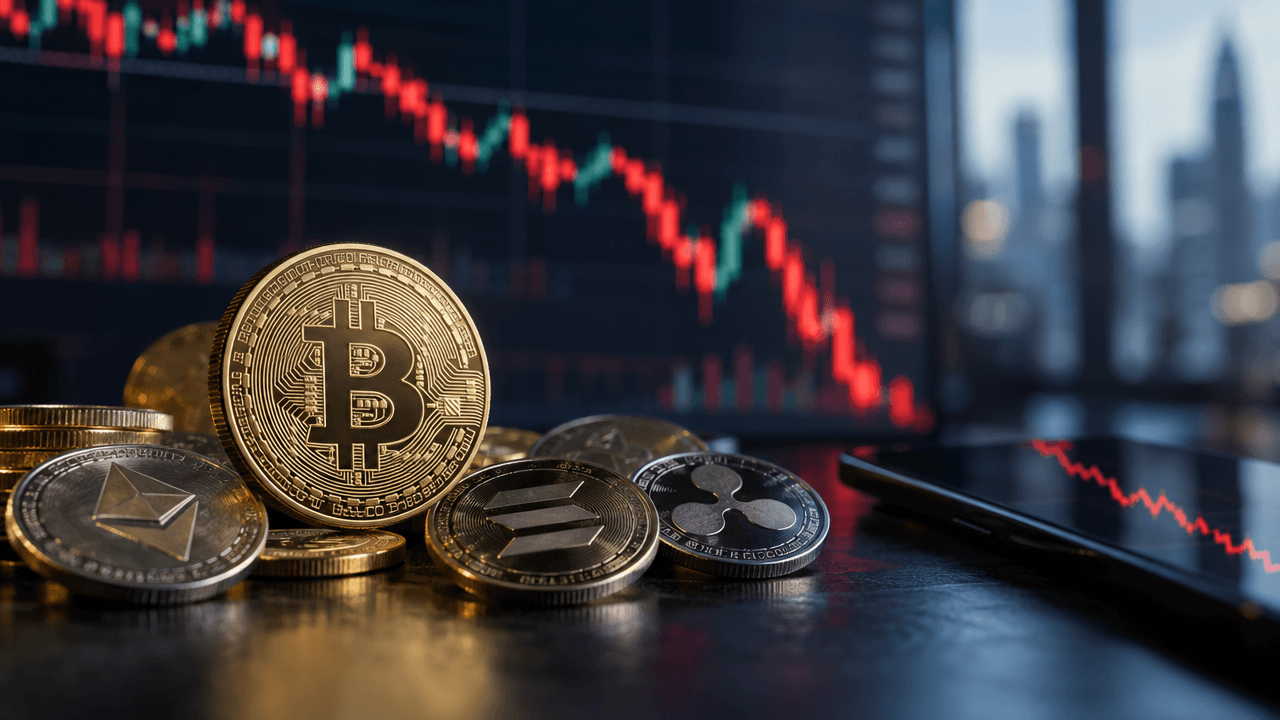
Crypto market capitalization declined roughly 1.1% to $2.81 trillion over 24 hours as selling pressure spread across major digital assets and leveraged positions were rapidly closed. Bitcoin, Ether, XRP, and Solana all moved lower, while approximately $315 million in crypto positions were liquidated, including about $248 million in long positions. [3]
The figures point to more than a routine pullback. When long liquidations substantially outweigh short liquidations, it indicates that traders positioned for rising prices were caught on the wrong side of the move. Forced selling can then intensify the decline, creating a feedback loop in which falling prices trigger liquidations, liquidations add sell pressure, and additional traders are pushed toward exit levels.
What The Market Move Signals
A 1.1% decline in total market capitalization may appear modest compared with the sharp daily swings common in crypto. However, the liquidation data provides important context. Nearly four-fifths of the reported liquidations came from long positions, showing that bullish leverage was concentrated before the market turned lower. [3]
This imbalance matters because leveraged traders control positions larger than their account collateral. If the market moves against them, exchanges can automatically close those positions to limit losses. The resulting market orders can accelerate price declines even when the original catalyst is relatively limited.
The pressure was broad rather than isolated to one token. Bitcoin’s direction continues to influence sentiment across the market, but weakness in Ether, XRP, and Solana suggests that traders were reducing risk across multiple segments. Broad-based declines often reflect a shift in market positioning rather than a problem specific to a single blockchain or project.
Why Long Liquidations Accelerate Selloffs
Long positions benefit when prices rise. Traders may use leverage to increase their exposure, expecting a small upward move to produce a larger return. The risk is that the same leverage magnifies losses when prices fall.
Consider a trader holding a $10,000 position with $2,000 of collateral. A 10% decline in the asset represents a $1,000 loss, consuming half of the trader’s collateral before fees and maintenance requirements. A deeper decline can trigger automatic liquidation. Across thousands of accounts, these forced closures can produce significant additional volume.
The $248 million in long liquidations therefore represents more than a tally of individual losses. It also shows how market structure can amplify volatility. A decline that might otherwise have stabilized can become a cascade as stop-loss orders, margin calls, and liquidations are executed close together.
For traders, liquidation totals should be viewed alongside open interest, funding rates, trading volume, and price support levels. High open interest combined with heavily positive funding can indicate crowded bullish positioning. If prices begin to weaken under those conditions, the risk of a long squeeze increases.
What Traders Should Watch Next
The first question is whether the market can stabilize after leverage has been removed. A liquidation event can sometimes clear excessive risk and create healthier conditions for a rebound. It does not guarantee that prices will recover, but lower leverage can reduce the number of forced sellers waiting above the next support zone.
Bitcoin remains the key market reference point. Traders should monitor whether it holds recent support or continues making lower highs and lower lows. A stable Bitcoin price could give altcoins room to recover, while renewed weakness may keep pressure on higher-beta assets such as Solana and other speculative tokens.
Market breadth is another useful signal. If only a few large-cap assets decline while smaller tokens remain stable, the move may be relatively contained. If most major assets fall together and trading volume expands, risk aversion is likely becoming more widespread.
Traders should also distinguish between realized selling and temporary volatility. Liquidations are evidence that positions were closed, but they do not independently explain why the market moved. Broader influences can include interest-rate expectations, equity-market performance, regulatory developments, stablecoin flows, and changes in institutional demand.
Practical Risk Management Lessons
The latest move reinforces several principles that apply to both traditional and simulated trading environments.
First, leverage should be sized according to the trader’s ability to withstand adverse price movement, not the maximum amount offered by an exchange. Lower leverage provides more room for a position to fluctuate without reaching liquidation.
Second, traders should define risk before entering a position. A stop-loss level, maximum daily loss, and position-size limit can help prevent one volatile session from causing disproportionate damage. These controls are especially important during periods of elevated funding rates or rapidly rising open interest.
Third, avoid treating a liquidation-driven decline as an automatic buying opportunity. Prices can rebound after a long squeeze, but they can also continue lower if the underlying market sentiment has changed. Waiting for evidence of stabilization, such as improving breadth or declining sell volume, may produce a more disciplined entry.
SimFi platforms offer a practical way to test these decisions without exposing real capital. Traders can compare different leverage levels, practice placing stops, and review how a portfolio would have responded during a liquidation cascade. The objective is not simply to predict the next move, but to build a process that remains functional when predictions are wrong.
The Bigger Picture
The decline to $2.81 trillion and the $315 million liquidation wave underline how quickly crypto market conditions can change. The headline percentage loss is only part of the story; the dominance of long liquidations reveals a market that had become vulnerable to a downside shock.
For experienced traders, the event is a reminder to monitor positioning as carefully as price. For beginners, it demonstrates why leverage can turn an ordinary pullback into a severe account-level loss. The most resilient approach is to manage exposure, identify invalidation levels, and avoid allowing a single market move to determine long-term results.
Crypto volatility is unavoidable, but uncontrolled risk is not. As the market searches for a new equilibrium, disciplined traders will focus less on reacting to every candle and more on understanding liquidity, leverage, and the conditions that drive forced selling.