
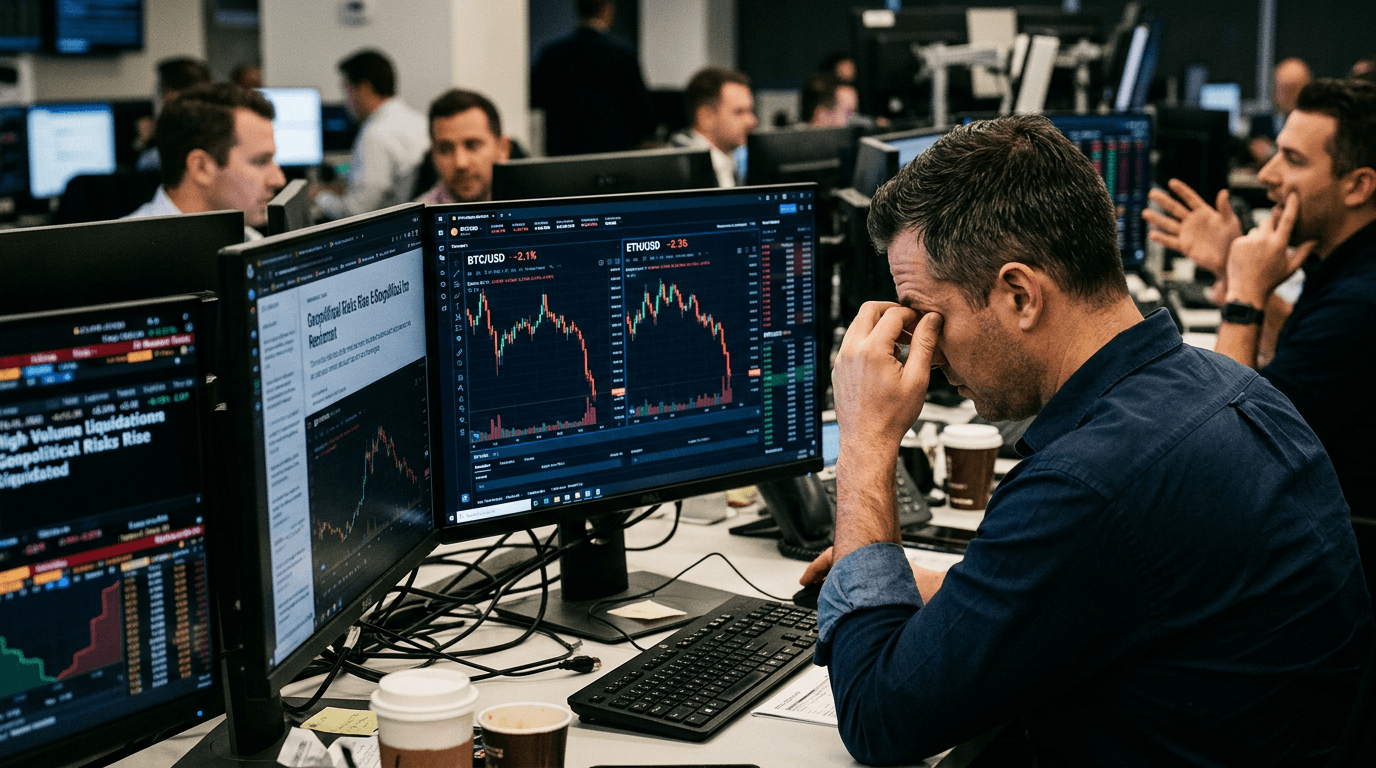
The cryptocurrency market is under pressure as geopolitical tensions continue to influence investor sentiment and trading patterns. Bitcoin, Ethereum, and Ripple have all experienced a pullback of approximately 2% from recent highs. This cautious stance is evident as traders position themselves defensively amidst global uncertainties affecting risk appetite. Bitcoin remains above the $71,000 threshold, Ethereum holds near $2,000, and XRP is consolidating within a sideways trading range. This scenario highlights the dual nature of the crypto market, balancing its role as both a speculative asset and a potential safe haven in an increasingly volatile global climate.
Market Performance
Recent price movements reflect how traders, both institutional and retail, are reassessing risk due to geopolitical uncertainty. Bitcoin's rise above $70,000 indicated strong demand, but the subsequent pullback shows investors are taking profits and reducing exposure to volatile holdings. This 2% correction, though modest, marks a significant shift in momentum as traders seek clearer signals about the future of geopolitical tensions. Ethereum's position near $2,000 suggests similar caution, with investors hesitant to commit large sums until the geopolitical landscape becomes clearer. Meanwhile, XRP's sideways movement indicates a pronounced risk-off sentiment among alternative cryptocurrencies, as investors gravitate towards Bitcoin's perceived stability.
The timing of this pullback is noteworthy. Bitcoin's recent gains were fueled by the belief that cryptocurrencies might act as a hedge against geopolitical disruptions. However, prolonged tensions have necessitated a reassessment. As market confidence wavers, even assets seen as safe havens can experience volatility. This results in the cautious trading patterns observed today, with prices constrained within narrow ranges as participants await either a resolution to tensions or clearer policy directions.
Leverage And Risk
A significant development beneath the surface is the sharp increase in leverage trading activity. Open interest in Bitcoin has surged by 59% over seven weeks, while Ethereum's open interest has risen by 45%, indicating a growing appetite for high-leverage positions among retail traders. This surge introduces a risky dynamic that could amplify market movements in either direction. In an environment where geopolitical news can lead to rapid risk repricing, high leverage creates conditions for rapid liquidation cascades that could turn a modest correction into a sharp decline.
Analysts are expressing concerns about this concentration of leveraged positions. While defensive positioning seems prudent, it could become risky if unexpected headlines trigger risk-off selling. When leveraged traders face simultaneous margin calls, forced liquidations can overwhelm natural support levels, exacerbating volatility when the market is least prepared for it. This explains why Bitcoin, despite maintaining support above $71,000, is trading cautiously rather than aggressively testing higher levels. The leverage structure of the market creates tail risks that warrant defensive positioning.
The Safe Haven Debate
Bitcoin's response to geopolitical tensions has challenged its traditional asset classification. Instead of acting solely as a speculative asset, Bitcoin has shown traits of both a defensive holding and a risk asset, depending on the market context. This hybrid nature causes confusion among investors about Bitcoin's actual role in a diversified portfolio during crises. Some perceive it as digital gold that preserves value when traditional monetary systems are stressed, while others view it as a highly volatile asset subject to selling pressure when investors seek refuge in traditional safe havens like bonds and cash.
The situation is more complex than it appears. Bitcoin's 2.15% daily gain and 5% recovery from weekend lows of $63,000 suggest that some investors see geopolitical stress as an opportunity to accumulate digital assets. However, the ensuing pullback indicates that confidence remains fragile. Until geopolitical tensions resolve definitively or until institutional adoption reaches levels that stabilize prices, Bitcoin will likely continue oscillating between these competing narratives.
Channels Of Geopolitical Impact
To understand why geopolitical events trigger swift crypto market reactions, it's essential to examine the specific channels through which tensions impact cryptocurrency demand and pricing. Economic uncertainty drives investors towards defensive positioning, leading to temporary withdrawals from volatile assets. Sanctions and capital controls in affected regions create an urgent demand for cryptocurrencies as alternatives to controlled financial systems. Additionally, geopolitical conflicts that disrupt energy markets and raise inflation expectations can paradoxically enhance Bitcoin's long-term appeal while creating near-term volatility as macro conditions tighten.
Navigating The Landscape
Today's cautious trading reflects prudent risk management in an uncertain environment. Traders are reducing positions, tightening stops, and waiting for clearer signals before committing new capital. While this defensive stance might seem to miss potential gains, it acknowledges the reality that geopolitical shocks can trigger price fluctuations of 5 to 10% within 48 to 72 hours. The key takeaway for investors is that disciplined risk management and dynamic position sizing, tailored to evolving geopolitical conditions, offer the most reliable approach to navigating this volatile landscape.
---