
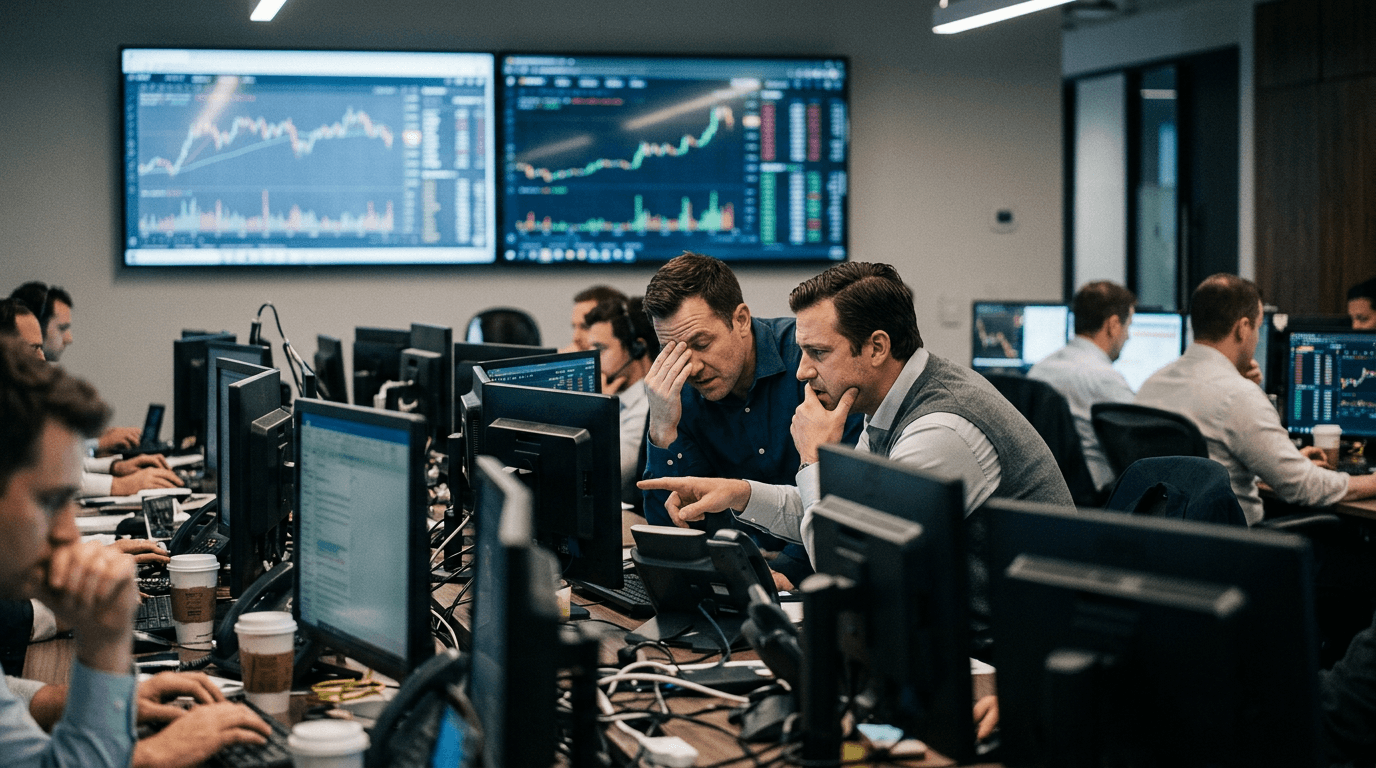
Risk appetite is under pressure across digital assets, with Bitcoin, Ethereum, and XRP extending recent losses as traders respond to US–Iran tensions and a fresh wave of regulatory headlines. War-linked risk aversion and concerns about policy tightening are pushing investors to reduce exposure to volatile assets, leaving top cryptocurrencies vulnerable to further downside.
Risk Sentiment Drives Crypto Sell-off
The latest pullback in major coins is occurring against a backdrop of broader market weakness, not an isolated crypto event. Recent sessions have seen the total crypto market cap fall sharply, with most of the top 100 tokens trading lower as selling pressure accelerates and intraday bounces fail to hold.[1][8] Bitcoin and Ethereum have both slipped toward multi-week lows, while XRP and other large-cap altcoins mirror the downtrend.[5]
Sentiment indicators underscore this shift: fear has replaced greed, and market commentary increasingly focuses on “capitulation” rather than a routine correction.[1][10] Forced liquidations in leveraged products, particularly on large exchanges, have amplified moves as margin calls trigger additional selling.[4] In this kind of environment, technical levels matter more, because breaks of support can set off a chain reaction in derivatives, spot markets, and risk models used by institutional traders.[8]
For traders, the key takeaway is that this is a sentiment-driven move layered on top of macro and geopolitical stress. When risk appetite deteriorates, crypto tends to behave like a high-beta asset class: moves in equities, credit, or commodities are often magnified in digital assets. Understanding that relationship is crucial for both portfolio construction and day-to-day trade sizing.
GEOPOLITICS: US–IRAN TENSIONS AND THE FLIGHT FROM RISK
US–Iran tensions are a focal point in the current sell-off, particularly given the strategic importance of the Middle East for energy flows and global security. Prior episodes of strain around the Strait of Hormuz and other regional flashpoints have historically coincided with risk-off moves across global markets, including crypto.[2][9] When headlines raise the probability of conflict, investors tend to rotate toward perceived safe havens and away from speculative assets.
Recent declines in Bitcoin and ether have been described by analysts as part of a broader “flight from risk,” where high-valuation technology stocks, growth names, and cryptocurrencies come under pressure simultaneously.[9] The logic is straightforward: heightened geopolitical uncertainty increases the perceived downside tail risk, making the volatility profile of crypto less attractive relative to cash, short-term bonds, or defensive equity sectors.
For traders and investors, the practical takeaway is that crypto does not trade in a vacuum. War-linked risk aversion can override bullish on-chain metrics or optimistic narratives. Even if the conflict does not escalate, the mere presence of geopolitical risk can keep volatility elevated and cap the upside until there is greater clarity.
Regulatory Headlines And Infrastructure Fragility
Geopolitics are only one half of the story. Regulatory headlines in the US continue to weigh on sentiment, as traders digest enforcement actions, evolving guidance on stablecoins and staking, and the policy outlook for spot and derivatives products.[3][10] Each announcement feeds into a broader narrative: the rules of the game are still being written, and that uncertainty is itself a source of risk.
At the same time, recent issues around crypto prediction markets on a major US exchange—where trading was temporarily halted due to an outage before being restored—highlight the fragility of market infrastructure. Even short disruptions can undermine confidence, particularly in instruments tied to real-world events such as elections or geopolitical outcomes. Operational risk becomes part of the checklist: it is not just price risk and regulatory risk, but also the reliability of the platforms themselves.
This matters for risk management. A robust trading plan today must consider: - Policy risk: how new rules or enforcement actions could impact specific tokens or business models. - Infrastructure risk: how outages, liquidity constraints, or security incidents could affect execution quality. - Correlation risk: how crypto moves alongside other assets when stress hits the system.
Together, these factors help explain why rallies often stall when regulatory stories are front-page news, even if the underlying technology continues to develop.
How Traders Can Navigate Heightened Uncertainty
Periods like this can be challenging, but they are also valuable learning environments. For active traders, several practical approaches stand out:
First, respect the prevailing trend. Recent technical analysis shows Bitcoin and other majors trading below key moving averages, with multiple consecutive losing sessions reinforcing a clear bearish bias.[8] Trying to “fight” that trend with aggressive long positions can be costly; instead, many professionals scale positions relative to volatility, reduce leverage, and wait for evidence of stabilization at well-defined support zones.[5][8]
Second, prioritize risk management over prediction. With overlapping forces—geopolitics, regulation, macro data—price action can be erratic. Using smaller position sizes, tighter stop-losses, and scenario planning (for example, mapping out what you will do under different conflict outcomes) can help keep drawdowns controlled. Maintaining diversified exposure across asset classes, rather than concentrating solely in crypto, also reduces portfolio-level volatility.[3][9]
Third, separate structural conviction from tactical timing. Long-term investors may believe in the multi-year adoption story for Bitcoin or Ethereum, but that does not mean every dip is a buy. Differentiating between a structural thesis and short-term trading decisions allows you to hold high-conviction assets over time while still acknowledging that entries and exits matter.
For newer traders, simulated environments such as SimFi platforms can be particularly useful in stress regimes. Practicing execution, position sizing, and risk rules in a realistic but capital-free setting helps build discipline before deploying real funds into volatile markets.
What This Means For Simulated Finance Participants
For participants on SimFi platforms like E8 Markets, the current backdrop is an opportunity to study how crypto behaves under genuine stress—without bearing the financial cost. You can: - Backtest strategies across prior geopolitical flare-ups and regulatory cycles. - Observe how correlations between crypto, equities, and safe havens change when risk aversion rises. - Design and refine rules for trading around major event risk, such as setting blackout windows or maximum position limits around key announcements.
Because simulated environments replicate live spreads, slippage, and volatility, they offer a realistic laboratory for testing whether a strategy that worked in calmer times can withstand extreme fear conditions.[1][5] That kind of testing is invaluable: it forces you to think through tail risks, infrastructure outages, and policy surprises, instead of assuming that markets will always be liquid and rational.
Ultimately, periods of pressure on top cryptocurrencies tend to reveal who has robust risk frameworks and who is simply chasing momentum. Whether you are trading live capital or building skills in SimFi, using this environment to deepen your understanding of macro drivers, market microstructure, and your own psychological responses can leave you better prepared for the next cycle—whatever the headlines may bring.