
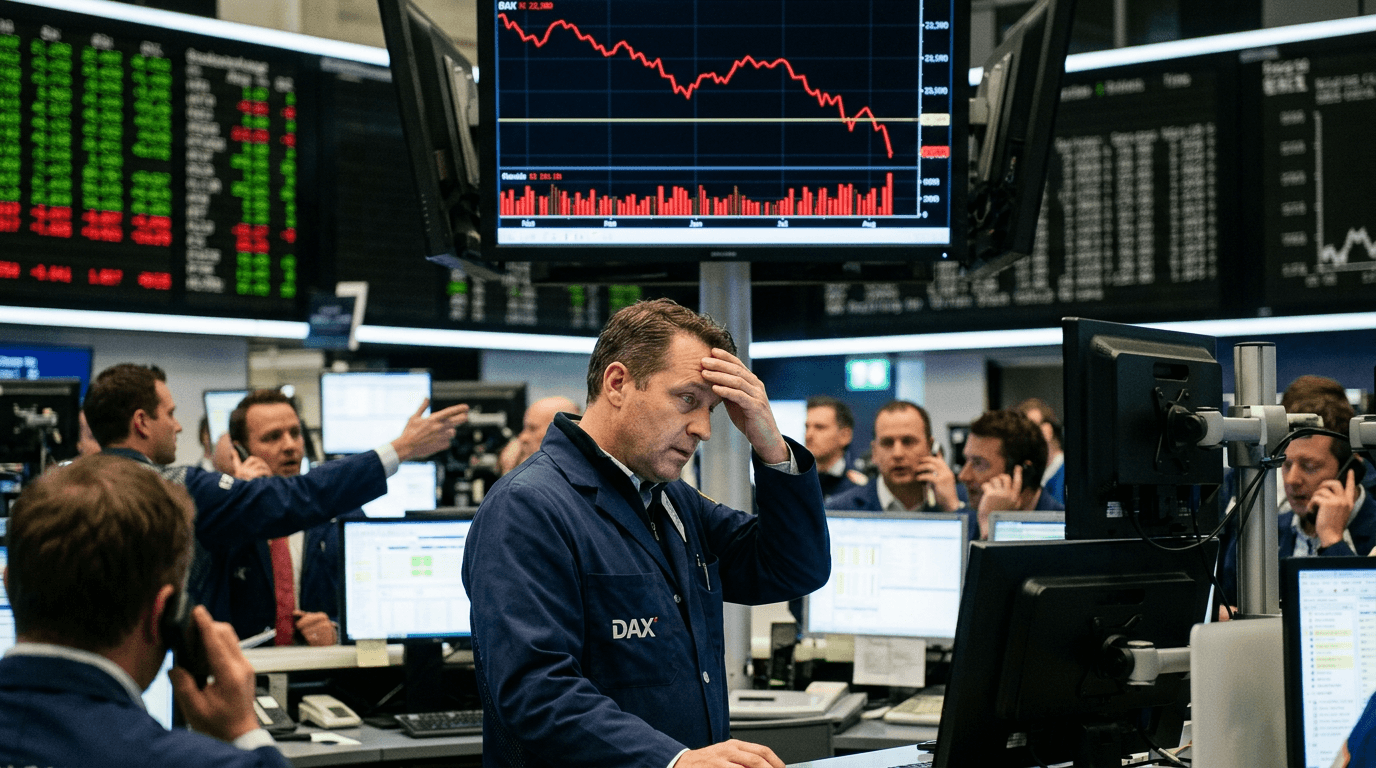
The German equities market finds itself at a precarious crossroads as the DAX 40 breaches crucial support levels. This downturn comes amidst a perfect storm of geopolitical turmoil, energy supply anxieties, and mounting interest rate pressures. On Friday, March 20, the Frankfurt-listed index tumbled 2%, closing at 22,380 points—the lowest since April 2025—marking its third straight session of declines. This sharp downturn raises pressing questions for traders and investors: are further declines imminent, or is stabilization on the horizon?
The Dax's Technical Turmoil
The scale of the recent losses is significant. Over the past month, the DAX has plummeted 10.45%, and year-over-year performance shows a 2.23% decline. In a single session, the index dropped 446 points—a 1.95% fall—as sellers dominated the market across major German equities. The breadth of the selling pressure, which extended beyond a few weak sectors, is particularly concerning. Trading Economics projects the index could fall to approximately 20,868 points within the next year if current challenges persist, indicating a further 7% decline from already low levels.
This technical breakdown paints a decidedly bearish picture. The DAX is now trading at levels not seen in nearly a year, indicating that previously reliable support levels have failed. When Germany's 40 largest blue-chip companies breach support, it typically signals deeper structural issues beyond mere daily market volatility.
The Energy Crisis Intensifies
Behind these numbers lies a fundamental economic issue: Europe's chronic vulnerability to energy supply disruptions. Traders are increasingly anxious about Middle East tensions and their potential impact on global LNG and oil markets. The U.S. has even deployed additional military assets, including three warships and approximately 2,500 marines to the Middle East, highlighting escalating geopolitical risks that could prolong the energy crisis.
For Germany—Europe's industrial powerhouse—energy affordability is crucial. Unlike energy-producing nations, Germany relies heavily on imports, making it particularly vulnerable to supply shocks and price pressures. Investors are spooked, recalling the volatility of 2022-2023. Energy-sensitive stocks like E.ON fell 3.78% in the latest session, reflecting these worries. If geopolitical tensions continue to rise, energy prices could spike dramatically, threatening profit margins across German manufacturing and raising consumer costs.
Rising Rates Squeeze Valuations
Adding to the DAX's woes is the macroeconomic environment of elevated interest rates. As central banks maintain restrictive monetary policies to combat inflation, the cost of capital for corporations rises. This dynamic directly affects valuation multiples, especially for growth-oriented and capital-intensive businesses. Companies that thrived during years of near-zero rates now face a radically different financial landscape where refinancing costs are significantly higher.
The combination of energy shocks and rising rates creates a particularly challenging environment for German equities. Unlike technology-driven markets that can sometimes navigate rate hikes through operational efficiencies, Germany's economy heavily relies on industrial production, export manufacturing, and energy-intensive processes. Tech giant SAP's 4.26% decline signals that even top-tier names are not immune to these pressures.
Sectoral Divergence And Individual Winners
Not all stocks experienced equal declines. Heidelberg Materials and Infineon showed resilience, gaining 2.8% and 2% respectively. Infineon's strength follows a JPMorgan upgrade citing growing demand for AI-driven power technologies, indicating that market participants are selectively rotating into companies with structural growth tailwinds. This selective weakness is emblematic of a transitional market where old investment theses are breaking down before new ones fully emerge.
Key Indicators For Traders
For SimFi traders, several metrics merit close observation moving forward. Trading Economics anticipates the DAX to reach 23,320 by quarter-end, suggesting potential for a bounce from current levels. However, the 12-month target of 20,868 indicates unresolved downside risk. Any escalation in Middle East developments should be closely monitored, as this appears to be the primary catalyst driving the selling pressure. Additionally, keep an eye on European central bank communications regarding interest rate trajectories—signals of rate cuts could provide meaningful relief.
The DAX's breach of support is not a mere technical event but a reflection of genuine economic headwinds. Until energy concerns abate or interest rate expectations shift significantly, German equities will likely remain under pressure, with 20,000 a realistic bear case target in an extended risk-off environment.