
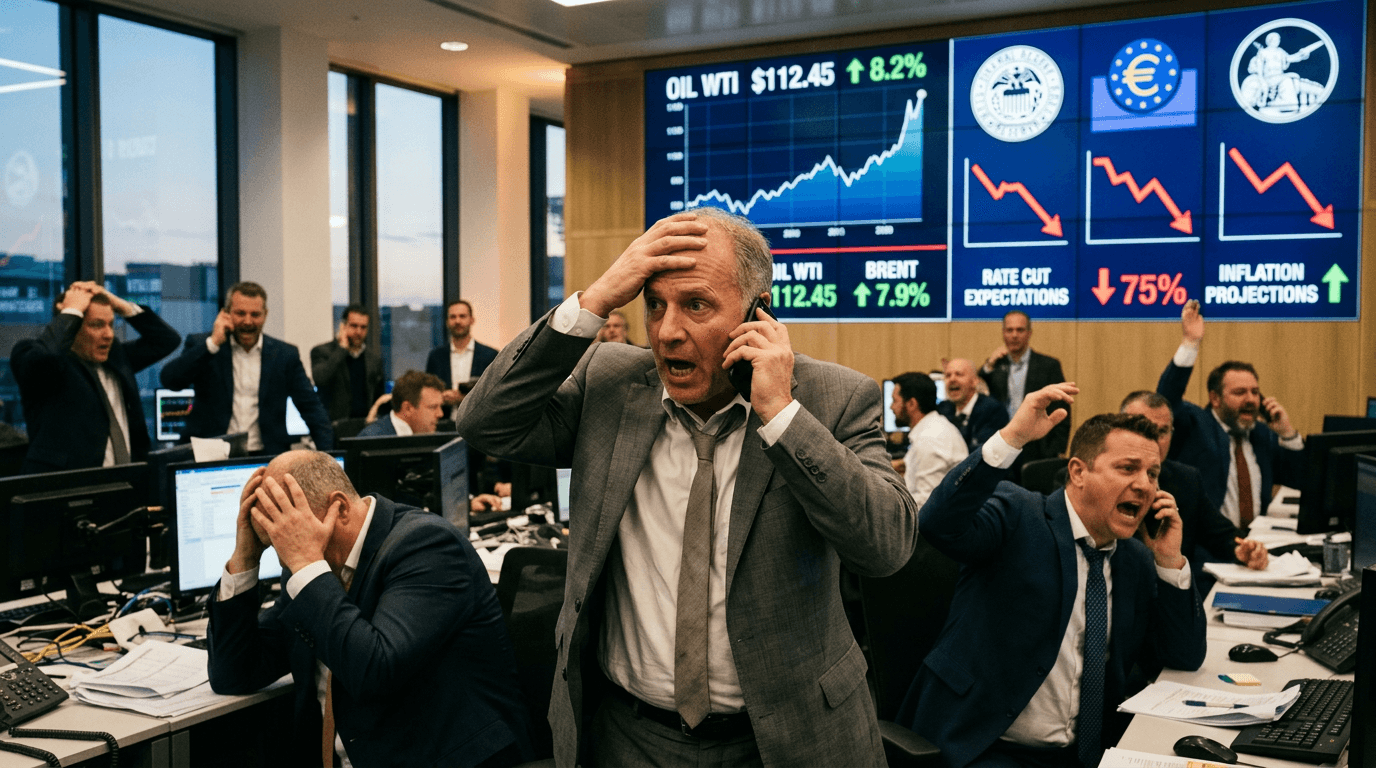
As markets kicked off the fourth day of the US-Iran conflict, the trading floors were painted in red, reflecting a broad-based retreat to safety and a dramatic reassessment of inflation risks. What began as a weekend of coordinated military strikes has now blossomed into a full-blown geopolitical crisis that has fundamentally altered the investment landscape, forcing traders and fund managers worldwide to recalibrate their portfolios and reassess rate cut expectations.
The scale of the market reaction tells the story of how quickly sentiment can shift when uncertainty about energy supplies takes center stage. Stock futures extended major losses as investors grappled with the dual threat of escalating military conflict and surging commodity prices. The Nasdaq traded down nearly 2 percent while the S&P 500 mirrored the weakness, with only a handful of stocks managing to climb in a sea of red. Bitcoin, typically seen as a hedge against uncertainty, paradoxically fell 7.7 percent, trading more like a risk asset than a safe haven as investors rushed to raise cash.
The Oil Shock Reshaping Market Dynamics
The real story behind the market turmoil lies in the energy sector. Oil prices experienced their most dramatic move since 2022, reaching levels not seen since 2024, as traders feared potential disruptions to the Strait of Hormuz—a critical chokepoint through which approximately 20 percent of the world's global oil supply flows. With Iran closing access to this vital passage and the world's largest liquefied natural gas export facility in Qatar shutting down, the potential for extended supply constraints became all too real.
This oil surge carries profound implications far beyond energy stocks. Every percentage point increase in crude prices ripples through the global economy, driving up transportation costs, manufacturing expenses, and ultimately consumer prices at the pump. The national average for a gallon of gas had already climbed to $3.13, signaling the early stages of an inflationary pulse spreading through the economy. For investors who had been hoping for interest rate cuts from the Federal Reserve, European Central Bank, and Bank of England throughout 2026, this conflict delivered a crushing blow to those expectations.
Inflation Fears Trump Growth Concerns
What makes this moment particularly challenging for investors is the shift in market psychology away from growth concerns and toward inflation worries. The Federal Reserve cannot cut interest rates into rising inflation—doing so would only pour fuel on the fire of an already heated economic situation. This realization has forced traders to abandon their earlier expectations of monetary accommodation and instead brace for higher rates for longer.
Treasury markets reflected this shifting landscape, with yields extending losses as traders repositioned portfolios. The conventional wisdom that bonds would provide shelter during geopolitical turmoil was put to the test, and bonds failed to deliver. Instead, real yields adjusted sharply higher as inflation expectations spiked, reminding investors that not all crises create equal opportunities across asset classes.
Divergent Paths For Sectors And Stocks
While the broad market decline was evident, the internals of the selloff revealed important nuances. Technology stocks, which have led the market higher on artificial intelligence enthusiasm, faced particular pressure. Beyond general risk-off sentiment, the sector faced an additional headwind from reports that US officials were considering caps on chip sales to China, limiting NVIDIA's potential sales to individual Chinese companies. This geopolitical dimension to tech regulation added another layer of concern for investors already jittery about the conflict's impact on supply chains.
Defense and aerospace stocks, by contrast, showed some relative resilience as investors considered the potential for increased military spending. However, even this potential bright spot came with complications—the surge in oil and gas prices, combined with potential shipping route disruptions, raised questions about how defense contractors would manage supply chain logistics and ultimately deliver products to customers.
Positioning For Uncertainty
The fourth day of the conflict has fundamentally changed how investors should think about portfolio construction. The traditional 60/40 stock-bond allocation faced renewed scrutiny as both equities and bonds declined simultaneously. The rush to perceived safety benefited the US dollar, as investors sought the stability and liquidity of the world's reserve currency.
For traders and investors, the key takeaway is that the current environment demands active risk management and tactical flexibility. The conflict shows no signs of de-escalating, President Trump has indicated there is no fixed timeline for resolution, and each military strike carries the potential to further disrupt energy markets. Whether this conflict becomes a brief shock to the system or extends into a prolonged geopolitical tension that reshapes global trade patterns and investment returns remains an open question.
What is certain is that sitting passively in portfolio positions without considering the fundamental shift in the risk environment is no longer prudent. The fourth day of this conflict has drawn a line in the sand, marking the transition from a period of monetary accommodation to an era of geopolitical risk management.