
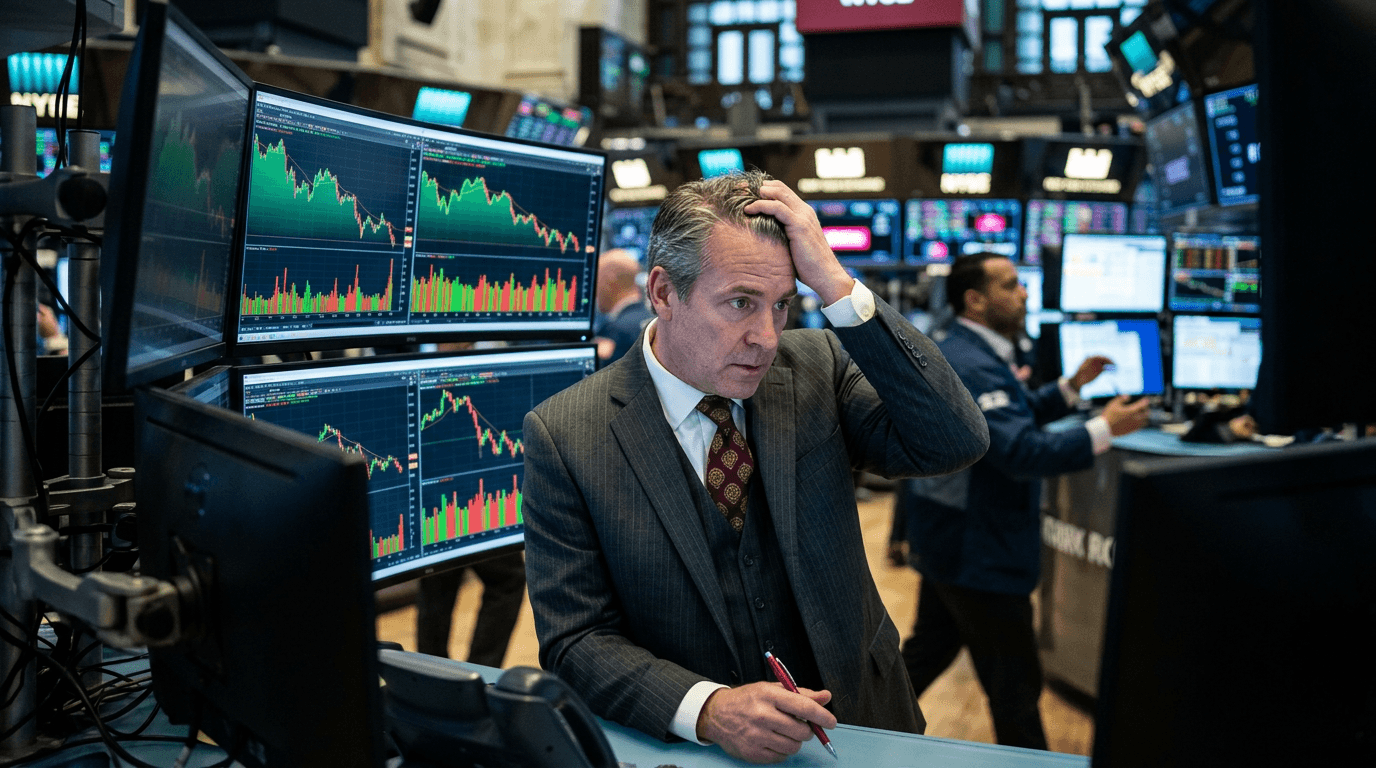
The U.S. dollar has just undergone a sharp repricing, with the dollar index breaking below the psychologically important 100 level as traders rapidly reassess tariff risks and a broader policy shock narrative. A move of this magnitude in the world’s reserve currency does more than shift a few forex charts—it can reset expectations across EUR/USD, GBP/USD, emerging market FX, commodities, and global risk sentiment in one sweep.
Market Snapshot: A Sharp Reset In Dollar Expectations
Big, fast moves in the dollar usually reflect more than a single headline; they signal that markets are reassessing the entire policy backdrop that sits behind the currency. In previous episodes of tariff uncertainty and policy-driven shocks, the dollar has fallen to multi-year lows as traders questioned the durability of U.S. economic leadership and the policy mix.[6][10] After the so‑called “liberation day” on tariffs, for example, the greenback sank to three‑year lows while investors recalibrated the outlook for trade, growth, and corporate earnings.[9]
Today’s drop below 100 on the dollar index echoes those prior episodes: traders are not only reacting to new tariff headlines, but also to what they imply about future retaliation, global growth, and central bank trajectories. When the dollar’s earlier “tariff risk premium” is perceived as overdone, or the policy path looks less supportive, that premium can unwind quickly.[2] The result is a broad-based weakening that cascades into major pairs like EUR/USD and GBP/USD, often alongside a sentiment swing in risk assets.
WHY TARIFF RISKS CAN WEAKEN THE DOLLAR INSTEAD OF STRENGTHEN IT
Textbook intuition often suggests that U.S. tariffs should strengthen the dollar: higher import prices and reshuffled trade flows can boost demand for dollars and improve the trade balance, at least initially.[7] When the U.S. imposes tariffs unilaterally and trading partners do not retaliate, research finds that the dollar tends to appreciate because the U.S. terms of trade improve and global portfolios rebalance toward dollar assets.[7]
However, history and empirical work show that once foreign retaliation enters the picture, the story flips. A study of tariff episodes finds that when markets anticipate broad, credible retaliation, the U.S. dollar often depreciates notably, with declines of up to 8% against the euro per one percentage point effective U.S. tariff in heavily contested environments.[4] In the Trump‑era trade conflict, tariffs surprised to the upside, yet the dollar ultimately slumped and was down roughly 10% against major G10 currencies, contrary to expectations that tariffs would push it higher.[5]
The mechanism is straightforward: widespread tariffs and retaliation can undermine growth expectations, tighten global financial conditions, and prompt investors to question the sustainability of U.S. policy and corporate profitability.[4][8] Instead of being seen as a sign of strength, tariffs become a signal of rising uncertainty and fragmentation in global trade, which can erode confidence in the dollar’s long‑term value.
Policy Shock, Uncertainty, And Risk Sentiment
Tariffs rarely arrive in isolation. They tend to come amid a barrage of policy announcements—from trade and industrial policy to sanctions, budget debates, and monetary commentary—that collectively raise uncertainty for businesses and investors.[8] Moody’s has highlighted how persistent tariff uncertainty and shifting policy signals cast a shadow over otherwise robust U.S. fundamentals by complicating investment decisions and supply‑chain planning.[8]
Currency markets respond not only to the direct economic impact of tariffs, but also to what they imply about institutional stability and central bank independence. Episodes where political leaders openly challenge the central bank or welcome a weaker currency have historically weighed on the dollar by undermining confidence in the policy framework.[6][10] When traders see a combination of tariff escalation, possible retaliation, questions around the future path of interest rates, and heightened geopolitical tensions, they often treat it as a “policy shock” regime rather than a simple cyclical adjustment.
In that regime, the dollar can lose its safe‑haven appeal even as volatility rises. Investors may diversify away from dollar assets, favoring other reserve currencies or gold, and demand a higher risk premium to hold U.S. bonds and equities. The latest sharp drop in the dollar index suggests that markets are again repricing this broader policy mix, not just the direct tariff headlines.
Implications For Major Currency Pairs And Global Markets
A rapid dollar selloff typically shows up first in the major pairs. EUR/USD and GBP/USD tend to push higher as the greenback weakens, especially when investors see Europe and the UK as less directly exposed to the specific policy shock than the U.S. This move can be amplified if markets believe that the European Central Bank or Bank of England will be slower to ease than the Federal Reserve in response to trade‑related growth risks, narrowing rate differentials in favor of the euro or the pound.
For U.S. companies, a weak dollar is often a mixed blessing. On one hand, a cheaper currency can support firms with large overseas revenues by boosting the dollar value of foreign sales.[9] On the other, tariffs raise input costs and disrupt supply chains, squeezing margins and complicating pricing strategies.[8][9] Equity markets can respond in a nuanced way: exporters and commodity producers may benefit, while import‑dependent sectors and domestically focused firms with fragile margins may struggle.
Emerging market currencies and risk assets can initially benefit from a softer dollar, as lower dollar funding costs and improved terms of trade support capital flows. But if the driver is a policy shock—rather than a smooth, growth‑friendly easing cycle—the relief can be short‑lived. Heightened volatility, swings in risk appetite, and concern about global growth can quickly spill into EM FX and local bond markets.
Practical Takeaways For Traders And Simulated Investors
For traders and SimFi participants, the key is to treat sharp dollar moves driven by tariff and policy headlines as regime shifts rather than isolated events. That starts with having a clear framework for how tariffs, retaliation, and policy uncertainty feed into currencies, rates, and risk sentiment. The evidence suggests that unilateral, contained tariff actions are more dollar‑supportive, while broad, contested measures accompanied by retaliation and political noise are more likely to weaken the dollar.[4][5][7]
Risk management becomes critical in these environments. Institutional guidance on FX hedging emphasizes the value of a defined policy that sets goals, identifies and quantifies currency risk, establishes clear guidelines, and relies on consistent monitoring rather than ad‑hoc reactions.[3] Even in a simulated trading environment, it is useful to:
- Map exposures across pairs: understand how EUR/USD, GBP/USD, JPY crosses, and key EM currencies tend to respond to dollar shocks.
- Run scenario analyses: test how your strategies perform under different combinations of tariffs, retaliation, and central bank responses.[3]
- Avoid over‑concentration: diversify across themes and time horizons so that a single policy headline does not dominate your P&L.
For short‑term traders, the first response to a policy shock is often a spike in volatility and correlation. Intraday swings in majors can widen, and correlations between the dollar, equities, and commodities can temporarily strengthen. In that environment, position sizing, disciplined use of stops, and respect for liquidity conditions matter as much as directional views.
Longer‑term investors and strategy designers can use episodes like this as a live stress test. Watching how the dollar behaves as tariff risks evolve, how central banks communicate, and how other assets respond offers valuable insight into cross‑asset linkages that can inform both real and simulated portfolios.
Ultimately, a sharp, tariff‑driven drop in the dollar is a reminder that currency markets are as much about policy credibility and global coordination as they are about interest rate differentials. For traders, the opportunity lies in understanding that interplay—and in building strategies that can adapt as policy shocks reshape the landscape.