
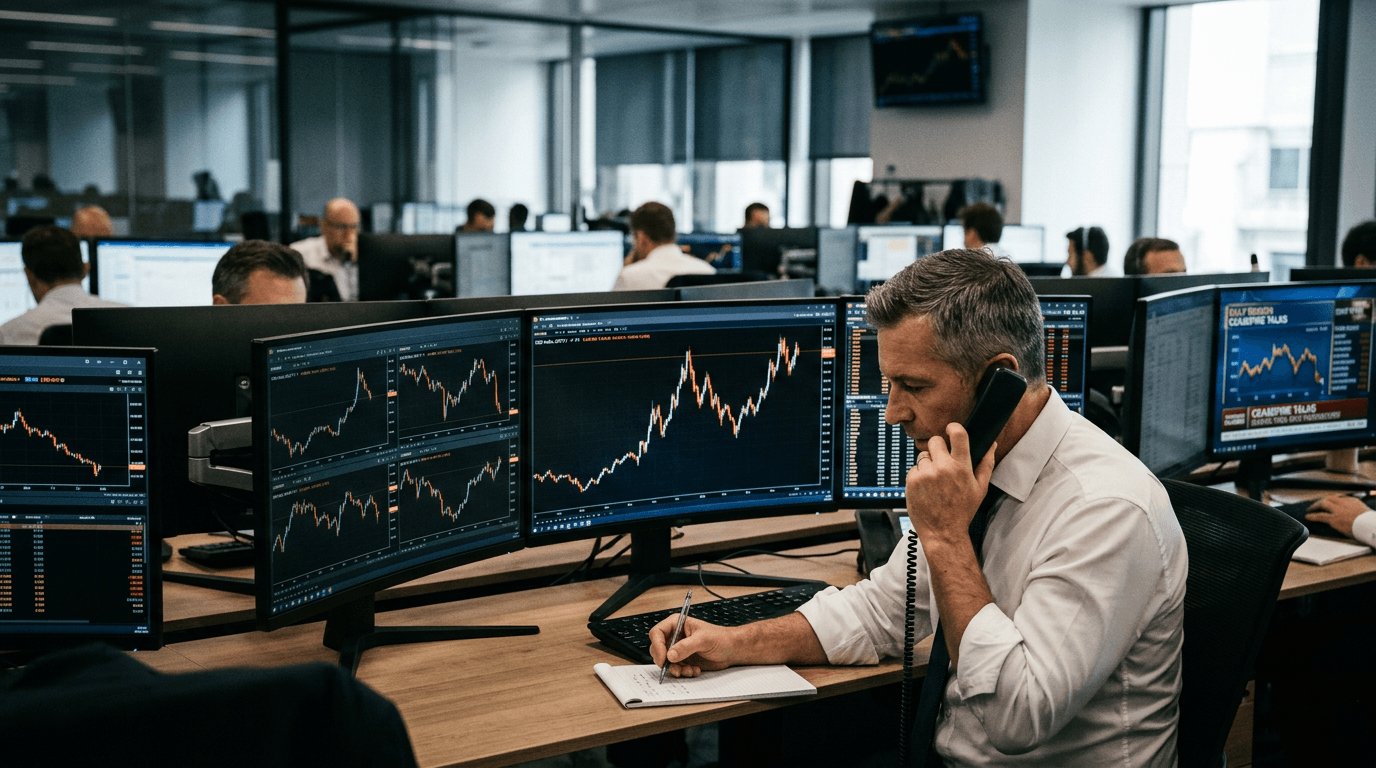
The dollar is holding close to a one-week high as markets wrestle with two opposing forces: rising Gulf tensions that threaten energy supplies, and tentative ceasefire mediation that has taken some heat out of oil’s recent rally[5]. This tug-of-war in sentiment is feeding into foreign exchange volatility, reinforcing safe-haven demand for the dollar and yen, while leaving risk assets like equities and commodity futures prone to sharp swings[5][3].
Markets Caught Between Risk And Relief
Geopolitical risk remains one of the most powerful short-term drivers of currency markets because it can simultaneously affect risk appetite, commodity prices, and expectations for global growth[5]. When traders see headlines about possible disruptions to Middle East energy flows, the instinctive reaction is often to cut risk and rotate into perceived safe havens such as the U.S. dollar and Japanese yen[5]. At the same time, any credible progress toward a ceasefire or de-escalation can quickly reverse that flight-to-safety, pressuring the dollar and supporting higher-yielding or risk-sensitive currencies[1].
This is why the dollar can sit near a one-week high even as markets price in both higher geopolitical risk and hopes of a negotiated calm[2][3][5]. The net outcome depends on which narrative dominates at any given moment: if traders view Gulf tensions as the primary risk, risk-off flows tend to keep the dollar elevated; if ceasefire efforts look durable, those same flows can unwind quickly and flatter risk currencies and assets[5]. For active traders, the message is clear: sentiment is fragile, and positioning can flip fast.
Dollar, Yen And Safe-haven Flows
The dollar index, which measures the greenback against a basket of major currencies, frequently gravitates toward short-term highs during episodes of heightened geopolitical uncertainty[2][3]. When U.S.–Iran tensions flared earlier this year, the dollar traded around a one-week high as investors sought safety in dollar assets and braced for possible energy and trade disruptions[2]. Similar dynamics are in play with Gulf-related headlines today, even if the precise catalysts differ[5].
The yen is also central to this story. Historically, the Japanese currency has been a classic risk-off haven, attracting flows during market stress[3]. Yet recent episodes have been complicated by the threat of official intervention when yen strength becomes too pronounced, which can change how aggressively traders lean into the currency[2]. That leaves the dollar as a relatively cleaner safe-haven expression for many investors, especially when U.S. yields remain competitive[2][3].
For traders, this environment creates opportunity but also trapdoors. Strong safe-haven flows can persist longer than expected and push the dollar beyond obvious technical levels, but they can also unwind violently if a ceasefire or diplomatic breakthrough gains traction[1][5]. Position sizing and disciplined risk management become more important than the direction of any single trade.
How Geopolitics Translates Into Price Action
Understanding the transmission channels from Gulf tensions to markets helps make sense of the moves. The first channel is energy: fears of supply disruption typically lift crude oil prices as traders price in potential outages or transport constraints[5]. Higher oil can, in turn, stoke inflation concerns and influence rate expectations, particularly in energy-importing economies.
The second channel is pure risk sentiment. Headlines about conflict, sanctions, or shipping risks often trigger broad de-risking across assets. Equities may sell off, high-yield credit spreads can widen, and emerging market currencies frequently come under pressure as investors retreat to core safe assets like U.S. Treasuries and the dollar[5][3]. When mediation efforts surface and oil pulls back from peaks, some of that pressure eases, allowing risk assets to breathe—but usually not evenly across markets[5].
The third channel is policy uncertainty. Geopolitical flare-ups often raise questions about future fiscal and monetary responses, especially in the U.S., which can influence expectations for the dollar beyond the immediate flight-to-safety impulse[3]. Traders who can map these channels clearly are better equipped to interpret price moves instead of simply reacting to every headline.
Impact On Equities, Commodities And Other Risk Assets
While the focus is often on the dollar, the repercussions extend far beyond FX. Equity markets tend to be sensitive to both the macro implications of higher oil and the broader risk-off tone that accompanies geopolitical stress[5]. Energy exporters may benefit from elevated prices, but sectors exposed to input costs or global trade can suffer, creating uneven performance across indices and single stocks.
Commodity futures, particularly in energy and metals, can see amplified moves as speculators and hedgers reposition around changing risk assessments[5]. For example, a spike in Gulf tensions might drive a short-term surge in crude and refined products, while ceasefire headlines can trigger rapid mean reversion as risk premia compress. Even alternative assets such as cryptocurrencies can experience volatility, sometimes behaving like risk assets and other times like idiosyncratic plays, depending on the broader context.
For traders using simulated environments, these cross-asset moves provide a realistic testing ground for strategies that rely on correlations and event-driven trading. Watching how FX, equity indices, and commodities react in real time to the same news flow is invaluable for building a more integrated market view.
What Traders Should Watch And How To Adapt
In a market pulled both ways by Gulf tensions and ceasefire hopes, the key for traders is to focus on structure and scenarios rather than single outcomes. Several practical steps can help:
First, anchor your FX view around the dollar’s safe-haven role and the balance of risks. If headlines skew toward escalation and energy disruption, expect the dollar and, to a degree, the yen to stay supported; if diplomacy gains traction, look for a rotation back into cyclical and higher-yielding currencies[2][3][5].
Second, track oil and broader commodity prices as a real-time proxy for how seriously markets are pricing energy risk[5]. Persistent strength in crude, even in the face of ceasefire talk, suggests investors remain unconvinced about a durable resolution, which can keep the dollar bid. A sustained pullback in energy, by contrast, often accompanies a softening in safe-haven demand.
Third, pay close attention to volatility. Spikes in implied volatility across FX and equity indices usually coincide with more erratic price action, wider spreads, and bigger intraday swings, all of which affect execution and risk management. In such regimes, simulated trading can be particularly useful for stress-testing strategies without real capital at risk.
Finally, clarify your time horizon. Geopolitical episodes can be highly binary and headline-driven in the short term, but their longer-term impact on growth, inflation, and policy may be more muted or delayed. Short-term traders may focus on news flow and intraday technicals, while swing and position traders anchor around macro trends, central bank trajectories, and valuation.
Conclusion
The dollar’s hold near a one-week high against the backdrop of Gulf tensions and tentative ceasefire hopes illustrates how markets can be simultaneously fearful and hopeful[2][3][5]. Safe-haven flows into the dollar and yen, shifting oil prices, and choppy risk sentiment across equities and commodities make for a complex trading landscape rather than a simple risk-on or risk-off narrative[5]. For traders—whether live or in SimFi environments—the opportunity lies in understanding these dynamics, respecting the event risk, and building robust strategies that can adapt as the balance between risk and relief continues to shift.