
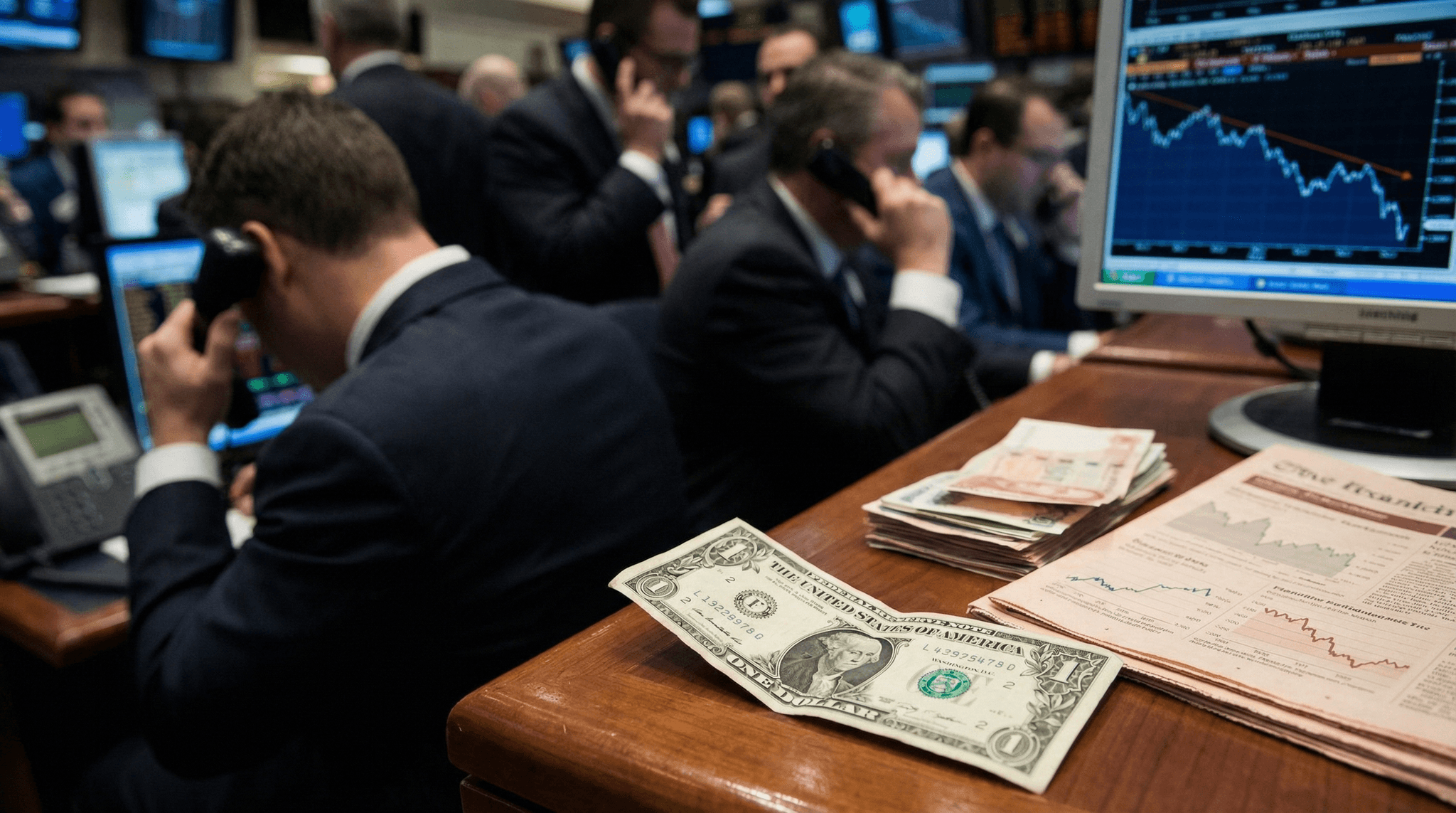
The US Dollar has touched its lowest level in four years, with the dollar index dipping to 96 before rebounding slightly to 96.4 on Wednesday. This significant move reflects a complex mix of policy signals, market expectations, and economic uncertainty that traders need to understand. The recent weakness stems not from fundamental deterioration in the American economy, but rather from shifting perceptions about policy direction and changing sentiment among international investors regarding dollar-denominated assets. Understanding these dynamics is crucial for anyone trading forex, commodities, or equity markets in this environment.
What's Driving The Dollar's Decline
The dollar's weakness primarily reflects two competing narratives in markets. On one hand, Treasury Secretary Bessent reaffirmed the US commitment to a strong dollar policy, pushing back against speculation that the administration was engineering currency intervention to weaken the dollar. This statement momentarily supported the dollar's recovery from its 96 low. However, this official position conflicts with broader market expectations and earlier signals that suggested the administration might welcome a weaker dollar to help balance the trade deficit.
Beyond policy statements, the fundamental driver of dollar weakness appears to be economic policy uncertainty. The sustained threat of tariffs against major trading partners has created hesitation among foreign investors holding dollar-denominated assets. When investors face increased uncertainty about future economic policy, they often reduce exposure to currency and assets that might be negatively affected by trade wars or economic friction. This capital flight away from dollar assets has been more powerful than official policy statements in determining the currency's direction.
The Role Of Intervention Expectations
Earlier in the month, speculation mounted that the New York Federal Reserve was preparing currency intervention on behalf of the presidential administration, particularly in the USDJPY currency pair. The fact that no intervention materialized, combined with conflicting signals about whether the US actually wants a weaker or stronger dollar, created confusion that ultimately weighed on sentiment. Markets hate uncertainty, and when policy makers send mixed signals about currency management, traders respond by reducing their bullish positioning on that currency until clarity emerges.
Implications For Traders And Portfolio Managers
For active traders, this environment presents both risks and opportunities. The four-year low in the dollar index suggests that further weakness may be possible if economic policy uncertainty persists. However, the rebound from 96 to 96.4 demonstrates that official policy statements still carry weight in currency markets. Traders should monitor Treasury Secretary statements and Fed communications closely, as clarity on policy direction could trigger significant reversals in currency positioning.
The weakness in the dollar has concurrent effects across multiple asset classes. A weaker dollar typically supports commodities priced in dollars, making them more attractive to international buyers. This dynamic has contributed to gold's push above $5,200 per ounce, as investors rotate toward safe-haven assets in response to policy uncertainty. Equity markets have benefited from the weaker dollar through support for multinational corporations' earnings, helping support S&P records despite the broader macroeconomic uncertainty.
Gold And Commodity Implications
The interplay between dollar weakness and commodity prices deserves particular attention for SimFi traders. As the dollar weakens, commodities become cheaper for international buyers, increasing demand and supporting prices. Gold's strength above $5,200 reflects both its safe-haven appeal during uncertain times and the technical support from a weaker dollar. This relationship means that trading opportunities exist not just in currency pairs, but across the commodity complex and in stocks with significant international revenue exposure.
What This Means For Policy And Future Direction
The Federal Reserve's expected decision to hold its funds rate steady in the first decision of the year provides little catalyst for currency movement based on interest rate differentials. Instead, the dollar's direction will likely continue to be driven by tariff developments, trade negotiations, and clarification of the administration's actual currency policy objectives. Traders should expect volatility to persist until these policy questions are resolved more definitively.
The contrast between official statements about strong dollar commitment and actual market conditions raises questions about whether policy makers truly prefer a weaker dollar for trade deficit reduction but are maintaining public statements of strong dollar commitment for market confidence. Understanding this potential gap between stated and actual policy is essential for anticipating future currency movements.
Key Takeaways For Traders
Monitor policy statements carefully but weight them appropriately in your analysis. Official comments may matter less than underlying policy implementation and economic conditions. Watch the USDJPY pair specifically, as any future intervention would likely target this pair. Consider broadening your perspective beyond just currency trades to capture opportunities in the commodities complex, particularly gold and energy. Finally, maintain awareness that policy uncertainty itself is a tradeable theme, with volatility likely to remain elevated until administration objectives become clearer to markets.
The dollar's four-year low represents a significant inflection point that reflects deeper questions about policy direction. Smart traders will use this period of clarity-seeking to position themselves appropriately across multiple asset classes while remaining flexible enough to adjust as the policy picture develops.