
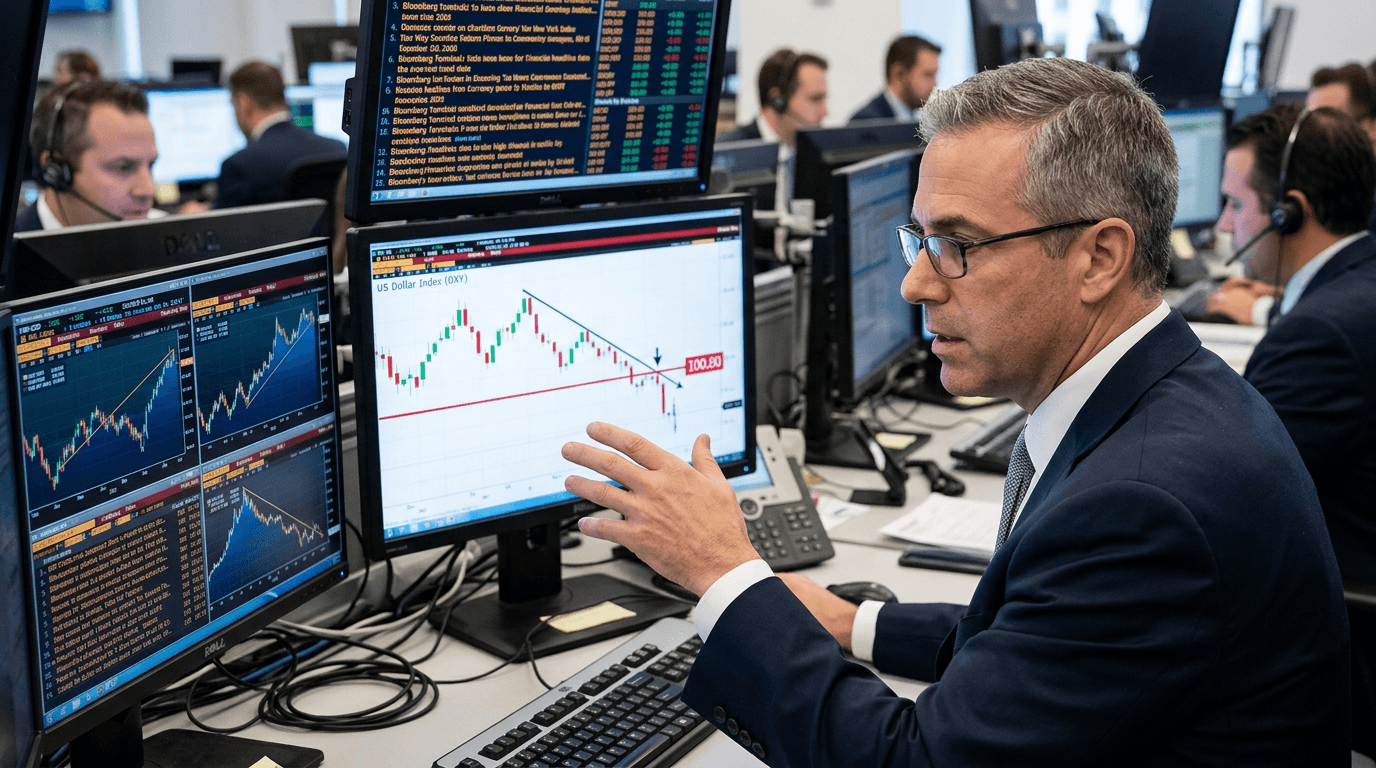
For the first time since July 2023, the US Dollar Index has dipped below the pivotal 100 mark, settling around 99.74. This is not merely a routine fluctuation; it signals a transformative moment in currency markets, underscoring fundamental shifts in global economic dynamics. The breach of this critical psychological and technical threshold, accompanied by substantial trading volumes, highlights significant institutional repositioning and compels traders to rethink their strategies in an increasingly volatile forex environment.
The dollar's robustness has historically relied on two main pillars: appealing US interest rates and safe-haven demand during global uncertainties. Yet, both are now simultaneously eroding. The Federal Reserve has ceased its rate hiking cycle, with markets now anticipating stable or even declining rates through 2026. This shift eliminates the primary yield advantage that previously attracted global capital to dollar-denominated assets. Concurrently, escalating tariff tensions under the current administration have exerted considerable downward pressure. Contrary to expectations that protectionist policies might bolster the dollar, the greenback has depreciated significantly since these policies were enacted. The uncertainty surrounding trade relations and potential recession risks from tariff disruptions is prompting investors to reassess their dollar exposure and seek alternatives with more favorable risk-adjusted returns.
Geopolitical dynamics have delivered the final catalyst for this decline. Reports of possible ceasefire negotiations in the Middle East prompted a notable dollar selloff as investors moved away from traditional safe-haven assets. This pattern illustrates a fundamental principle in forex markets: as global risk appetite increases and geopolitical tensions ease, the safe-haven allure of US assets diminishes—particularly when monetary support is already waning. The combination of reduced yield attraction and lower safe-haven demand presents a dual challenge for dollar bulls, creating the perfect storm for weakness.
Technical Indicators Signal Further Downside Risks
From a technical perspective, the breach of the 100 level poses significant warning signs for those wagering on dollar strength. The development of a death cross—where the 50-day moving average falls below the 200-day average—signals sustained selling pressure and weakening momentum. This is not a temporary setback but evidence of systematic institutional shifts away from dollar exposure. The daily chart pattern reveals descending highs and lows, confirming an orderly decline rather than panic selling, often suggesting further downside ahead.
The technical landscape now focuses on critical support and resistance levels. Support is near 98.50, an area largely untested since early 2023. Should the dollar fall below this level, it could enter uncharted territory, potentially triggering accelerated selling as stop-loss orders are activated across the market. On the upside, the 100.20 to 100.50 range has emerged as key resistance. If the dollar manages to hold above this range, it might attempt rallies toward 101.60 or even 103. However, given the current selling pressure and bearish technical outlook, the path of least resistance remains downward. Traders monitoring these levels closely will be well-positioned to identify whether a sustainable rebound occurs or further weakening continues.
Implications For Major Currency Pairs
This dollar weakness has substantial implications for traders focused on major pairs. EUR/USD and GBP/USD pairs have already benefited significantly from dollar depreciation, and further downside in the dollar could attract additional buying pressure in these pairs. Conversely, traders holding USD-based short positions should be cautious about potential mean reversion if economic data surprises to the upside or Federal Reserve communications become more hawkish than currently expected.
The current environment also presents opportunities for traders seeking to position ahead of potential volatility. The uncertainty surrounding upcoming economic data and Federal Reserve communications creates asymmetric risk-reward setups for those with discipline and clear trading plans.
Crucial Factors To Monitor
The dollar's trajectory heavily depends on upcoming economic releases and central bank communications. Employment figures, inflation reports, and Federal Reserve announcements will be key catalysts determining whether this decline marks the start of a prolonged downturn or merely a temporary pause. Positive surprises in inflation or employment data could quickly reverse dollar weakness, while signs of slower growth or earlier rate cuts would likely exacerbate the decline.
Traders should also closely monitor geopolitical developments. Any escalation or de-escalation in international tensions could rapidly shift safe-haven dynamics. Additionally, watch for any shifts in Fed policy communication or changes in interest rate expectations, as these remain fundamental drivers of currency valuations.
Key Takeaways For Traders
The fall below 100 marks a critical turning point for currency markets. Traders equipped with an understanding of both technical signals and fundamental drivers will be best positioned to navigate the forthcoming volatility with discipline. Whether trading EUR/USD, GBP/USD, or other dollar pairs, the current environment demands heightened vigilance and adaptive risk management. Position sizing becomes crucial in this volatile environment, and maintaining clear stop-loss levels near identified technical support and resistance zones should be non-negotiable components of your trading plan.
---