
Dollar Index Dips Below 100: A New Era for Global Markets
The Greenback's Unprecedented Slide
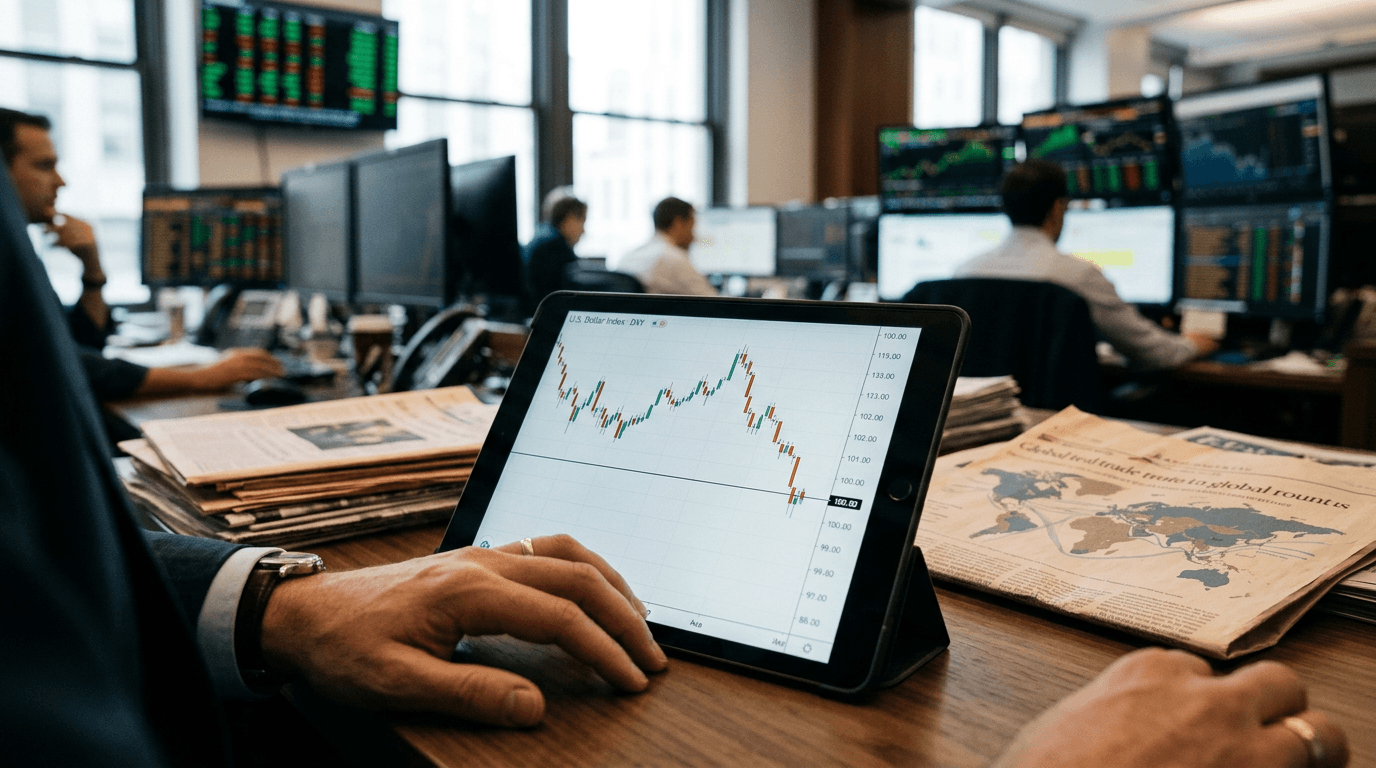
The US Dollar Index, a crucial gauge of the dollar's strength, has tumbled below the 100 mark, a level unseen since July 2023. This drop to 99.74 marks a significant departure from its January peak of 110, erasing more than 7% of its value since President Trump's inauguration. Market participants, who once expected the dollar to thrive under the new administration, are now grappling with a harsh reality. Instead of reinforcing its safe-haven status, the dollar has been caught in a storm of trade tensions, aggressive tariff policies, and shifting investor sentiment, fundamentally altering currency dynamics and portfolio strategies worldwide.
The Tariff Shock: A Rethink of Currency Dynamics
Wall Street analysts initially foresaw a robust dollar, anticipating that protectionist policies would invigorate US economic growth, drive up interest rates, and draw foreign capital. Yet, Trump's escalating trade war with China has had the opposite effect. Rather than bolstering the greenback, these policies have sown uncertainty, prompting investors to retreat. This isn't just about currency weakness; it's a profound reassessment of capital flows in a fragmented global economy. The dollar's diminished appeal as a safe-haven asset is forcing traders to reevaluate their strategies.
An Intentional Dollar Weakness
The current dollar decline appears to be a deliberate strategy by the Trump administration. Unlike past periods of depreciation due to economic weakness, this is a calculated move to shift focus from Wall Street to Main Street. By weakening the dollar, the administration aims to boost US exports, attract foreign investment in American industries, and provide domestic producers with a competitive edge. Traders are now navigating a landscape where geopolitical positioning and policy manipulation hold sway over traditional dollar-supportive factors.
New Safe Havens Emerge
In this uncertain climate, the Japanese Yen and Swiss Franc have risen as the new safe havens. This shift signals a fundamental change in how global investors perceive currency risk. The dollar, once the ultimate refuge during crises, is now viewed with caution due to geopolitical tensions and trade wars. Analysts at private equity firm KKR project continued dollar weakness, with the Euro and Japanese Yen gaining strength. This is not a mere technical correction but a recalibration of global capital flows driven by changing geopolitical dynamics.
Implications for Traders and Investors
Breaking the 100 level on the DXY is a psychological and technical shift that has triggered a wave of stop-loss orders, confirming a downward trend. Traders are rethinking currency hedging strategies, with support levels at 99.70 and 98.50 under scrutiny. For those willing to adapt, opportunities arise in currency trades and investments in export-driven companies that benefit from a weaker dollar. The falling Dollar Index reflects deliberate policy choices, geopolitical tensions, and economic uncertainties. Navigating these dynamics is crucial for market success in 2026.