
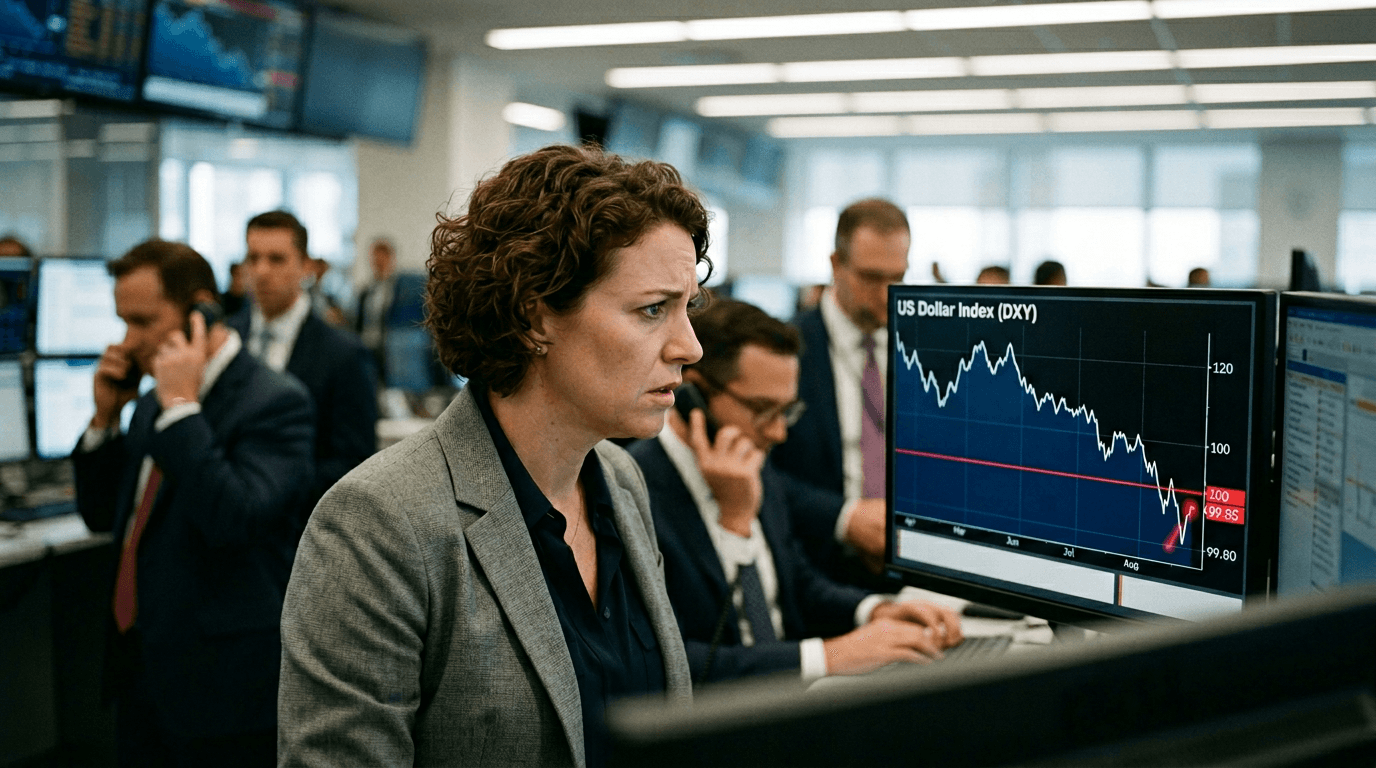
The US Dollar Index (DXY) has dipped below the 100 mark for the first time since July 2023, reaching a low of 99.74. This isn't just a routine fluctuation—it reflects a significant shift in how global markets perceive US monetary policy, economic growth prospects, and capital flows. For traders and investors, this decline carries considerable implications for currency pairs, commodities, and broader portfolio strategies.
Crossing below the 100 level is a historic moment in forex markets. This barrier has long served as a critical technical support and psychological benchmark. The breach suggests that the US dollar is trading weaker than its historical average since the Dollar Index's inception in 1973, indicating a potential loss of confidence in the dollar's traditional strength. The decline from a January high of 110 is a dramatic shift exceeding 10 percentage points, underscoring the dollar's recent weakness.
What's Driving The Dollar's Weakness
The dollar's decline is primarily driven by tariff tensions and trade policy uncertainty under the current administration. Wall Street anticipated dollar strengthening with the new administration, yet the greenback has slumped approximately 7 percent since its onset. Trump's unpredictable tariff strategies and escalating trade tensions with major economic partners—particularly China, Mexico, and Canada—are exerting sustained dollar-selling pressure among institutional investors.
Growing recession concerns add to this pressure. Market participants worry that aggressive protectionist stances could trigger economic contraction, reducing demand for dollar-backed assets. As investors reassess recession risks, they're moving away from the dollar as a safe-haven currency. Notably, the Japanese Yen and Swiss Franc have emerged as primary beneficiaries, attracting risk-off flows that traditionally favored the dollar. This currency rotation highlights a fundamental shift in market sentiment about US economic resilience.
Technical Deterioration Signals Sustained Weakness
From a technical standpoint, the breakdown below 100 presents bearish signals extending beyond a simple price level breach. The 50-day moving average has fallen below the 200-day average, forming the ominous death cross pattern. This bearish indicator typically signals ongoing selling pressure and diminishing momentum rather than a temporary pullback. Additionally, the pattern of descending highs and lows on daily charts confirms a systematic reduction in dollar exposure by institutional investors, indicating strong selling conviction.
The technical damage deepens as support levels become increasingly crucial. The immediate support zone at 98.50, untested since early 2023, becomes pivotal. If the DXY breaches this support, further losses could accelerate below 97.50, signaling a longer-term reversal with significant implications for capital flows across asset classes. Conversely, the 100.20 to 100.50 range has become critical resistance; sustaining above this area could lead to attempts toward 101.60 or even 103. However, given current trends and selling strength, further decline risks remain high.
Strategic Implications For Traders
The dollar index's breakdown below 100 reshapes the trading landscape across multiple instruments. Currency traders holding long dollar positions face mounting pressure, while those shorting the dollar see their theories validated. Commodity traders should note that a weaker dollar typically supports commodity prices denominated in dollars, potentially benefiting energy and precious metals positions.
The Federal Reserve's future monetary policy direction will be crucial in determining whether the dollar can stabilize or if weakness will intensify. Traders must closely monitor Fed communications for hints about rate cuts and policy direction. Economic data releases, particularly jobs reports and inflation figures, will heavily influence whether the dollar continues lower or finds footing for a recovery.
Looking ahead, analysts at major firms like KKR expect the dollar to likely remain weaker while the Euro and Japanese Yen strengthen. This outlook suggests that currency rotation could continue as long as tariff uncertainties persist and recession risks remain high.
Actionable Takeaways For Your Strategy
Keep a close watch on the 98.50 support level—a decisive breach would confirm deeper weakness and could accelerate selling pressure. Monitor Federal Reserve communications for signals about future monetary policy adjustments. Track economic data releases carefully, as employment and inflation figures will be critical in determining whether the dollar stabilizes.
Evaluate your currency pair exposures and commodity positions in light of these developments. Consider whether concentrated dollar positions align with your risk tolerance and time horizon. Diversifying currency exposure could be prudent if you're currently holding heavy dollar allocations.
The US Dollar Index's drop below 100 marks a critical turning point in currency markets. Whether this represents the start of a sustained decline or a temporary dip will become clearer as key support levels are tested. For now, traders should prepare for heightened volatility and ensure positions are appropriately sized for a potentially transformative period in currency valuations.