
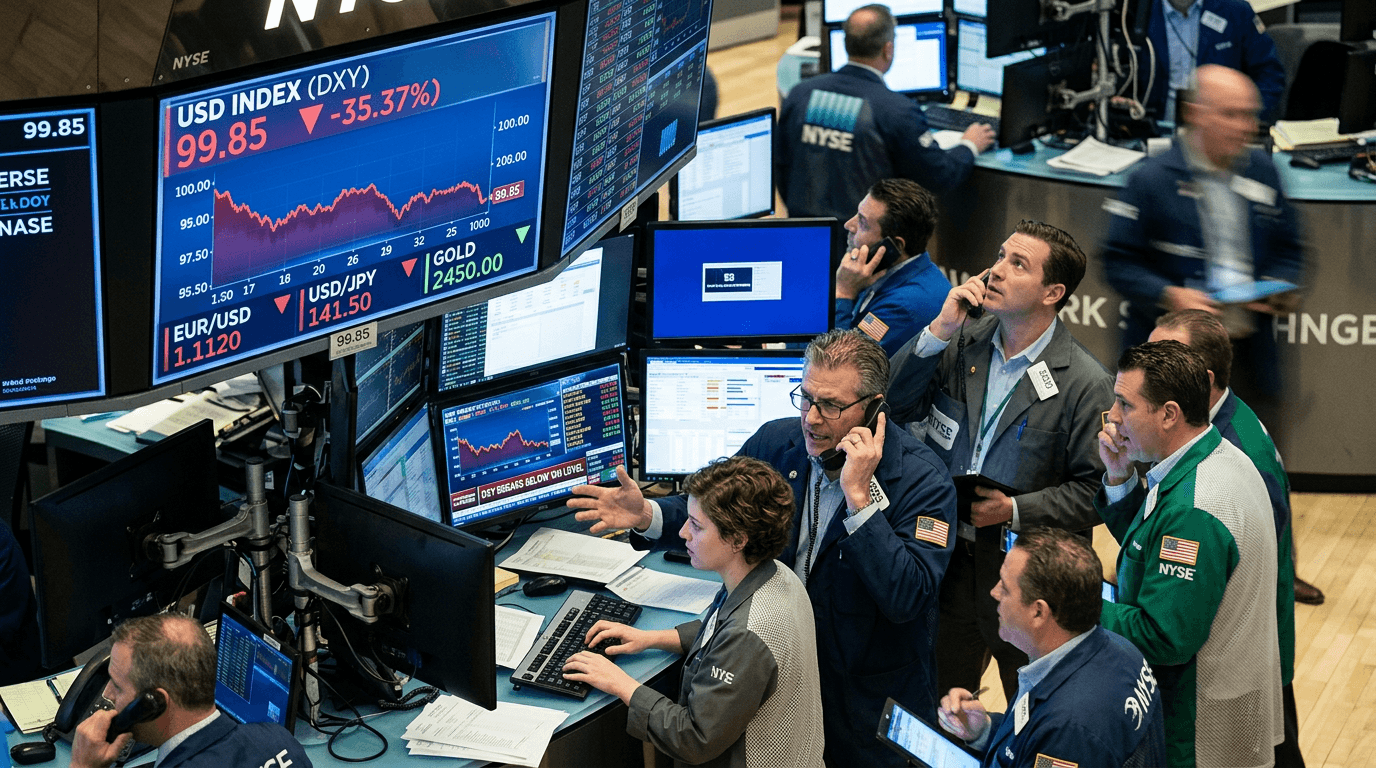
The US Dollar Index has slipped below the crucial 100 mark, landing at 99.74, a level not seen since July 2023. This is more than just a market blip; it signals a profound reevaluation of the dollar's robustness amidst a confluence of economic pressures, evolving Federal Reserve policies, rising trade tensions, and shifting geopolitical landscapes. For traders and investors, grasping the elements behind this drop and its implications is vital for navigating the subsequent volatility.
The Perfect Storm: Multifaceted Factors Driving Dollar Weakness
The dollar's decline past 100 isn't caused by a single factor but by a blend of strong opposing forces. Central to this is the Federal Reserve's policy shift. For years, high US interest rates attracted global capital seeking better returns, sustaining demand for dollar assets. But with the Fed halting rate hikes and expectations leaning toward steady or declining rates through 2026, this support has vanished. Without the yield appeal, the dollar has lost a key strength.
Adding to this are rising trade tensions under the current administration. Initially, Wall Street anticipated dollar strength with the new leadership, but the greenback has fallen more than 7% since the administration began. President Trump's protectionist measures and ongoing US-China frictions have created uncertainty around tariffs and trade relations. This uncertainty fosters a risk-off climate, with investors worried about recession risks from protectionist policies, further reducing dollar-backed asset demand.
Geopolitical shifts are also significant. Reports of possible ceasefire talks between Iran, the US, and regional mediators initially pressured the dollar as investors moved away from safe-haven assets. This marks a market dynamics shift: as global risk appetite improves, the safe-haven appeal of US assets wanes, precisely when monetary support is lacking.
Why The 100 Level Is Significant
Dropping below 100 is significant beyond its numerical value. For over a decade, this level has been a key technical and psychological benchmark for the US Dollar Index. When such levels break amid high trading volumes, it signals true institutional repositioning rather than random market fluctuations. The volume increase during this breakdown shows major market players actively reducing dollar positions, indicating a serious reevaluation of the currency's strength.
Technically, the breakdown concerns dollar advocates. The 50-day moving average has fallen below the 200-day moving average, forming a bearish "death cross" pattern, suggesting ongoing selling pressure and reduced momentum. The pattern of descending highs and lows on daily charts confirms systematic dollar exposure reduction by institutional investors. These technical signals suggest structural, not cyclical, weakness.
The Technical Outlook Ahead
Examining support and resistance levels, the technical outlook suggests further downside risk. The next support level is near 98.50, untested since early 2023. A break below could lead to further declines into unexplored territory. Conversely, resistance now lies in the 100.20 to 100.50 range. If the dollar holds above this, it might recover to 101.60 or even 103. However, given current momentum and selling strength, further decline seems likely.
What This Means For Traders
The dollar's weakness creates a dynamic trading environment with clear implications across currency pairs and asset classes. As investors shift away from US assets as a safe haven, alternative safe-haven currencies like the Japanese Yen and Swiss Franc gain prominence. This rotation reflects broader portfolio rebalancing in response to changing macroeconomic conditions and geopolitical risk appetite.
Analysts at major financial firms expect the dollar to remain weaker in the medium term, while the Euro and Japanese Yen strengthen. This shift could significantly affect flows into US financial assets and equity markets, impacting international portfolio allocations.
Navigation Points For Traders
Looking forward, the dollar's path critically depends on upcoming economic data and Federal Reserve communications. Positive inflation or employment surprises could quickly reverse the dollar's weakness, while signs of slower growth or earlier rate cut expectations could push it lower. Traders must closely monitor economic calendars for employment data, inflation reports, and central bank announcements. These will determine if the break below 100 marks the start of a prolonged dollar decline or just a pause in extended valuations.
The drop below 100 is a pivotal moment for currency markets. Traders who understand both the technical signals and fundamental drivers will be best positioned to capitalize on the directional movements emerging from this evolving landscape. Discipline, clear strategies, and continuous monitoring of key economic indicators will distinguish successful navigation from costly missteps in this volatile environment.