
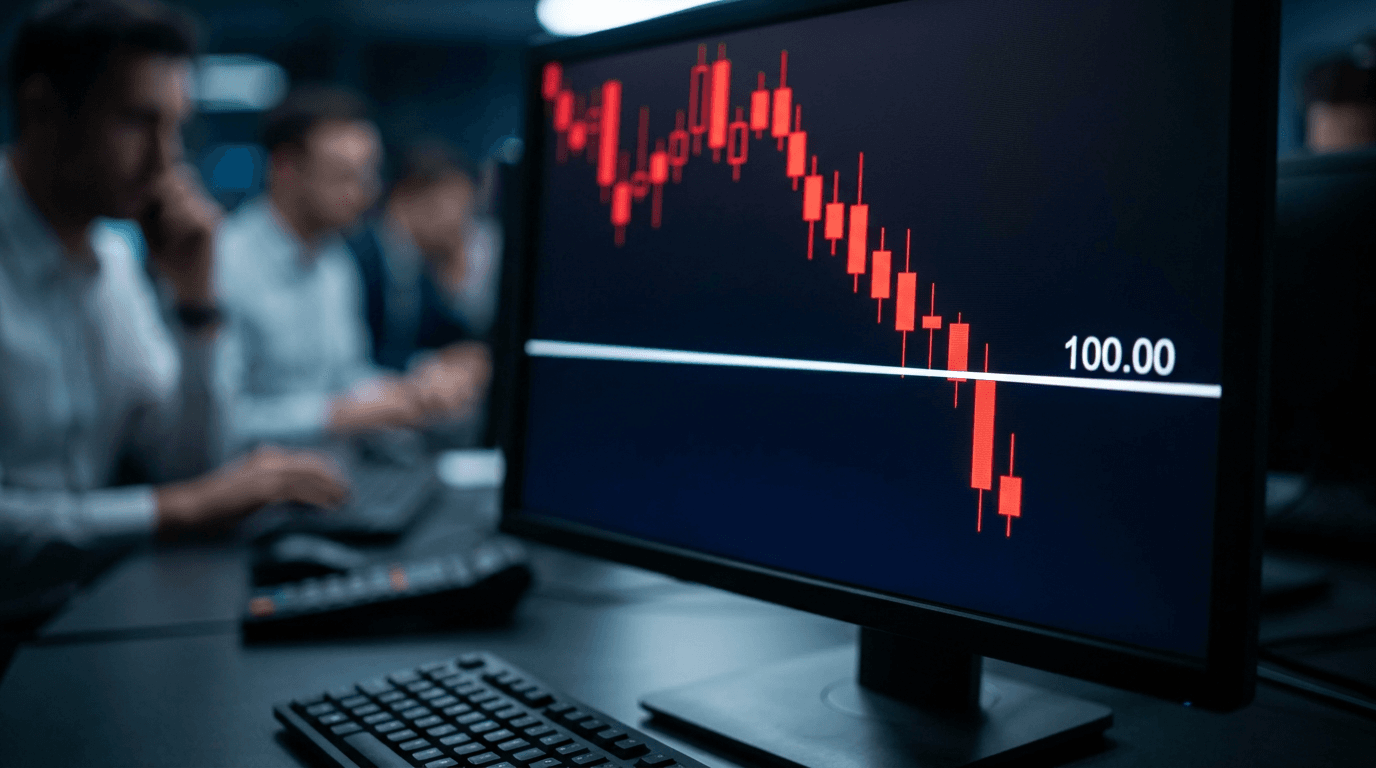
The recent dip in the US Dollar Index below the 100 mark marks a pivotal moment, with significant implications for the currency markets. This drop signals a shift in market sentiment and prompts traders to reassess their strategies in light of evolving economic conditions. Here, we explore the factors contributing to this decline, its impact on the market, and what traders should watch for moving forward.
Why The Dollar Index Fell
Several factors have converged to weaken the dollar, with geopolitical tensions and economic policy at the forefront. Escalating conflicts, particularly around Iran and the Strait of Hormuz, have driven oil prices up, typically supporting the dollar. However, the index's decline suggests underlying issues are influencing the market.
A key factor is investors' reassessment of US economic policies. The announcement of tariffs and aggressive trade measures has raised concerns about potential economic slowdowns, prompting a shift away from dollar-denominated assets. Furthermore, discussions about changes in Federal Reserve leadership have raised questions about the bank's independence, further eroding confidence in the currency.
Additionally, European fund managers have been offloading dollar-denominated debt assets due to concerns over policy shifts, decreasing overall market demand for the dollar. Seasonal factors also play a role, with the dollar often facing selling pressure preceding Federal Reserve policy decisions during periods of rate cuts.
Technical Levels And Market Implications
The 100 level in the forex market is more than a psychological marker; it serves as a significant support and resistance level influencing trading strategies. When the dollar remained above 100, it was supported by its 200-day moving average, indicating sustained strength. Now, traders are closely monitoring the next support zones.
The critical support lies between 96.50 and 97.00, representing 2025 lows that might act as a safety net for further declines. Falling below this range could signal a stronger reversal, potentially testing the 96.20 September FOMC lows or even the psychological level of 95.00. Conversely, rebounding above 97.25 to 97.60 could suggest consolidation or recovery.
Traders currently anticipate consolidation between 96.80 and 97.30 until the next FOMC meeting. The policy outcomes from this meeting will be crucial in determining whether bulls can drive a recovery towards 98.20 or if bears will push for lower levels.
Rate Cut Expectations And Market Dynamics
Market pricing suggests less than two rate cuts through 2026, which aligns with the stable labor conditions and inflation hovering near 3 percent, despite recent improvements. Under these conditions, the Federal Reserve Chair has limited incentive to adopt a dovish stance, yet traders price in modest easing.
This disparity between economic resilience and rate expectations opens the door for sudden dollar flow shifts. A hawkish Fed stance could trigger immediate inflows as traders rapidly adjust. Conversely, signals of accelerated cuts could exacerbate the dollar's current weakness.
Implications For Simfi Traders
The dollar's decline presents both challenges and opportunities. A weaker dollar typically favors foreign assets and international equity markets, while potentially pressuring dollar-denominated commodities. Currency traders must identify which scenarios are most likely to unfold.
The next Federal Reserve Chair's nomination could be pivotal for the dollar's direction. Similarly, geopolitical developments—whether the US intervenes in regional conflicts or escalates trade disputes—will significantly impact investor risk appetite and dollar demand.
Strategic Positioning Moving Forward
As a SimFi trader, the upcoming FOMC decision should be your primary focus. Pay attention to whether Powell signals patience with rate cuts or suggests maintaining restrictive policy. Monitor tariff developments and geopolitical tensions closely, as these can quickly shift market dynamics.
The technical outlook suggests near-term consolidation, allowing traders to analyze the landscape before the next major move. Whether the dollar rallies back toward 99 or drops toward 96.50 will largely depend on these economic and policy developments. Position yourself accordingly, and be prepared for sudden policy shifts or geopolitical events that could rapidly alter technical expectations.