
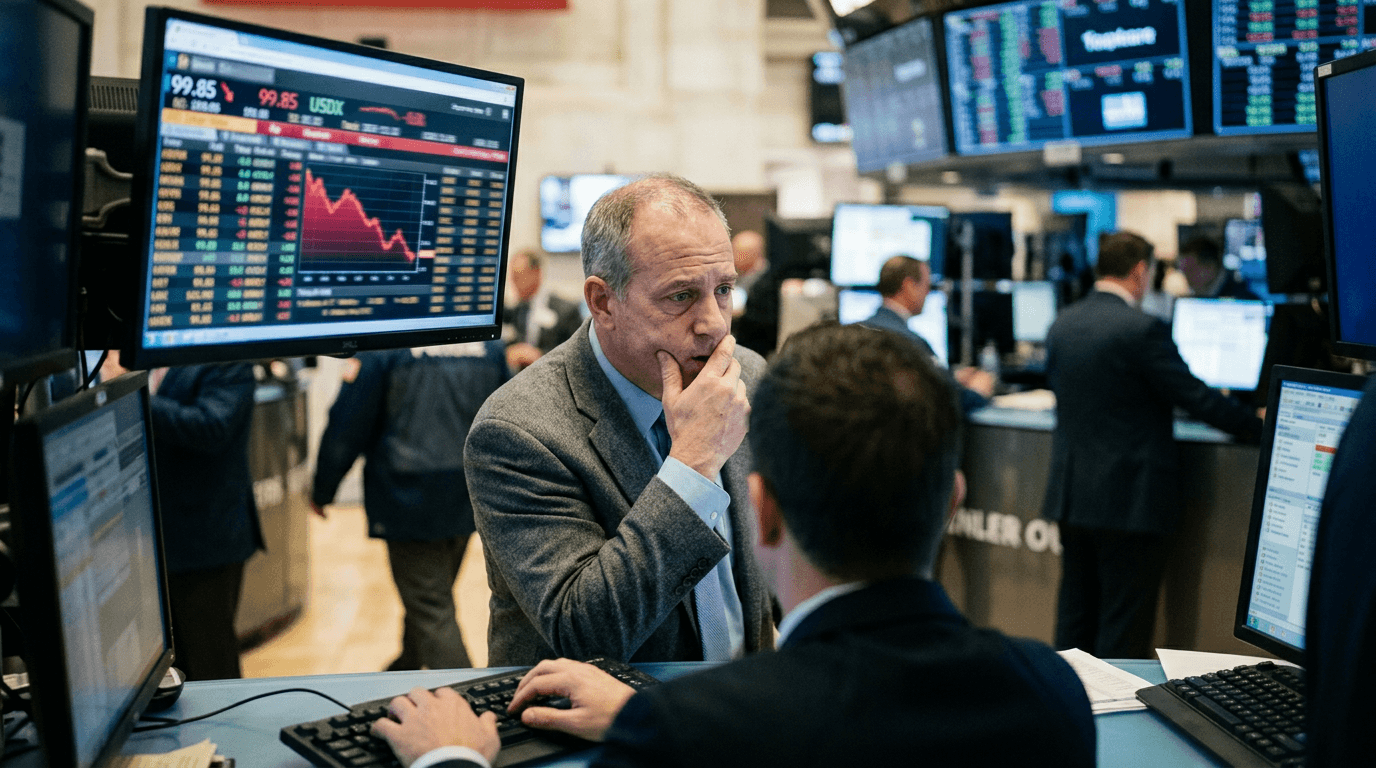
The US Dollar Index has marked a significant milestone this week, breaking below the 100 level for the first time since July 2023. This technical breakdown represents more than just a number on a chart—it signals a fundamental shift in how markets are valuing the world's reserve currency amid escalating trade tensions and mounting economic uncertainties. For traders, investors, and those watching global markets, this move carries important implications that extend far beyond forex pairs and into equities, commodities, and fixed income markets.
What Triggered The Breakdown
The dollar's plunge below 100 didn't happen in a vacuum. Multiple converging factors have conspired to weaken the greenback after it had maintained a relatively stable position above this psychological threshold. The primary catalyst stems from renewed trade war escalation, with aggressive tariffs imposed on major trading partners including China, Mexico, and Canada. These protectionist measures have fundamentally altered economic projections, introducing new recession risks while simultaneously pressuring inflation expectations—a combination that historically weakens the dollar.
Additionally, US-Iran tensions have disrupted energy markets, pushing oil prices higher and creating geopolitical uncertainty that typically drives capital flows away from risky assets into perceived safe havens. Rather than benefiting the dollar as might be expected, however, the conflict's impact on broader economic growth forecasts has dominated, creating headwinds for US currency valuations.
Macro Forces Reshaping Dollar Demand
Beyond trade and geopolitical factors, structural shifts in asset allocation have accelerated the dollar's descent. European institutional investors have begun actively selling dollar-denominated debt assets in response to concerns about aggressive policy shifts from the current administration. When major global investors reduce their dollar exposure simultaneously, the impact cascades through forex markets quickly and forcefully.
The timing compounds these pressures. Markets typically experience seasonal dollar weakness ahead of Federal Reserve interest rate decisions during cutting cycles. Combined with pre-FOMC positioning effects—where traders adjust their books ahead of major central bank meetings—the technical setup has favored dollar selling into this week's session. The confluence of fundamental weakness and technical selling pressure has overwhelmed any support mechanisms that might normally stabilize the currency.
Technical Levels That Matter
From a technical perspective, the breakdown below 100 opens important questions about where the dollar finds support. The critical support zone now sits between 96.50 and 97.00, representing 2025 lows that have held during previous sell-offs. If the index drops below this level, traders would need to look at 96.20—established as the September FOMC lows—before psychological support around 95.00 comes into play.
On the upside, resistance is building at the 98.80 to 99.00 range, with the 99.40 to 99.50 zone marking January resistance levels. A consolidation pattern is likely to form between 96.80 and 97.30 until the FOMC makes its rate decision. The critical test will come after the announcement—whether bulls demonstrate enough conviction to drive the index back above 98.20 toward the upper bounds of current technical channels, or whether bears maintain control for a retest of support.
Traders watching the daily timeframe should note that while the selloff has been dramatic, with the index down 2.50% recently, the downside momentum appears to be stalling at descending channel lows. This slowdown doesn't guarantee an immediate rebound, but it does suggest that dip-buying interest may finally be appearing. The key is whether institutional buyers emerge to confirm a reversal or if this represents merely a pause before lower levels are tested.
Implications For Your Trading
The dollar's weakness carries multifaceted consequences across your portfolio. A weaker dollar typically benefits companies with significant overseas earnings, making multinational corporations more attractive. Commodities priced in dollars—particularly precious metals and crude oil—become more affordable for foreign buyers, potentially supporting prices. Emerging market currencies tend to strengthen as dollar weakness reduces debt servicing pressures for companies with dollar-denominated liabilities.
However, this same weakness introduces inflation risks for the US economy as import costs rise. Companies relying on imported materials face margin pressures, while consumers may experience higher prices on consumer goods. The bond market's recent volatility likely continues as investors reassess whether rate cuts are actually coming or if inflation concerns force the Fed to maintain higher rates despite recession risks.
What To Watch Next
The FOMC decision is the obvious catalyst, but equally important is whether the dollar can stabilize above 97.00 after the announcement. Closes above this level should support a gradual rebound toward 99.00, while breaks below open the door to revisiting 2025 lows. Monitor economic data releases for signs of recession acceleration or inflation persistence—both factors that will drive the next leg of dollar movement.
Pay attention to oil prices and energy sector positioning, as Middle East tensions remain unresolved. Watch European asset flows and central bank commentary for hints about coordinated response to dollar weakness. Finally, track real yields—the difference between nominal bond yields and inflation expectations—as this metric ultimately determines whether international investors find US assets attractive even at lower dollar valuations.
The breakdown below 100 marks a inflection point in markets. Positioning yourself correctly for what comes next requires understanding both the technical levels in play and the fundamental drivers reshaping currency demand.