
Market Volatility Erupts as Trump's Iran Announcement Sparks Dollar Surge
When President Donald Trump addressed the nation about military actions in Iran, financial markets reacted with immediate volatility. The dollar soared, stocks stumbled, and oil prices spiked as investors scrambled to reassess the risks across all asset classes. This rapid response underscores a critical truth in forex markets: geopolitical uncertainty paired with potential inflation pressures opens doors to both trading opportunities and significant risks. Grasping the driving forces behind these market shifts is crucial for those navigating today's trading landscape.
The Dollar's Safe-haven Surge
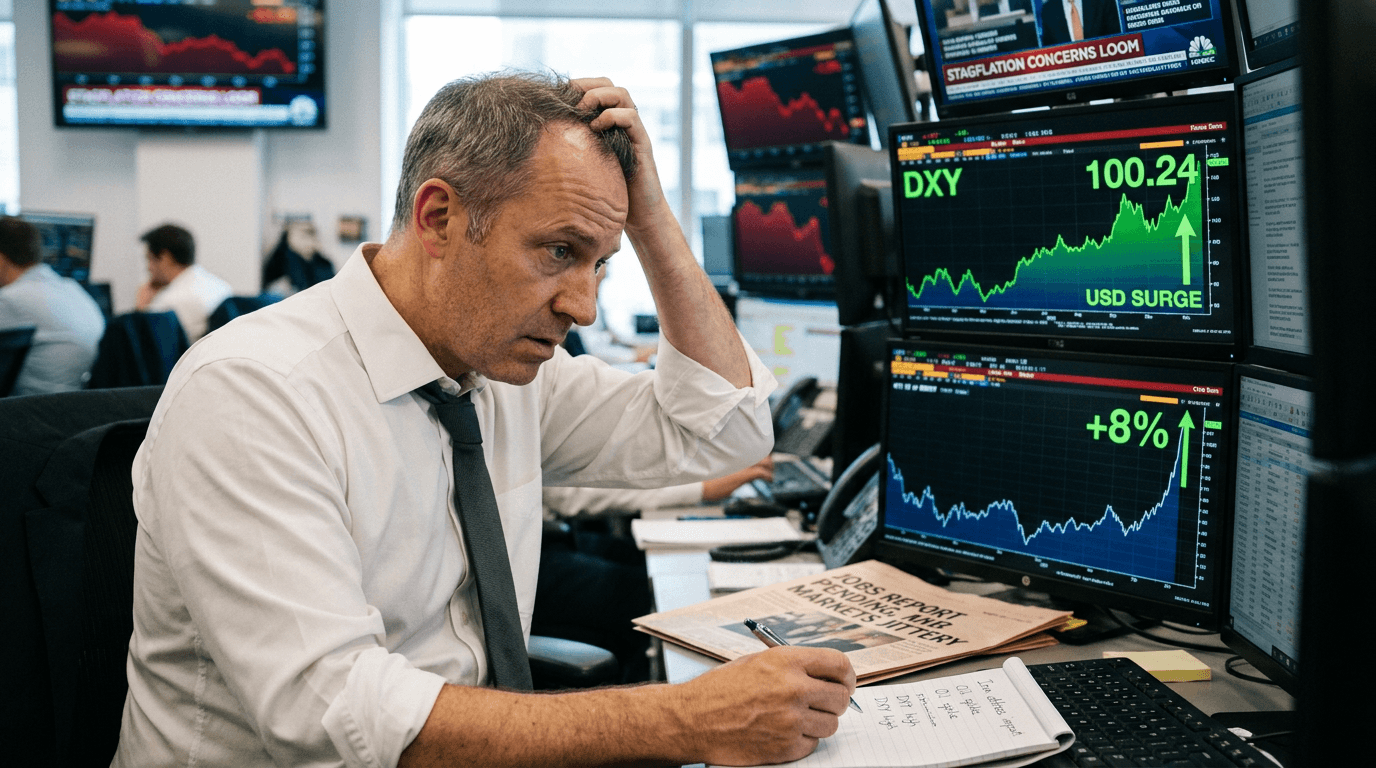
Trump's address carried a pivotal message, reshaping investor sentiment almost instantaneously. Instead of calming the waters with a promise of swift resolution to Middle East tensions, he pledged more aggressive strikes on Iran with an indefinite timeline. Consequently, the dollar index, which measures the greenback against a basket of major currencies, surged 0.68% to 100.24 on Thursday. This marked its best performance since March 18, reversing two days of losses and signaling a robust return to safe-haven demand.
The mechanics of this rally are clear-cut. As geopolitical risks heighten and investors fear broader economic disruption, capital flows away from riskier assets and into perceived safe havens. The US dollar, backed by the world's largest economy and deepest capital markets, naturally attracts this defensive capital. As funds poured into dollars, other major currencies weakened. The euro dropped 0.66% to $1.1513, sterling slid 0.88% to $1.319, and the risk-sensitive Australian dollar fell 0.95% to $0.6863. Even the Japanese yen, another traditional safe haven, traded 0.6% weaker at 159.72 per dollar as investors favored dollars over yen.
The Energy Shock And Inflation Spiral
What sets this moment apart from typical geopolitical shocks is the direct impact on energy markets. Brent crude futures jumped nearly 8% to $109.10 per barrel following Trump's address. This dramatic rise reflects genuine concerns about prolonged disruptions to global oil supplies, particularly given the geopolitical tensions surrounding the Strait of Hormuz, a critical energy chokepoint.
Higher oil prices have profound implications for the global economy. They directly increase input costs across various industries, from transportation to manufacturing to agriculture. The inflationary pressure complicates central banks' ability to consider rate cuts, including the Federal Reserve. This realization pushed US Treasury yields higher on Thursday as markets adjusted expectations around monetary policy. For traders, higher long-term yields can bolster dollar strength while pressuring risk assets and emerging market currencies that lean on lower rates.
The Jobs Report Wildcard
Amidst these dynamics, Friday's US non-farm payrolls report gains even more importance. Markets anticipated a 60,000 rise in jobs for March, based on consensus estimates. In an environment where inflation concerns are already heightened due to energy shocks, a significant miss in this employment report could spark further market volatility. Kyle Rodda from Capital.com cautioned that another disappointing jobs number "could rattle the markets and amplify warnings about stagflation," a troubling mix of stagnant growth and rising inflation.
This highlights a crucial lesson for traders: during volatile periods, economic data assumes outsized importance. When markets are already jittery over geopolitical tensions and inflation, weaker economic data can accelerate risk-off moves and further support the dollar.
What Traders Should Watch
From a tactical standpoint, several key levels and developments merit close attention. The dollar index's climb above 100 represents significant technical territory. Carol Kong, a currency strategist at Commonwealth Bank of Australia, observed that the dollar can "certainly strengthen further against all major currencies" as markets absorb the likelihood of a global economic slowdown.
For specific currency pairs, observe the yen's behavior near the 160 level against the dollar. Japanese authorities consider this a line in the sand for potential intervention, so any sustained move toward or beyond 160 could prompt official action. The Australian and New Zealand dollars, both sensitive to global growth expectations, may present better trading opportunities as markets continue to reprice risk.
Energy-related trades also deserve consideration. While higher oil prices support commodities and commodity-linked currencies in the short term, the stagflation narrative could eventually pressure both energy demand and risk appetite. Traders should monitor how oil's recent gains interact with forthcoming economic data and additional geopolitical developments.
Navigating Uncertainty Ahead
The current environment serves as a reminder that major market movements often arise from the convergence of multiple factors: geopolitical risks, inflation concerns, monetary policy constraints, and economic data. Trump's address triggered a classic safe-haven rally in the dollar, but the sustainability of that strength hinges on whether these conditions persist and how markets interpret upcoming economic indicators. By diligently tracking these variables and adhering to clear risk management protocols, traders can position themselves to capitalize on the volatility rather than being blindsided by the next significant market shift.
NEWSIMPACTSCORE: 8