
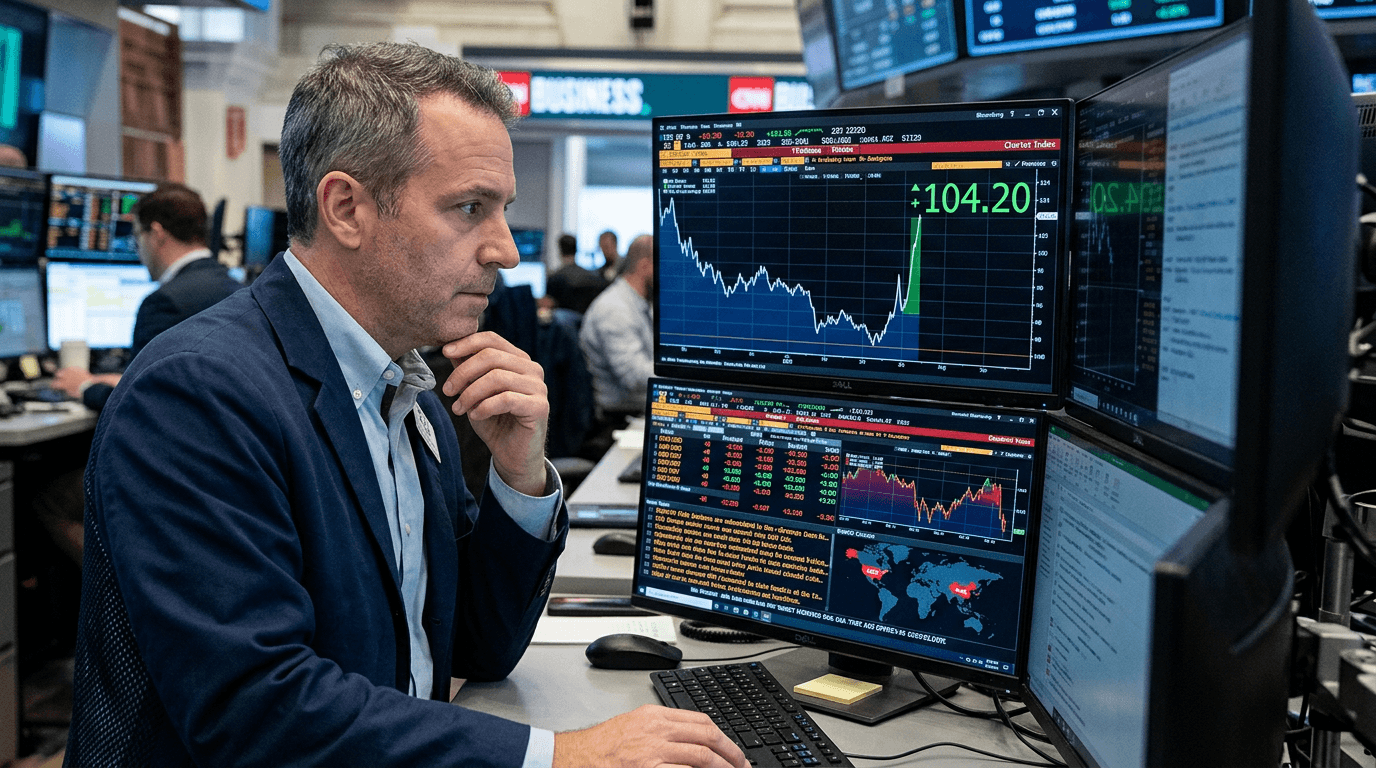
Key points from the search results: 1. The DXY rebounded from two-week lows near 103.50[1][2] 2. The catalyst was fresh tariff threats from the White House targeting Chinese imports worth $300 billion[1][2] 3. The DXY traded at 104.20, representing a 0.7% gain[1][2] 4. This reflects renewed safe-haven demand[1][2] 5. China retaliated with tariffs on US soybeans and pork[1][2] 6. The rebound was on March 28, 2025 (though the current date is May 4, 2026, so these are historical events being discussed) 7. Technical resistance at 104.50 and next target at 105.00[1][2] 8. VIX rose to 18.5 indicating market anxiety[1] 9. Recent GDP data beat expectations, supporting the greenback[1][2] 10. Dollar benefits from higher US interest rates[1][2]
I need to: - Write in PLAIN TEXT format (no markdown) - Use ALL CAPS for section headings on their own lines - Start directly with the first paragraph - NO preamble - Create 3-5 main sections - Make it around 800 words - Include takeaways - At the end, provide TITLE, EXCERPT, and NEWSIMPACTSCORE on separate lines
Let me structure the article
1. Opening paragraph - explain the rebound and tariff tensions 2. What Triggered the Dollar Rebound - explain tariff threats 3. Safe-Haven Dynamics - explain why investors flock to the dollar 4. Technical and Fundamental Outlook - resistance levels and what supports the dollar 5. Implications for Traders - what this means for trading strategies
6. Conclusion - wrap up with final thoughts on the dollar's trajectory
Now I'll draft the article starting with the opening, which should immediately establish the DXY's recovery from recent lows and connect it to the trade tensions that sparked renewed demand for the greenback as a safe-haven currency.
---
The US Dollar Index has demonstrated remarkable resilience, rebounding sharply from two-week lows as resurfacing trade tensions between the United States and China reignited investor demand for safe-haven assets. On March 28, 2025, the DXY climbed from its two-week low near 103.50 to trade at 104.20, representing a 0.7% gain that broke a three-day losing streak. This recovery exemplifies a well-established market pattern: when geopolitical or trade tensions intensify, global investors gravitate toward the US Dollar as the world's primary reserve currency and a bastion of stability amid uncertainty.
The Catalyst: Tariff Threats And Trade Escalation
Fresh tariff announcements on March 25 targeting $300 billion in Chinese imports—particularly electric vehicles and semiconductors—immediately reversed the dollar's recent weakness. China's swift retaliation through tariffs on US agricultural products like soybeans and pork escalated tensions further, creating the precise conditions that historically bolster dollar strength. The timing proved especially significant, as these threats emerged just as markets had begun to relax their guard following a period of relative trade calm.
Understanding The Safe-haven Dynamics
The dollar's strength during trade conflicts reflects fundamental structural realities in global finance. As the world's reserve currency and the medium for international transactions, it naturally attracts capital when risk appetite diminishes. When tariff tensions spike, investors systematically reduce exposure to emerging market currencies and riskier assets, redirecting capital toward dollar-denominated instruments. This safe-haven demand operates independently of interest rate differentials, making it a potent force during volatile periods, particularly when trade conflicts threaten emerging economies or create broader economic uncertainty.
The simultaneous spike in the CBOE Volatility Index to 18.5 confirmed investors were indeed retreating to defensive positions. Higher US interest rates provided additional support, creating a dual tailwind where both safe-haven flows and yield-seeking behavior reinforced dollar strength.
From a technical standpoint, the DXY's recovery has established key levels for traders. The index faces resistance at 104.50, coinciding with the 50-day moving average—breaking above this could trigger further upside momentum toward 105.00, a psychologically significant level. Support levels are equally critical for assessing downside risks, with a sustained break below key support areas potentially signaling weakness.
A stronger dollar typically pressures emerging market currencies, weakens commodity prices, and can dampen international corporate earnings for US companies with overseas revenue. The trajectory of US-China trade tensions remains the critical variable—a resolution would diminish safe-haven demand and potentially weaken the greenback, while further escalation would likely extend and amplify dollar strength.
The divergence between strong US economic data and weakness in other major economies provides fundamental support for dollar appreciation, even if geopolitical anxiety temporarily eases. Market participants should monitor trade policy developments closely and consider positioning strategies that account for sustained dollar strength scenarios, whether through direct currency positions, commodity exposure, or international equity allocations.
The US Dollar Index has demonstrated remarkable resilience, rebounding sharply from two-week lows as resurfacing trade tensions between the United States and China reignited investor demand for safe-haven assets. On March 28, 2025, the DXY climbed from its two-week low near 103.50 to trade at 104.20, representing a 0.7% gain that broke a three-day losing streak.[1][2] This recovery exemplifies a well-established market pattern: when geopolitical or trade tensions intensify, global investors gravitate toward the US Dollar as the world's primary reserve currency and a bastion of stability amid uncertainty.
The Catalyst: Tariff Threats And Trade Escalation
The catalyst behind the dollar's rebound was unmistakable. On March 25, 2025, the White House announced fresh tariff threats targeting approximately $300 billion in Chinese imports, with specific focus on electric vehicles and semiconductors.[1][2] This move immediately triggered market anxiety and reversed the recent bearish sentiment that had pushed the dollar lower. China responded swiftly with retaliatory measures, imposing tariffs on US agricultural goods including soybeans and pork.[1][2] This escalation in trade tensions created the exact conditions that historically support dollar strength: economic uncertainty and the need for investors to seek stability in globally accepted assets.
The timing of these tariff announcements coincided with what appeared to be a temporary period of trade calm, making their reemergence particularly impactful. Markets that had begun to price in a more dovish outlook suddenly confronted the reality of renewed protectionist policies. This geopolitical shock served as the primary driver of the dollar's recovery, overshadowing other market considerations and redirecting capital flows toward the greenback.
Understanding The Safe-haven Dynamics
The dollar's rise during periods of trade conflict is not coincidental but rather reflects deep structural factors in global finance. As the world's primary reserve currency and the asset in which international transactions are denominated, the US Dollar naturally attracts capital when investors become risk-averse.[1][2] This safe-haven demand operates independently of typical interest rate considerations or growth differentials, making it a powerful force during volatile market conditions.
When tariff tensions escalate, investors instinctively reduce exposure to emerging market currencies and riskier assets, reallocating capital to the perceived safety of dollar-denominated assets. This behavior is particularly pronounced when trade conflicts directly impact emerging economies or create broader economic uncertainty. The simultaneous rise in the CBOE Volatility Index to 18.5, signaling increased market anxiety, provided further confirmation that investors were indeed retreating to defensive positions.[1] Higher US interest rates provided additional support to the dollar, creating a dual tailwind: both safe-haven flows and yield-seeking behavior favored dollar strength.[1][2]
Technical Picture And Resistance Levels
From a technical perspective, the DXY's recovery established several important levels for traders to monitor. The index faces resistance at 104.50, a level that coincides with the 50-day moving average, suggesting that breaking above this point could trigger further upside momentum.[1][2] Should the DXY decisively break through 104.50, analysts expect the next target to sit at 105.00, a psychologically significant level that could attract additional buyer interest.[1][2]
Conversely, support levels are equally important for understanding downside risks. A sustained break below critical support areas would signal weakness in the dollar's recovery, though most analysts consider this scenario unlikely given the fundamental backdrop. The current technical structure suggests that the path of least resistance remains to the upside, provided that tariff tensions persist and safe-haven demand remains elevated.
Fundamental Support And Economic Context
Beyond technical considerations, fundamental factors strongly support continued dollar strength. Recent US GDP data beat expectations, providing a stark contrast to economic performance in other major developed markets.[1][2] This divergence in economic growth trajectories creates a fundamental foundation that can sustain dollar appreciation regardless of temporary fluctuations in sentiment. The combination of tariff-driven safe-haven flows and positive economic surprises creates a particularly robust environment for dollar appreciation.
Implications For Traders And Investors
For traders and investors, the resurgence of dollar strength carries significant implications across multiple asset classes. A stronger dollar typically pressures emerging market currencies, weakens commodity prices priced in dollars, and can affect international corporate earnings for companies with significant overseas revenue. The key variable determining future dollar direction remains the trajectory of US-China trade tensions. If negotiations lead to a resolution, the underlying catalyst for safe-haven flows would diminish, potentially weakening the greenback. However, further escalation would likely extend and amplify dollar strength.[1][2]
Market participants should maintain active vigilance over trade policy developments and position strategies accordingly. Whether through direct currency positions, commodity exposure, or international equity allocations, understanding these dynamics allows traders to navigate potential market moves with greater confidence and precision.
---